Health
Nursing Homes in Bangkok for Foreign Families
How to evaluate nursing homes and long-term care in Bangkok for foreign families: licensing, care levels, staffing and indicative monthly costs for 2026.
On this page
Bangkok’s long-term care sector for foreigners is almost entirely private, largely unregulated in practice even where regulation exists on paper, and dominated by individual operators each marketing their own facility as the answer rather than by any independent directory a family can trust. That combination makes the evaluation framework more important than any specific facility name: what licence a facility should hold, what level of care it’s actually staffed and equipped for, and how to read a monthly fee before signing anything. This article is that framework, not a ranked list or a recommendation of any specific operator: for the adjacent question of choosing a hospital for acute or planned medical treatment rather than ongoing residential care, see the hospital-choosing guide.
Why foreign families end up researching this
The jobs-to-be-done here usually fall into one of three situations: a retiree living in Thailand whose care needs have increased beyond what independent living supports; an ageing parent being brought to Thailand to live near an adult child based there; or a family arranging care from abroad for a relative already resident in Thailand. Each situation carries a different urgency and a different practical starting point, but the underlying evaluation (licensing, care level, staffing, cost) is the same regardless of which situation applies.
The regulatory picture: what oversight actually exists
In Thailand, elderly and dependent-care facilities fall under regulation from the Department of Health Service Support (DHSS), part of the Ministry of Public Health, which is responsible for setting national standards for long-term care services and for licensing facilities that provide medical or nursing functions. Ministerial regulation divides facility types broadly into day care, residential (non-medical) homes, and nursing homes providing hands-on nursing care: a distinction worth knowing because it determines what level of staffing and medical oversight a facility is actually required to have.
Separately, Thailand’s Department of Older Persons, under the Ministry of Social Development and Human Security, sets broader national policy on ageing and elder welfare, though its state-funded elder-support programmes are generally built around Thai nationals rather than foreign residents: a foreign resident or visiting family member should expect to rely on privately run, commercially operated facilities rather than any state-subsidised care route.
The practical caution worth taking seriously: independent reviews of Thailand’s long-term care sector have found that registration and compliance are inconsistent in practice, with a meaningful share of operating facilities either registered with the wrong body for the services they actually provide, or not properly registered at all. This means a facility’s own claim to be “licensed” is a starting point for verification, not proof: ask specifically which licence it holds, from which government body, and ask to see the current certificate rather than accepting the claim on trust.
Care levels: matching the facility to the actual need
The single most common mismatch in this sector is a family choosing a facility based on price, location or presentation, without first being clear about what level of care their relative actually needs. Facilities generally fall into a rough hierarchy:
| Level | Typical profile | What to check |
|---|---|---|
| Independent / retirement living | Largely self-sufficient residents wanting community, meals and light support | Whether medical staff are on-site or only on call, and how quickly |
| Assisted living | Support with daily activities (bathing, dressing, medication reminders) but not full nursing care | Staff-to-resident ratio, and whether support is available around the clock or only at set times |
| Residential nursing care | Ongoing medical or nursing needs requiring qualified nursing staff on-site | Whether the facility is licensed specifically as a nursing home, not just a residential home, and what nurse-to-resident ratio applies on each shift |
| Dementia / memory care | Specialised staffing, secure premises and structured activity for residents with cognitive decline | Staff training specific to dementia care (not just general elderly care), secure premises to prevent wandering, and a realistic staff ratio for supervision needs |
A facility marketed generally as a “retirement home” or “senior living” community is not automatically equipped for dementia care or ongoing nursing needs: ask directly whether the facility holds the licence category matching the actual care level required, not just whether it accepts residents with that condition.
Staffing: the number that matters most
Staff-to-resident ratio, and specifically the ratio during night shifts rather than just daytime, is the single most consequential number in evaluating any facility, and it’s also the number facilities are least likely to volunteer without being asked directly. A facility that looks well-staffed during a daytime tour can have a materially thinner overnight roster, worth asking about explicitly, along with:
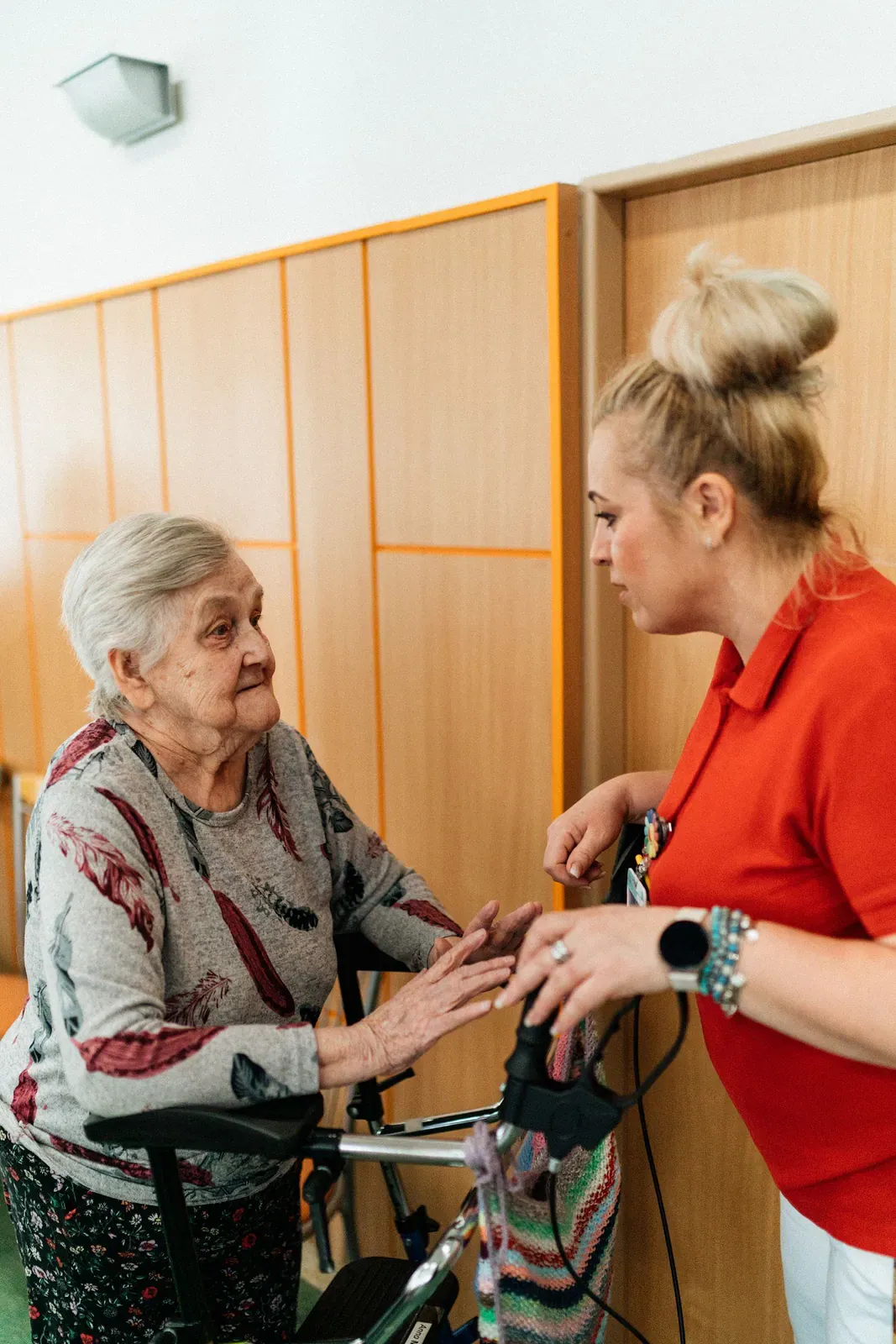
- Qualified nurse presence, not just general care staff, and whether a nurse is on-site around the clock or only reachable on call for a facility providing nursing-level care.
- Language capability of care staff, since day-to-day communication (understanding a resident’s needs, explaining changes to family) depends on staff who can actually communicate with the resident and family, not just administrative staff at the front desk.
- Doctor access: whether a physician visits regularly, is on-call, or whether the facility’s arrangement is to transfer to a hospital for anything beyond routine care, and if so, which hospital, and how quickly transport is arranged.
- Staff turnover and training, harder to verify from a single visit but worth asking about directly: consistent, longer-tenured staff generally correlates with more attentive individual care, particularly for dementia residents who benefit from familiar faces.
Home care as an alternative to residential placement
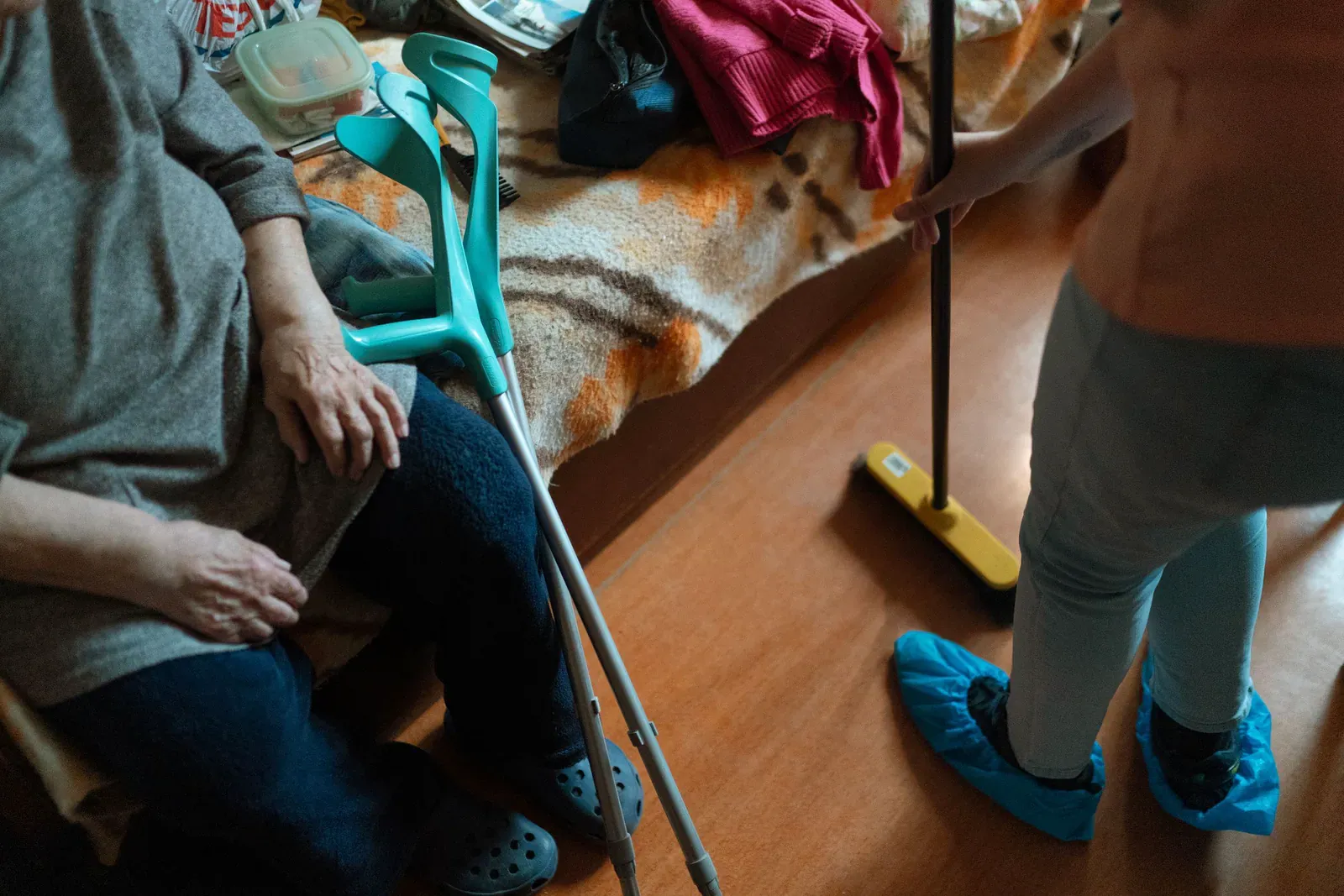
For a resident who can remain in their own home or condo with support, in-home nursing and caregiving services are a well-established alternative to a residential facility in Bangkok, ranging from a few hours of daily assistance to live-in, round-the-clock care. This suits families wanting a relative to remain in a familiar environment, and can also serve as a bridge: trialling a level of support before committing to a residential move, or supplementing an assisted-living placement with additional one-to-one hours. The same staffing questions apply: verify the agency’s own vetting and training of caregivers, whether a qualified nurse is involved for any medical tasks (medication management, wound care), and how the agency handles an emergency outside normal hours.
Indicative costs: what to expect, and why nothing here is a quote
Long-term care costs in Bangkok vary enormously by care level, facility quality and location, and no single figure represents “the” cost. As a general, dated 2026 planning range only (never a quote for any specific facility, which will always require its own written estimate), publicly discussed figures for private facilities serving foreign residents have clustered roughly as follows:
| Care level | Rough monthly range (2026, indicative) |
|---|---|
| Independent / retirement living | ฿20,000-฿50,000 (~$570-$1,430) |
| Assisted living | ฿50,000-฿105,000 (~$1,430-$3,000) |
| Residential nursing / dementia care | ฿105,000-฿160,000+ (~$3,000-$4,600+) |
| In-home care (part-time to live-in) | Varies by hours and whether a qualified nurse is involved; live-in round-the-clock care sits toward the higher end of the ranges above |
Treat every figure in that table as a dated, general planning range, not a quote: actual costs depend on the specific facility, room type, staffing ratio and any medical add-ons, and prices move over time. Always get a current, written, itemised quote directly from any facility before assuming affordability, and ask explicitly what the quoted figure includes (meals, laundry, medical supplies, incontinence care, transport) and what triggers an additional charge.
Paying for long-term care: insurance rarely covers it
It’s worth being direct about this early rather than discovering it at the point of need: most health insurance policies, including the international and expat plans covered in the general health insurance guide, are built around acute medical treatment, hospital admission, surgery, diagnosis and treatment of an illness, and generally exclude custodial long-term care (help with daily living, supervision, residential nursing-home stays not tied to active medical treatment) as a category. A handful of specialist long-term-care insurance products exist internationally, but they’re a niche purchase decided years in advance, not something to expect a standard expat health plan to cover if a need arises later. The practical planning implication: budget for long-term care as a largely self-funded cost, verify with any existing insurer exactly what is and isn’t covered before assuming otherwise, and treat a quoted monthly facility fee the same way you’d treat any other significant recurring cost: as something to plan for directly rather than expect to claim back. The payment mechanics that do apply, deposits, itemised billing, what a facility expects upfront, follow broadly the same logic covered for hospital treatment in paying for treatment in Thailand, even though the underlying cover is different.
From hospital discharge to long-term placement
A meaningful share of long-term care decisions get made under time pressure immediately after a hospital stay: a parent or relative admitted for an acute problem, stabilised, and then facing a discharge planning conversation about what comes next when a full return to independent living isn’t realistic. This is a different situation from a short-term recovery stay after a planned procedure, which is a temporary arrangement (commonly one to two weeks) built around healing from a specific surgery before returning home or flying onward. A long-term care placement, by contrast, is an ongoing arrangement without a fixed end date, evaluated against the framework in this article rather than the shorter-term logistics of a post-surgical recovery stay. Where possible, starting the long-term care conversation and initial facility research before a discharge deadline forces a decision gives a family far more room to actually visit facilities, ask the questions above, and verify licensing properly, rather than choosing under the pressure of an imminent hospital bed being needed for the next patient.

Questions to ask on a facility visit
- Which licence does the facility hold, from which government body, and can I see the current certificate?
- What is the staff-to-resident ratio, specifically overnight, not just during the day?
- Is a qualified nurse on-site around the clock, or on call, and if on call, how quickly do they actually arrive?
- What happens in a medical emergency: which hospital does the facility transfer to, and how is transport arranged?
- What exactly is included in the quoted monthly fee, and what triggers an additional charge (higher-dependency care, medical supplies, incontinence products, one-to-one supervision)?
- What language do care staff speak, and is there someone who can communicate directly and regularly with the family, not only through a translated summary?
- What is staff turnover like, and how does the facility handle continuity of care if a regular staff member leaves?
- For dementia specifically: what staff training and premises security exist beyond general elderly-care staffing?
Common mistakes
- Choosing on presentation rather than care level. A well-decorated facility with a thin overnight nursing roster is a worse fit for a high-dependency resident than a plainer facility with adequate staffing.
- Not verifying the licence directly. A facility’s own description of itself as “licensed” or “government-approved” should be checked against an actual current certificate from the relevant department, not accepted as stated.
- Assuming a general retirement community handles dementia care. Ask specifically whether the facility’s licence category and staff training match dementia-specific needs, not just whether it says it accepts residents with the condition.
- Treating a quoted monthly fee as the final cost. Ask explicitly what’s excluded and what triggers additional charges before committing, especially for a resident whose needs may increase over time.
- Delaying the search until a crisis forces a fast decision. Long-term care decisions made under time pressure, often after a hospital discharge, tend to skip exactly the verification steps that matter most: starting the research well before it’s urgently needed gives a family time to actually visit, compare and verify.
This article is general information about how to evaluate long-term care options in Bangkok, not medical, legal or financial advice, and it does not recommend or endorse any specific facility or agency. Licensing status, staffing, and costs vary between facilities and change over time: verify a facility’s current licence directly with Thailand’s Department of Health Service Support or the facility itself, and get a written, itemised quote, before committing to any placement.
Common questions
Are nursing homes in Bangkok regulated?
In principle, yes: facilities providing medical or nursing functions fall under the Ministry of Public Health’s Department of Health Service Support, which sets national standards and licenses providers. In practice, independent reviews have found registration and compliance inconsistent across the sector, so a facility’s own claim of being licensed should be verified against its actual current certificate.
Can foreigners access Thailand’s state-funded elderly care?
Generally no. Thailand’s state-funded elder-support programmes are built around Thai nationals; foreign residents and families typically rely on privately run, commercially operated facilities and home-care agencies instead.
How much does assisted living or a nursing home cost in Bangkok for a foreigner?
Costs vary widely by care level and facility. As a general, dated 2026 planning reference only, assisted living has clustered in the low-to-mid thousands of US dollars monthly equivalent, with residential nursing or dementia care running higher: always get a current, written, itemised quote from the specific facility rather than relying on any published range, including this one.
What’s the difference between assisted living and a nursing home?
Assisted living supports daily activities like bathing, dressing and medication reminders without full nursing care; a nursing home provides ongoing medical or nursing care from qualified nursing staff on-site. Confirm which licence category a facility actually holds rather than assuming based on how it markets itself.
Is home care a realistic alternative to a residential facility?
Yes, for a resident who can remain in their own home or condo: in-home caregiving and nursing services in Bangkok range from a few hours a day to live-in, round-the-clock support, and can also serve as a trial before committing to a residential move.
What should I ask about dementia care specifically?
Ask whether staff have training specific to dementia care rather than general elderly care, whether the premises are secured against wandering, and what the actual staff-to-resident ratio is for supervision: a facility accepting residents with dementia is not automatically staffed and equipped for it.
How do I verify a facility’s licence is genuine and current?
Ask the facility directly which licence it holds and from which government department, and ask to see the current certificate rather than accepting a verbal or website claim. For facilities providing nursing or medical care, that licence sits with the Ministry of Public Health’s Department of Health Service Support.
Written by
Mike Brochlowski
Founder and editor, travel photographer and designer
I'm Mike Brochlowski, a travel photographer and designer, and I currently live on Koh Samui, Thailand. I built BangkokWiki to put practical, checked information about Bangkok in one place. Every page is researched from official and primary sources, and the text names them. Where a page shows a checked date, that is when its facts were last confirmed. I also run samui69.com, a non-commercial guide to Koh Samui. If you spot an error or something out of date, tell me through the contact page and I will check it and correct the page.
Read all articles
Medical stays
Planning treatment in Bangkok?
See dated price ranges for common procedures, what each package includes and how to choose a hospital or clinic. Prices are indicative only, and nothing here replaces advice from a clinician.

Places to stay
Find a hotel
Explore the other desks
More from Health
- 11 min read
 9 min read
Bangkok Hospital Network: BDMS Branches Compared
 9 min read
Weight Loss Surgery in Bangkok: Eligibility Before the Price

Newsletter
You're subscribed as