Health
Siriraj Hospital for Foreigners: Queues, Costs, Boats
How a first visit to Siriraj Hospital works for a foreigner: walk-in rule, 6am queue, passport registration, price questions, river access, private wing.
On this page
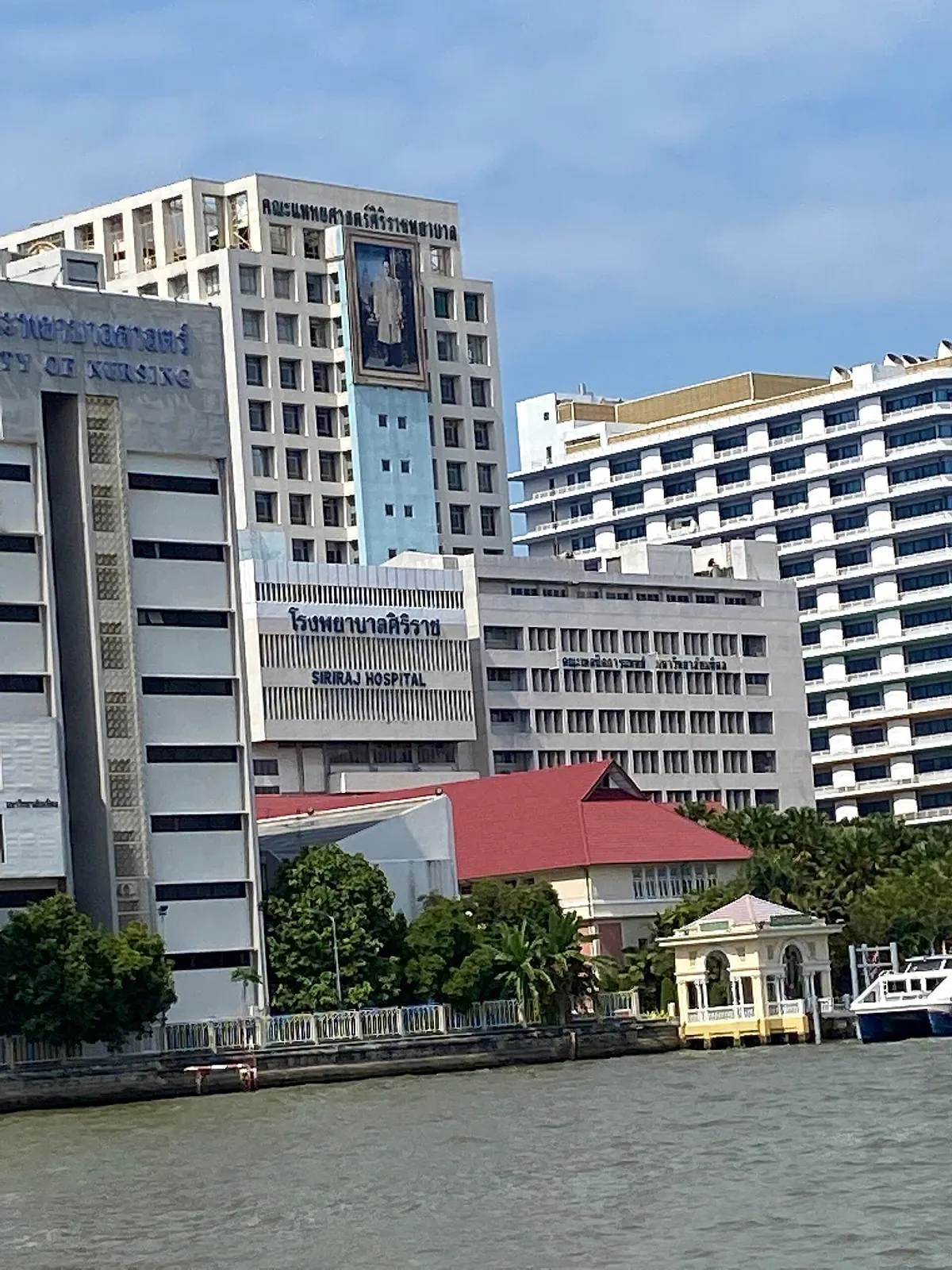
Siriraj Hospital is a very large university hospital on the west bank of the Chao Phraya River, and a foreigner can be treated there as a self-pay patient. The rules that matter for a first visit: new patients cannot book ahead and must walk in, you register with your passport, and a popular government hospital queue can close by 7am or 8am. Costs are lower than at private hospitals, but waits are long and Thai is the working language. This guide covers how a first visit runs, what to ask about price, how to reach the hospital by river, and when its private neighbour is the better choice.
What is Siriraj Hospital?
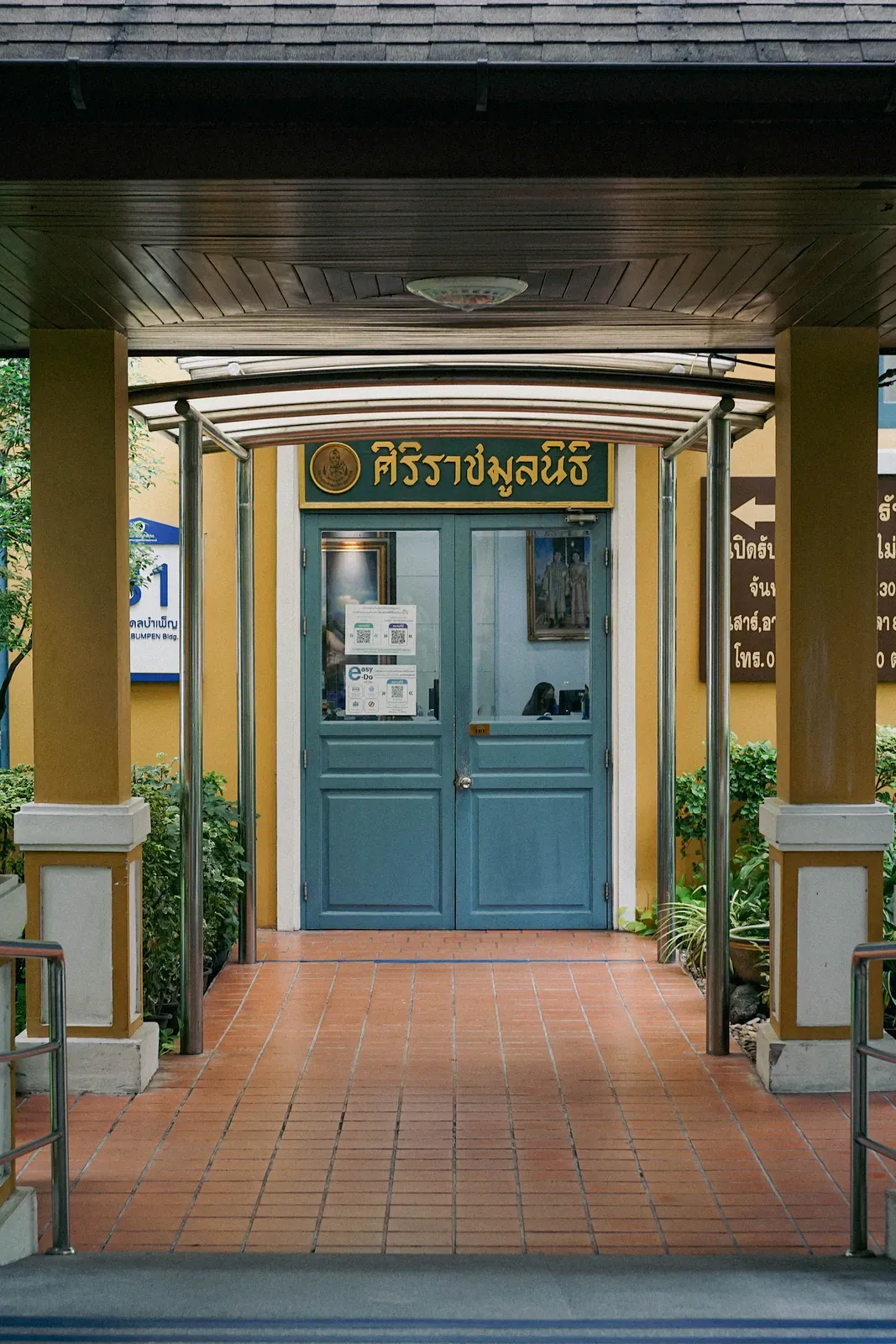
The Faculty of Medicine Siriraj Hospital, Mahidol University, was founded on 26 April 1888 by King Chulalongkorn and named after his son, Prince Siriraj Kakudhabhand. Wikipedia lists about 2,145 beds and more than three million patients a year. Siriraj is a teaching hospital and a referral centre, so it sees complicated cases that other hospitals send upward (see JCI, private and public hospitals compared for how that tier differs).
What is the Siriraj Hospital address?
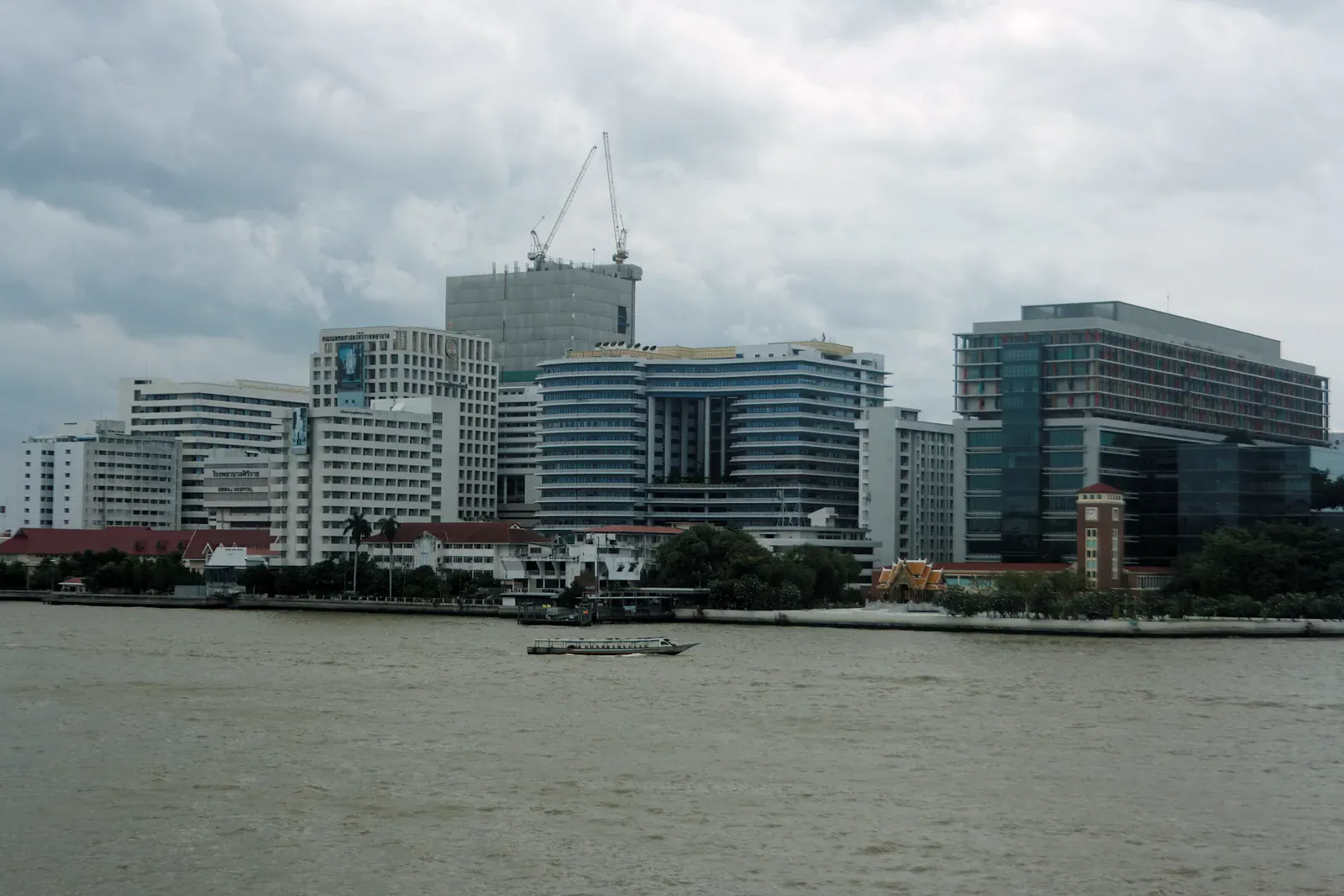
The official address is Faculty of Medicine Siriraj Hospital, Mahidol University, 2 Wanglang Road, Bangkoknoi, Bangkok 10700. The main hospital phone is 02 419 7000, and Siriraj’s own contact page marks it as Thai language only. The hospital sits opposite Thammasat University’s Tha Phra Chan campus.
Do not confuse the main hospital with its neighbour. Siriraj Piyamaharajkarun Hospital (SiPH) is a separate, private-style hospital next door, with its own phone line (+66 2 419 1000). Check which of the two an address or booking refers to.
How does a first visit work for a foreigner?
Siriraj’s contact page states that new patients cannot book appointments and must come as walk-in patients. A Thailand expat health guide describes the usual government hospital routine, and it applies here:
- Arrive early, around 6am, to fill in registration forms and get a queue number.
- Register as a new patient with your passport and receive a hospital number.
- Queue for the department you need and see a doctor.
- Pay the cashier for the visit, since most Thai hospitals expect the bill settled out of pocket after treatment.
The same guide says the queue at popular government hospitals can close at 7am or 8am, and if you miss the number you return the next day. It also warns of several hours of waiting for a brief consultation. Follow-up appointments are normally set by the doctor after your first consultation, not by phone or online.
Individual departments publish their own hours. The orthopaedic outpatient clinic (room 118 on the first floor of the Outpatient Building) lists weekday service from 7:00 to 15:00 and takes both appointment and walk-in patients. Treat that as one example, not a rule for every clinic, and phone the department or ask a Thai-speaking friend to check the clinic you need.
What should I bring?
- Your passport (registration for foreigners uses it).
- Any medical records, test results and a list of your medicines, ideally with generic drug names.
- Cash or a card, plus your insurance details if you plan to claim afterwards.
- A Thai-speaking companion or a translation app, because reception, forms and signs lean heavily toward Thai.
Which department do I go to?
Staff at the outpatient clinics screen each patient and match them with a specialist, according to Siriraj’s own clinic page. Have your complaint written down in one or two plain sentences in English and, if possible, in Thai. If you are unsure where to start, ask at the first information counter you find. A large compound with many buildings is easier with a companion.
How much does Siriraj cost for foreigners?
Costs are lower than at private hospitals. The Thailand expat guide puts a typical government hospital outpatient visit at around THB 300 to 500 (~USD 9 to 15, checked October 2026), with a shared room starting at THB 2,000 (~USD 59) a night. These are general government hospital figures, not a Siriraj price list.
The more important point is that foreigners may not pay the Thai rate. The same guide notes that government hospitals set their own rates for non-Thai patients, and those are not always the low rates Thai patients pay. So before treatment starts:
- Ask the registration desk which price category you are in.
- Ask for an estimate before tests, scans or any procedure.
- Ask whether a deposit applies if you may be admitted.
Siriraj’s international office page lists an “Announcement of Medical Charge Calculation for Foreign Patient of Siriraj Hospital”, dated BE 2561 (2018), in Thai and English. It is a useful document to ask about, but because it dates from 2018, confirm at the desk which rate sheet applies today.
If you are insured, read insurance versus cash for treatment first. A government hospital is almost always pay first and claim later, so ask your insurer beforehand which documents it needs.
Is the language a problem at Siriraj?
Plan for it to be. The main phone line is Thai only, and the general pattern at Thai government hospitals is Thai-language reception, forms and signage, as covered in choosing a hospital in Bangkok. Do not assume the nurse, cashier or pharmacy counter will speak English.
Practical fixes: bring a Thai-speaking companion for registration and consent forms, take photos of your passport and prescriptions, and ask the doctor to write the diagnosis and medicine names on paper before you leave.
How do I get to Siriraj Hospital by boat?
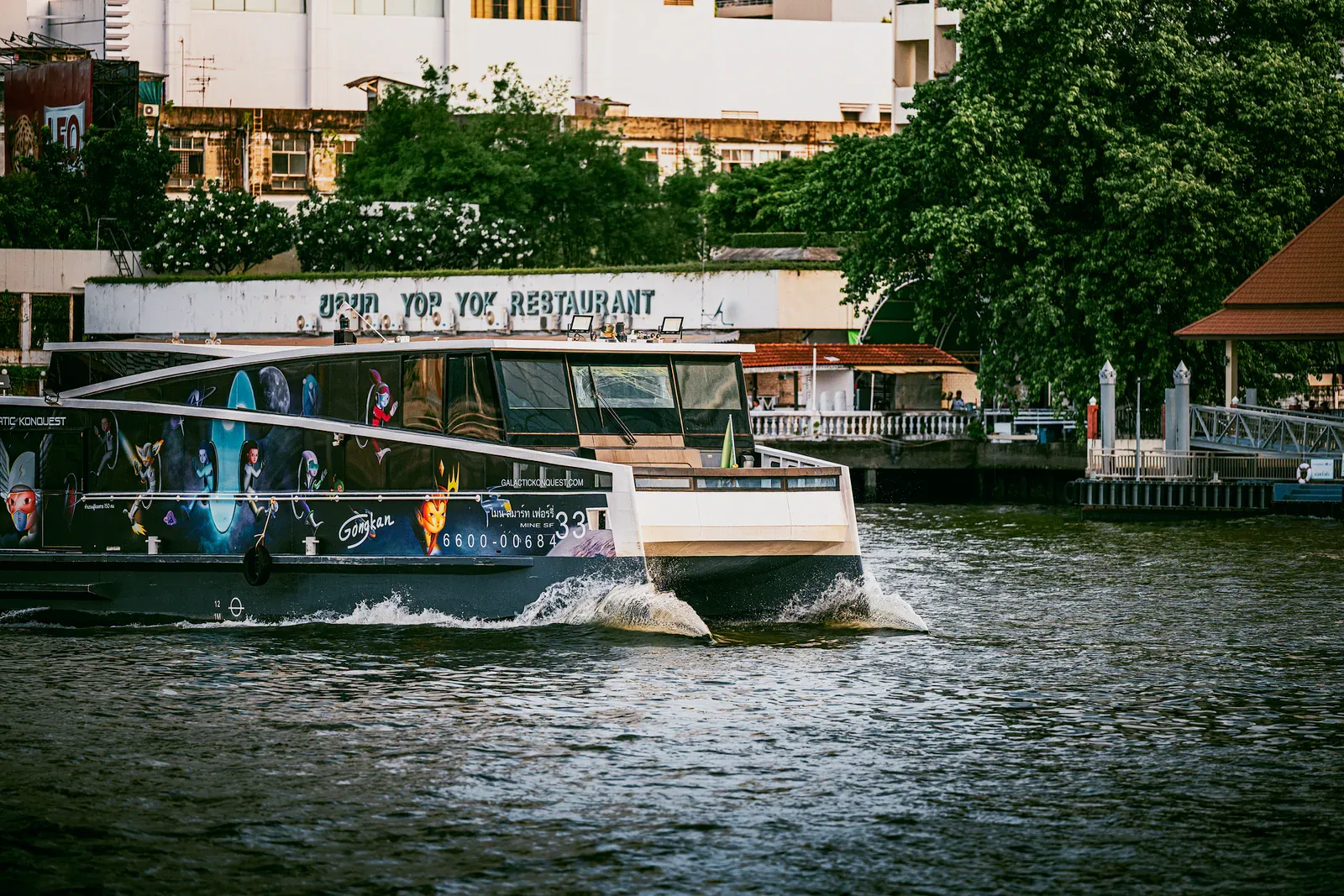
The hospital has its own river access. Siriraj’s own directions give these options:
- Express boat: take a boat flagged red, green, yellow or orange and get off at Prannok pier (N10) for the Siriraj Hospital side. Get off at Thonburi railway station pier (N11) for the Siriraj Piyamaharajkarun side. Check the flag on the boat before boarding, because flag colours and routes change. The wider system is explained in the Chao Phraya piers guide.
- Cross-river ferry: short ferries to Wang Lang run from Tha Prachan (Thammasat), Tha Maharaj and Tha Chang, so you can bus or walk to the old-city side first and hop across.
- BTS plus boat: get off at Saphan Taksin (S6), use exit 2, take the express boat from Sathorn pier and continue to Prannok (N10).
Can I get there by bus, MRT or train?
Yes. Buses in front of the hospital include lines 19, 57, 81, 146, 149, 169, Por.91, Por.177 and Por.157. By MRT Blue Line, leave at Fai Chai (BL03, exit 1), Itsaraphap (BL32, exit 2) or Bang Khun Non (BL04, exit 2), then continue by bus, minitruck, truck taxi or hospital shuttle. Shuttle buses also run from Siriraj to Fai Chai station and to Central Pinklao. A train from Salaya reaches Thonburi Station, near the hospital.
For an early registration, the practical issue is the first boat or bus time, not the route. Ride the route once before the day you need it, or stay the night before close to the hospital.
Where can I stay near Siriraj Hospital?
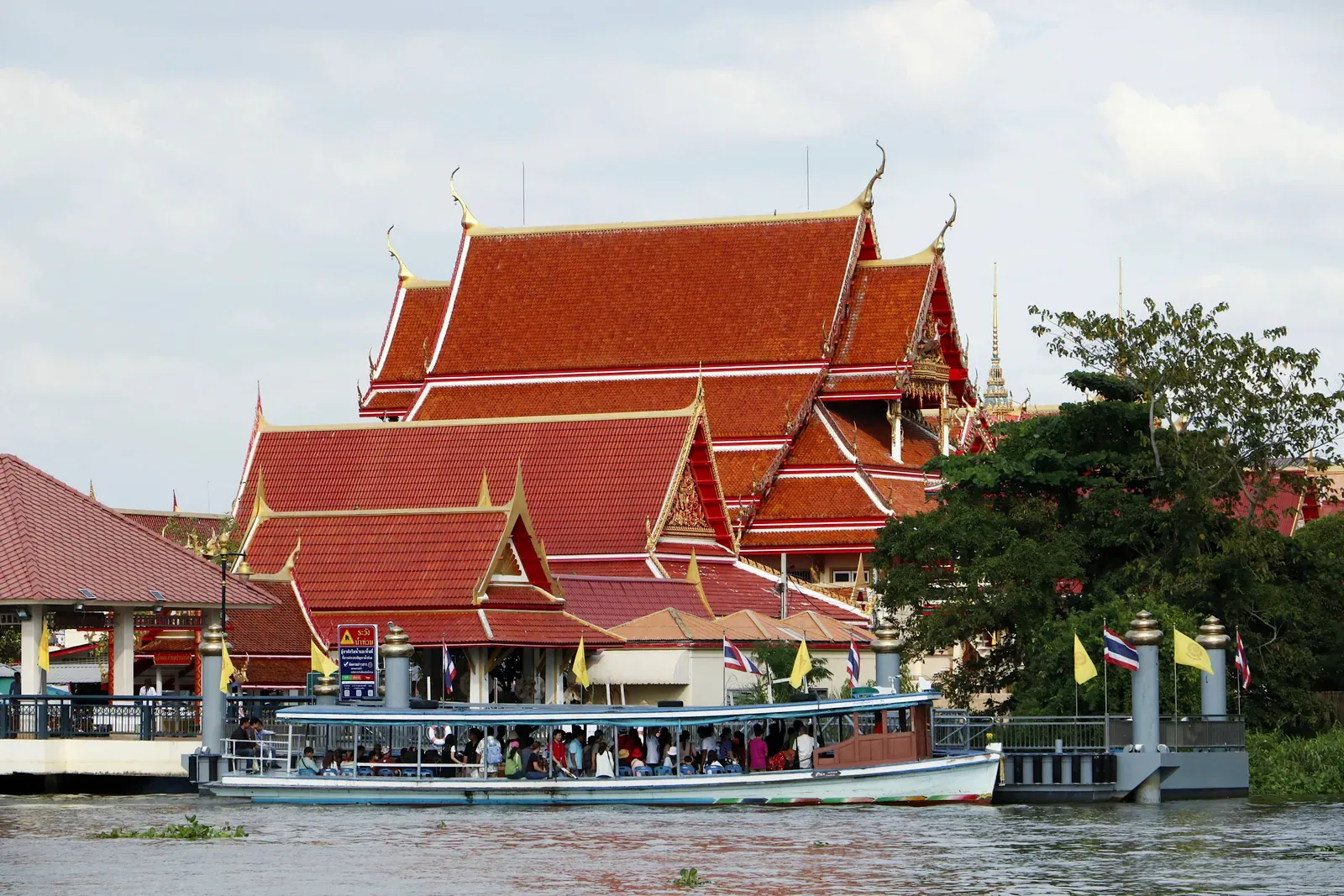
Staying on the Wang Lang Road side of the river puts the hospital within walking distance, and the Thonburi railway station area is close too. Compare current prices and walking times on a map before booking. Staying close lets you reach the hospital before the 6am registration rush without depending on the first boat.
When should I use the private wing instead?
If you cannot spend a morning in a queue, need an English-speaking process, or want a scheduled visit, look at the private hospital next door. Siriraj Piyamaharajkarun Hospital opened on 26 April 2012, has 402 beds and runs 20 special medical centres, according to Wikipedia. It is aimed at higher-income patients, in the manner of private hospitals. The Thailand expat guide describes it as a pricier option with similar medical staff, better service and shorter waits. Our guide to the Siriraj Piyamaharajkarun private hospital covers booking and costs.
For the private hospital, see our Siriraj Piyamaharajkarun guide.
| Siriraj Hospital (public) | Siriraj Piyamaharajkarun (private wing) | |
|---|---|---|
| New patient booking | Walk-in only | Ask the hospital: +66 2 419 1000 |
| First-visit timing | Register around 6am, queue can close 7am to 8am | Ask for a scheduled slot |
| Cost level | Lower; foreigner category may apply | Higher, private-hospital style |
| Language | Mostly Thai | Ask when you call |
| Best for | Complex cases, patience, tight budget | Time-pressed visits, comfort |
For a genuine emergency, go to the nearest hospital or call the emergency number from the emergency guide rather than planning a trip across the city.
Is there anything to see at Siriraj besides treatment?
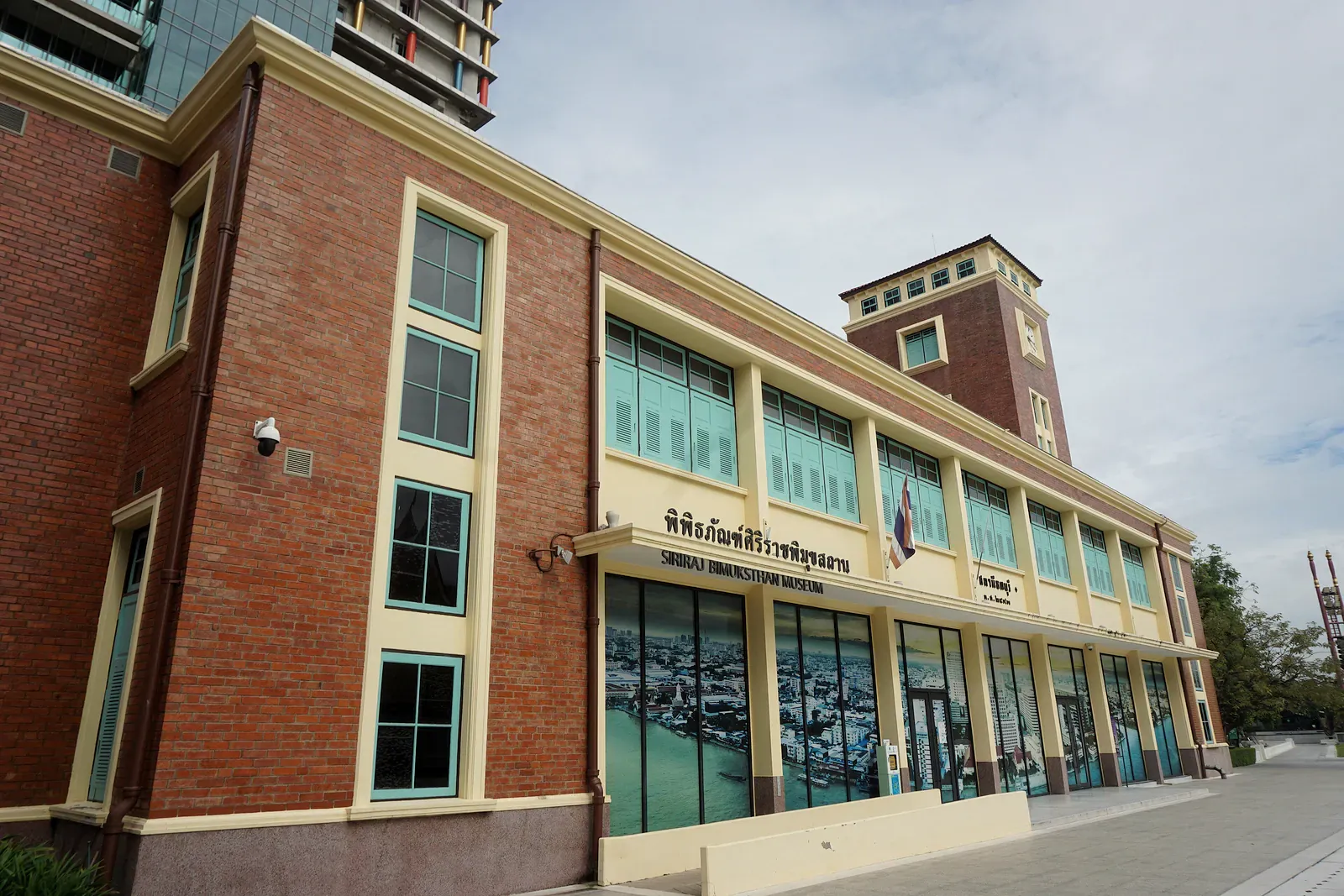
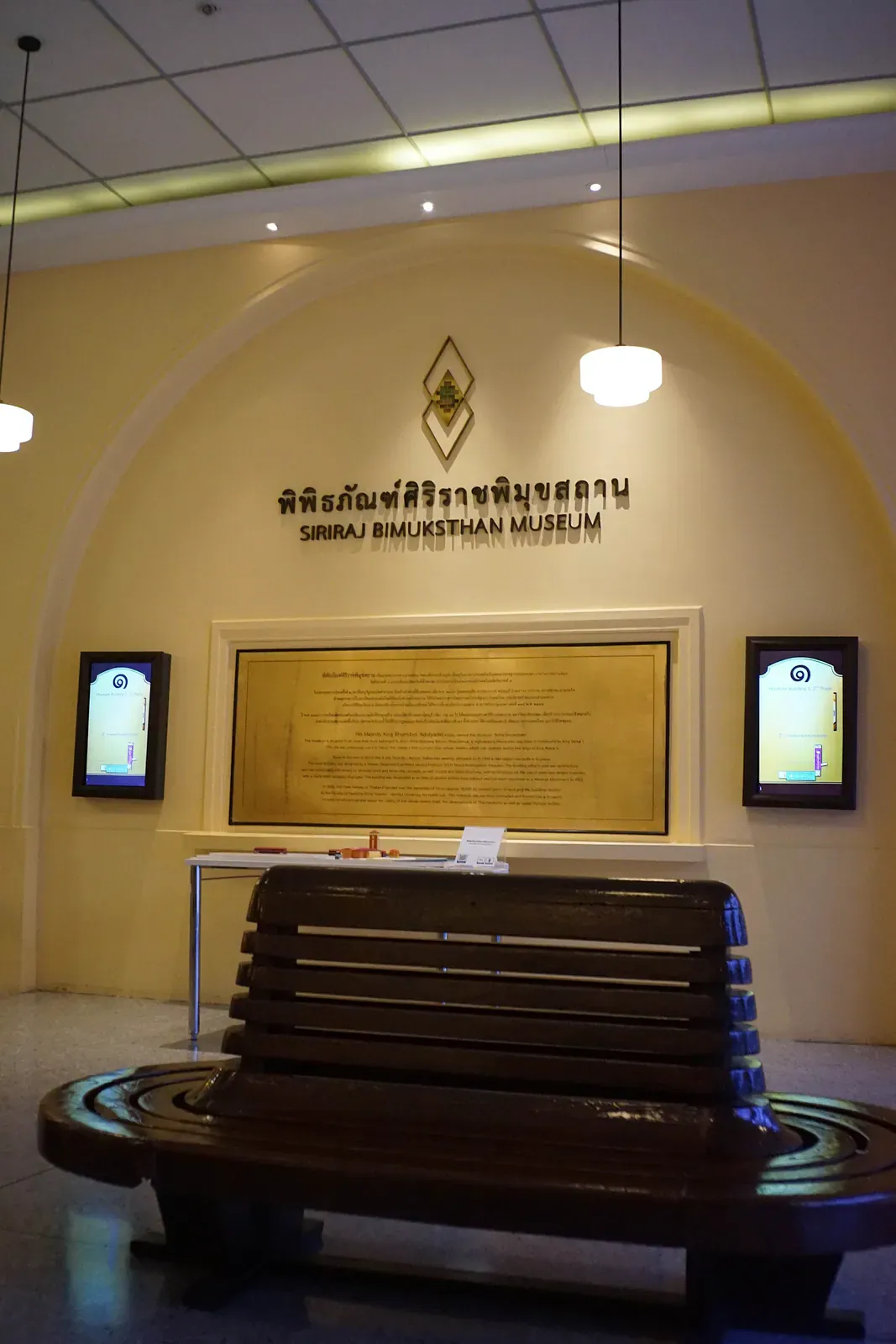
The grounds include a group of seven medical museums, among them the Congdon Anatomical Museum (founded 1927, with more than 2,000 specimens) and the Ellis Pathological Museum. The Siriraj Bimuksthan Museum occupies the renovated old Bangkok Noi railway station. Check the museum’s current hours and fee before going. Our museums worth your time guide covers the content warning for the preserved specimens.
What do the Siriraj name and logo refer to?
Searchers often look for the Siriraj logo or hospital logo. The Siriraj name comes from Prince Siriraj Kakudhabhand. The hospital’s own website is the place to find the official logo for use in documents.
Clinical tools also carry the name. One of them, the Siriraj stroke score, is explained in Siriraj stroke score: what it can and cannot tell you.
Quick checklist before you go
- Decide between the public hospital (walk-in, early, lower cost) and the private wing (scheduled, higher cost).
- Check boat or bus times for 5am to 6am arrival, or sleep nearby.
- Pack your passport, records, medicine list, cash and a Thai-speaking helper.
- At registration, ask your price category and an estimate.
- Ask your insurer which documents it needs for a claim.
Written by
Mike Brochlowski
Founder and editor, travel photographer and designer
I'm Mike Brochlowski, a travel photographer and designer, and I currently live on Koh Samui, Thailand. I built BangkokWiki to put practical, checked information about Bangkok in one place. Every page is researched from official and primary sources, and the text names them. Where a page shows a checked date, that is when its facts were last confirmed. I also run samui69.com, a non-commercial guide to Koh Samui. If you spot an error or something out of date, tell me through the contact page and I will check it and correct the page.
Read all articles
Medical stays
Planning treatment in Bangkok?
See dated price ranges for common procedures, what each package includes and how to choose a hospital or clinic. Prices are indicative only, and nothing here replaces advice from a clinician.

Places to stay
Find a hotel
Explore the other desks
More from Health
- 11 min read
 9 min read
Bangkok Hospital Network: BDMS Branches Compared
 9 min read
Weight Loss Surgery in Bangkok: Eligibility Before the Price

Newsletter
You're subscribed as