Living
Bangkok Rent by BTS and MRT Line: Where Price Actually Drops
A line-by-line breakdown of Bangkok condo rent: why the Sukhumvit and Silom lines cost more, where MRT and the extensions save you money, dated ranges.
On this page
The short answer: the Sukhumvit Line’s core stretch (Asok to Ekkamai) and the Silom Line’s CBD stretch (Sala Daeng to Surasak) are Bangkok’s most expensive rental corridors, both lines get dramatically cheaper once you ride past their central sections, and the MRT’s Blue and Purple Lines run cheaper than either BTS line at almost every point along their routes. None of this is one station’s quirk. It is a pattern that holds line by line, and once you see why, you can shop by line segment instead of hoping one lucky station listing saves you money.
Why price drops the way it does, line by line
Three forces set the price at any given station, and they explain almost every jump and dip on this page.
Interchange access is the first. A station where the Sukhumvit and Silom Lines meet (Siam), or where BTS meets MRT (Asok/Sukhumvit, Mo Chit/Chatuchak Park, Sala Daeng/Silom), lets a resident reach almost the entire rail network without a long walk between systems. That convenience gets priced in, station by station, even though BTS and MRT are two separate paid systems that charge separate fares at a cross-operator transfer, not a single combined trip.
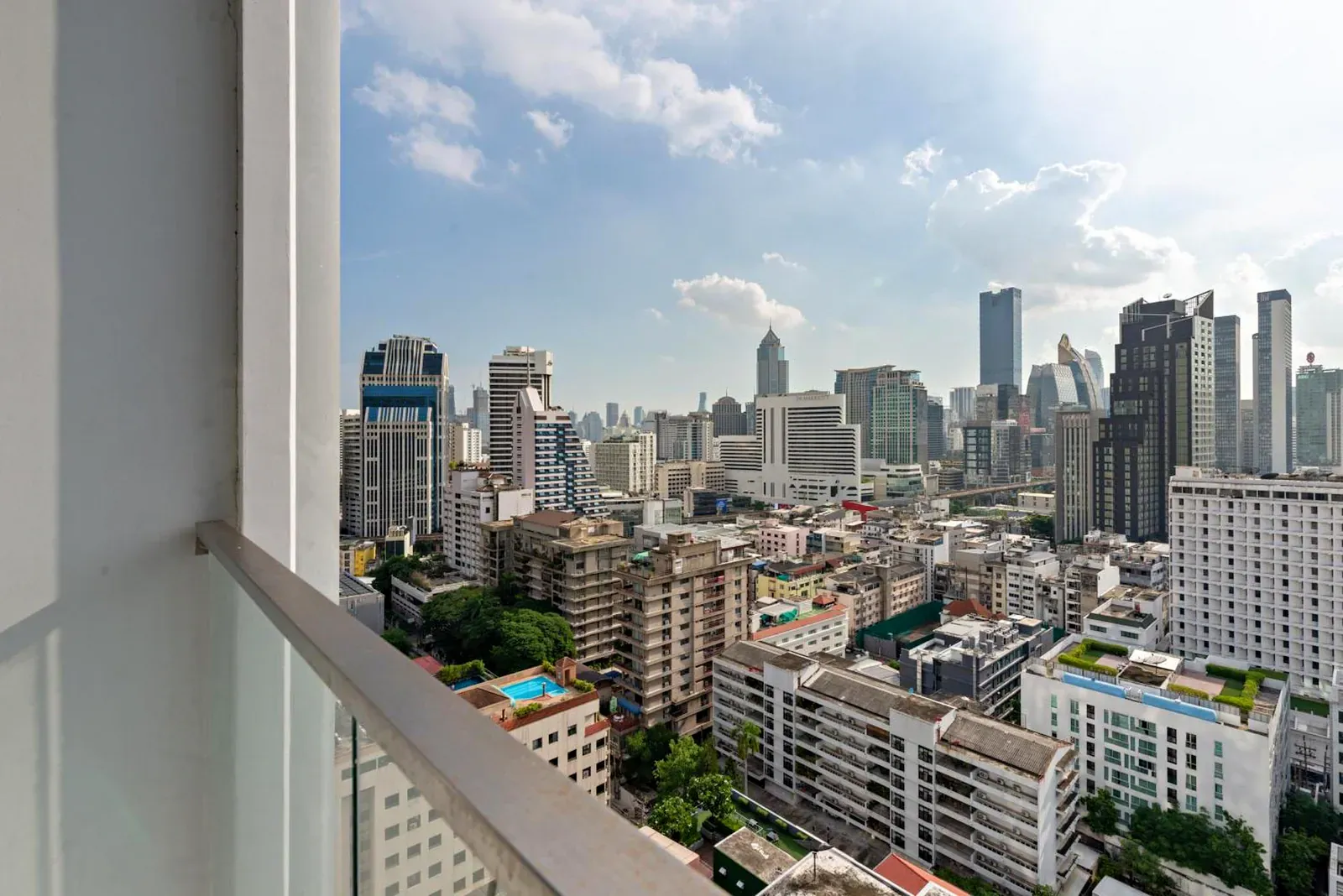
CBD proximity is the second. Sathorn and Silom form Bangkok’s financial district, and any station that drops you inside a short walk of it (Chong Nonsi, Sala Daeng, Surasak) carries a premium independent of anything else about the building.
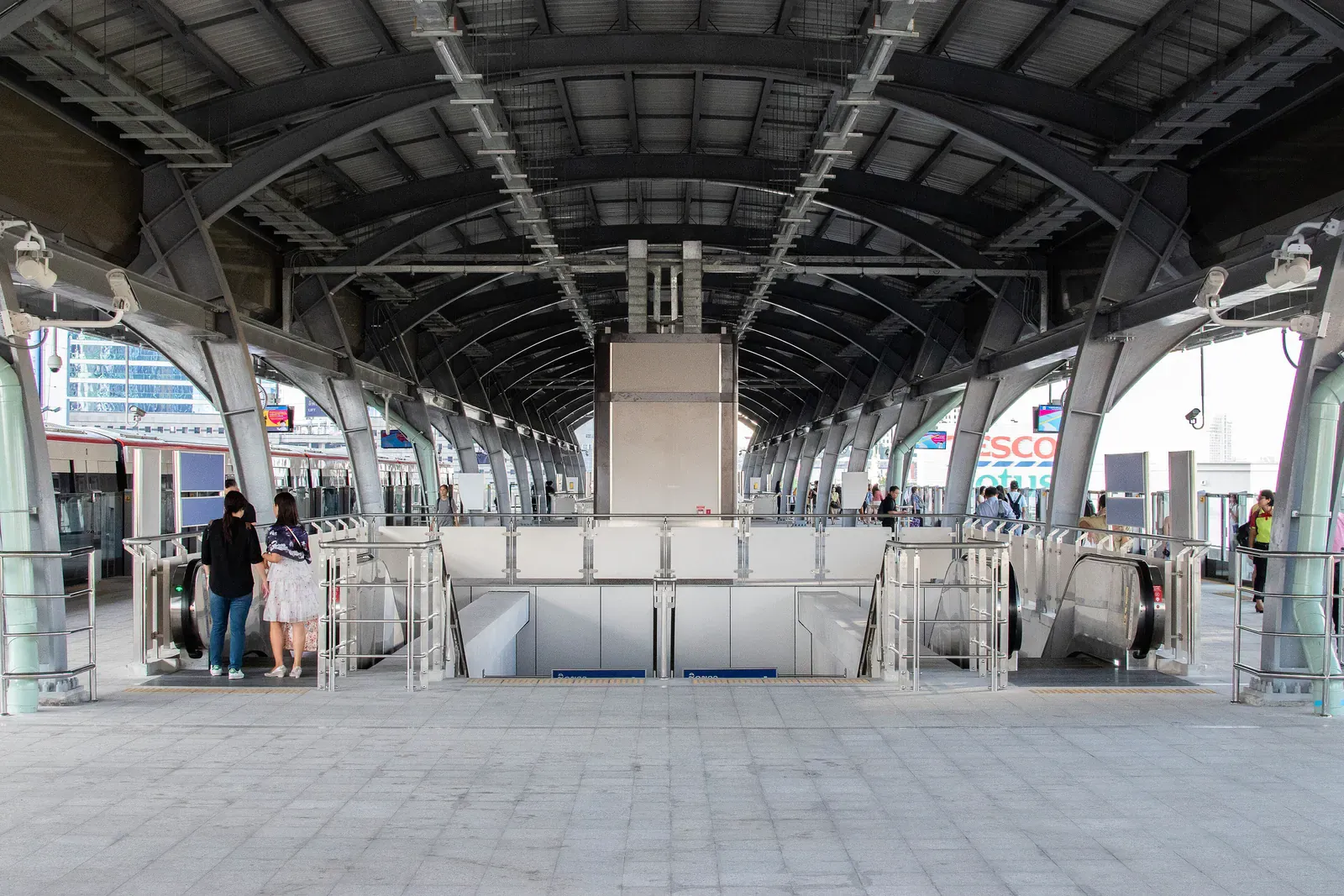
Space per baht on the extensions is the third, and it runs the opposite direction. The newer stretches (the Sukhumvit Line’s push out to Bearing and Samrong, the Silom Line’s push across the river to Bang Wa, both MRT lines reaching into outer districts and Nonthaburi) opened later, on cheaper land, with newer buildings that trade commute time for genuinely larger, newer units at a lower monthly cost.
BTS Sukhumvit Line: the premium core and where it eases
The Sukhumvit Line’s core, running through Asok (BTS E4, MRT interchange), Phrom Phong (BTS E5), Thong Lo (BTS E6) and Ekkamai (BTS E7), is the single most expensive rental corridor on either BTS line. A one-bedroom here commonly runs 22,000-38,000 THB (~655-1,135 USD, checked September 2026), with Phrom Phong and Thong Lo sitting toward the top of that band and Asok closer to the middle.
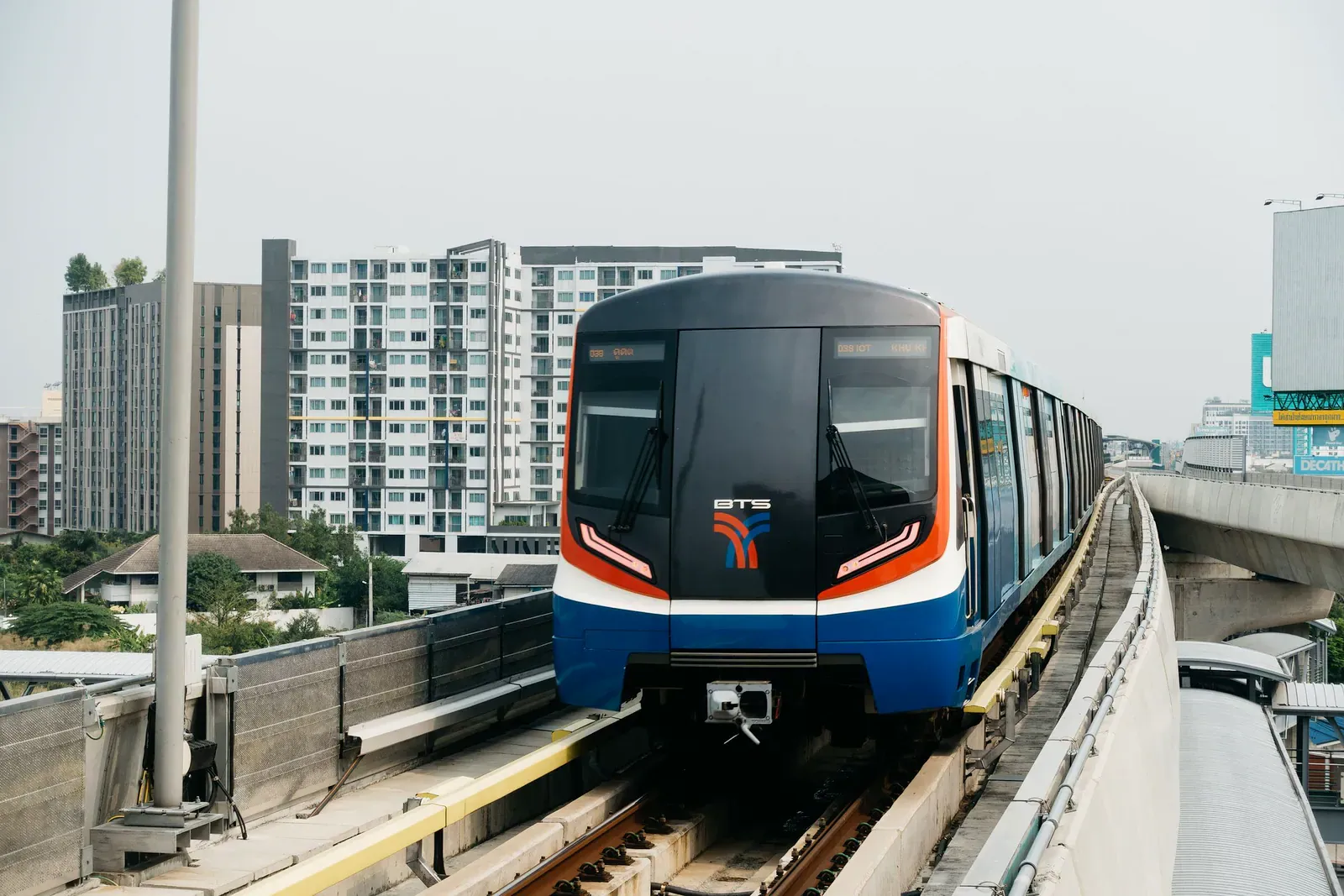
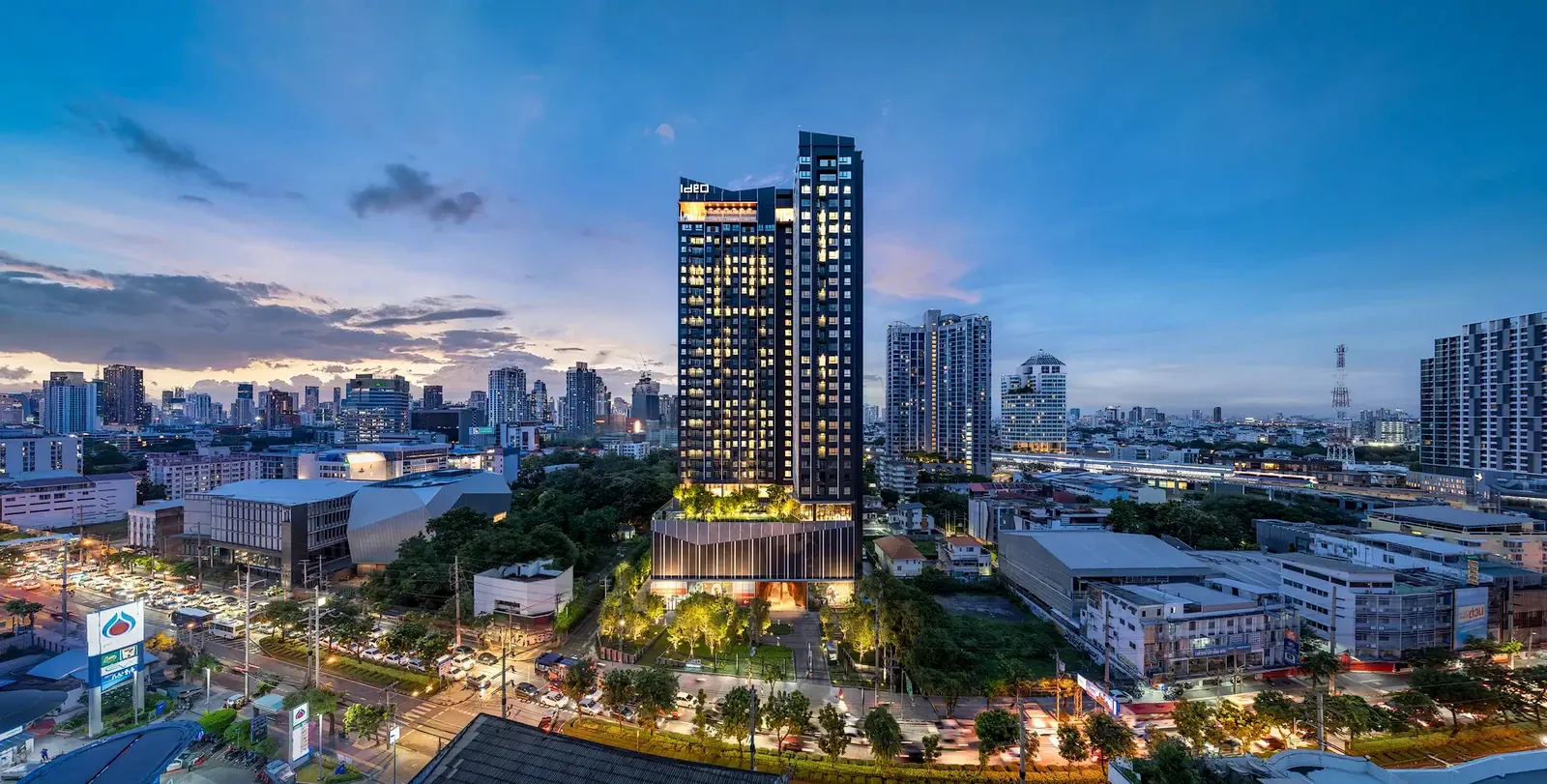
Ride further out and the price genuinely drops, not just tapers. On Nut (BTS E9) commonly runs 16,000-22,000 THB (~480-655 USD). Push out to the Sukhumvit extension proper, Bang Na (E13), Bearing (E14) and Samrong (E15), plus Udom Suk (E12) just before them, and a one-bedroom in a newer building commonly runs 10,000-22,000 THB (~300-655 USD), with brand-new stock in the 14,000-20,000 THB range increasingly common as developers build out that stretch. The trade is a longer ride to the CBD for meaningfully more space and a newer building at the same money.
BTS Silom Line: the CBD stretch and the Thonburi drop-off
The Silom Line’s expensive stretch is short and specific: Sala Daeng (BTS S2, MRT interchange), Chong Nonsi (BTS S3) and Surasak (BTS S5) sit inside or immediately beside the Sathorn-Silom CBD, and a one-bedroom here commonly runs 25,000-35,000 THB (~745-1,045 USD), on par with the Sukhumvit core despite being a shorter, less internationally famous stretch of line.
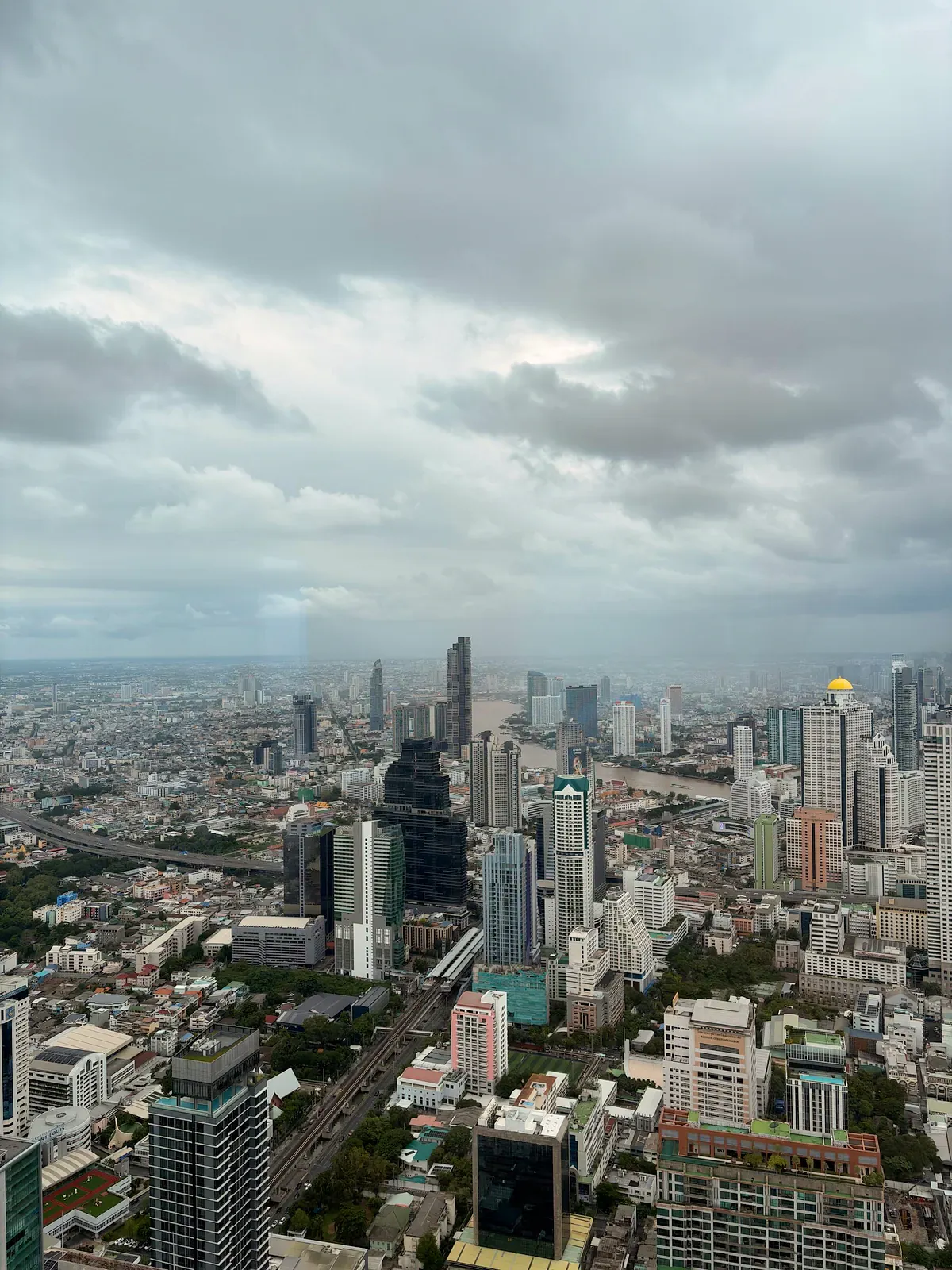
Cross the river and the picture changes fast. Wongwian Yai (BTS S8) through Bang Wa (BTS S12), the line’s Thonburi extension, commonly runs 10,000-28,000 THB (~300-835 USD), a wider spread than the CBD core because the building stock itself spans everything from older, basic blocks near 10,000 THB to newer towers approaching the CBD’s own pricing. This is the widest value range on either BTS line: a careful search here can beat the Sukhumvit extension on space for the money, at the cost of a longer, cross-river commute into the CBD itself.
MRT Blue Line: the mid-ring alternative
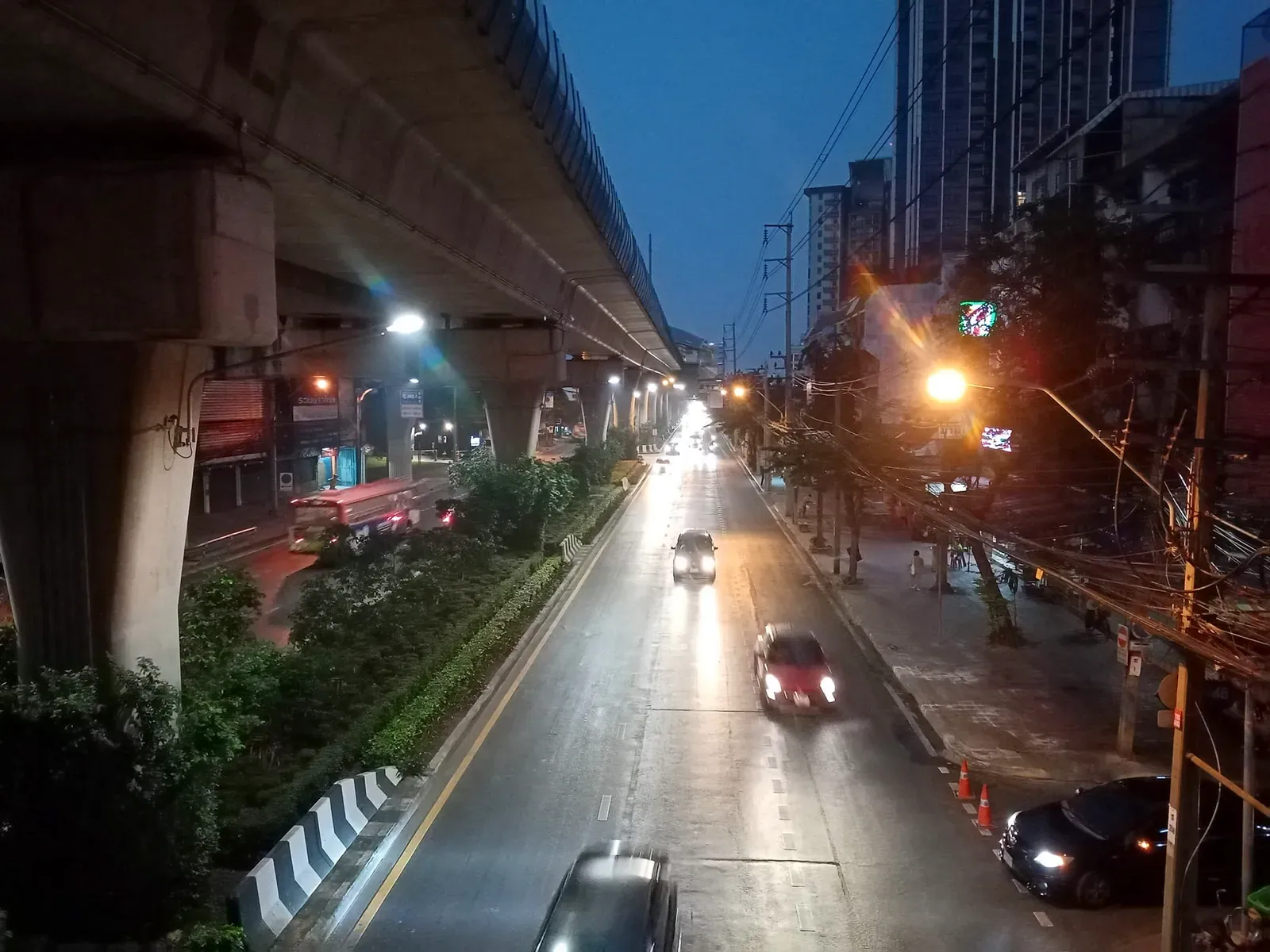
The MRT Blue Line runs a loop through inner-ring districts that never got BTS coverage, and it prices accordingly: consistently below the Sukhumvit and Silom cores, even at stations well inside the city. Lat Phrao (MRT BL15), Huai Khwang (MRT BL18) and Phra Ram 9 / Rama 9 (MRT BL20) commonly run 14,000-26,000 THB (~420-775 USD) for a one-bedroom, with Rama 9 at the higher end given its own growing office and mall cluster.
- Sukhumvit Line core (Asok-Ekkamai)
- 22,000-38,000
- Silom Line CBD (Sala Daeng-Surasak)
- 25,000-35,000
- Silom Line Thonburi ext. (Wongwian Yai-Bang Wa)
- 10,000-28,000
- MRT Blue Line mid-ring (Lat Phrao-Rama 9)
- 14,000-26,000
- Sukhumvit Line ext. (On Nut-Samrong)
- 10,000-22,000
- MRT Purple Line / Nonthaburi
- 8,000-16,000
Source: Editorial compilation from FazWaz, Hipflat, Livinginsider, Thailand-Property, Bangkok-Housing and Superagent listing data, checked September 2026
Being on the Blue Line’s loop means a cross-town trip without going near the Sukhumvit or Silom cores at all, useful for anyone whose work or life doesn’t actually revolve around the CBD.
MRT Purple Line: the outer-suburb budget option
The Purple Line reaches into Nonthaburi province north-west of central Bangkok, past Tao Poon (MRT PP16, the interchange with the Blue Line) toward Nonthaburi Civic Center (MRT PP11) and beyond. This is the budget end of the entire rail network: a one-bedroom commonly runs 8,000-16,000 THB (~240-480 USD), genuinely the cheapest rail-connected rent in this comparison, trading a longer commute and a quieter, more suburban daily life for it.
- Sukhumvit Line core highest rent, shortest commute to CBD
- 2 out of 5
- Silom Line CBD stretch same trade as Sukhumvit core, smaller footprint
- 2 out of 5
- Silom Line Thonburi ext. widest price spread, worth a careful search
- 3.5 out of 5
- MRT Blue Line mid-ring cross-town access, skips both CBD cores
- 3.5 out of 5
- Sukhumvit Line ext. newer stock, real space-per-baht gain
- 4 out of 5
- MRT Purple Line / Nonthaburi cheapest rent, longest commute
- 4.5 out of 5
Editorial rating, 1 to 5, for space and price per baht against commute time to the CBD. Not a ranking of which segment suits every renter.
Crossing between BTS and MRT: what it actually costs you
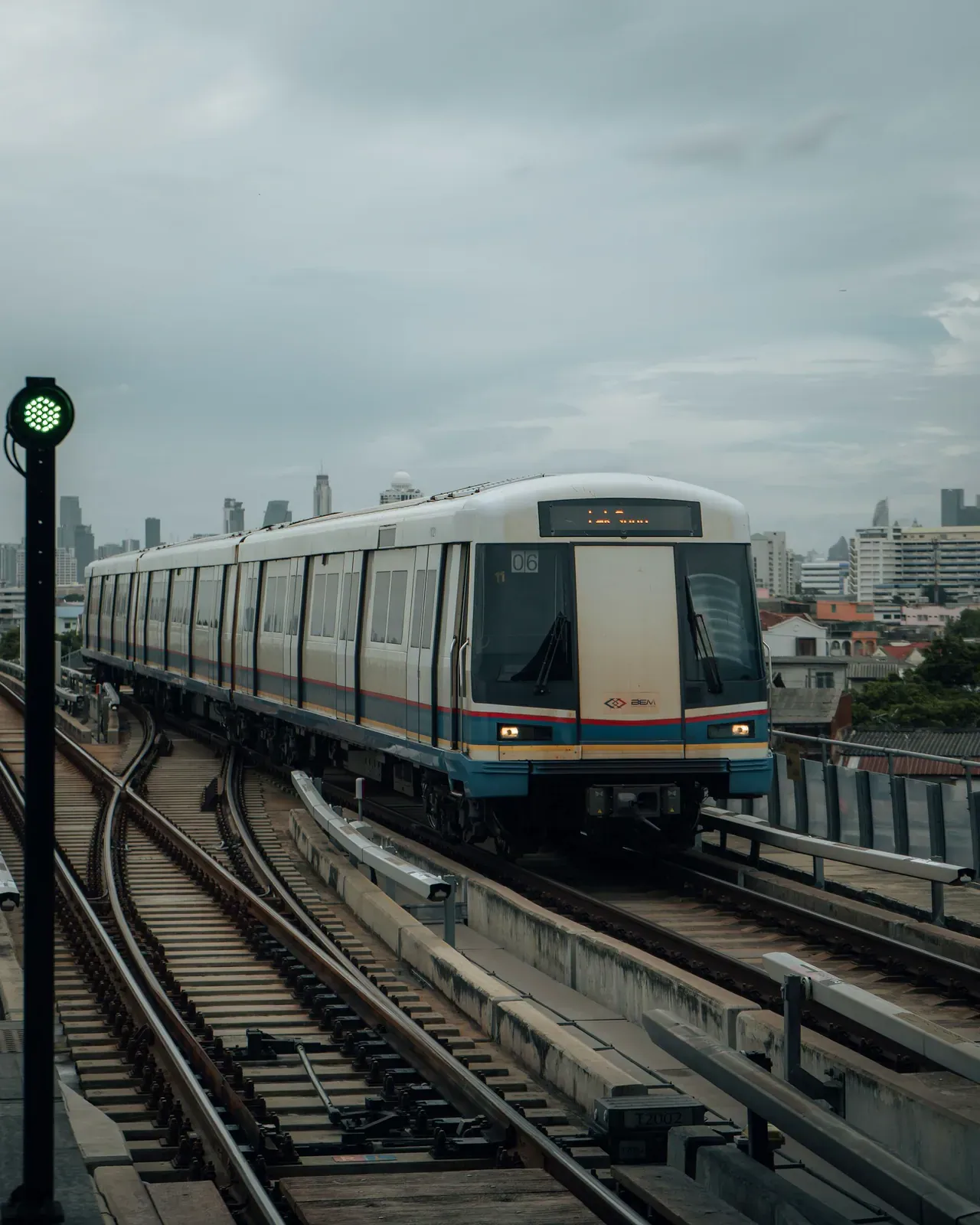
A unit on one system’s line and a job or social life anchored to the other system’s line isn’t fatal, but it isn’t free either. As Bangkok’s BTS and MRT guide covers in full, BTS and MRT are two separate paid networks: a trip that crosses from one to the other means exiting one system’s fare gates, walking the interchange, and paying the second system’s fare on its own distance-based scale. That’s a real daily cost in money and minutes, small per trip but worth factoring in before you sign a lease on a line that doesn’t reach where you actually spend your week.
Rent by line segment, compared
| Line segment | Representative stations | Typical 1-bed range |
|---|---|---|
| Sukhumvit Line core | Asok (E4), Phrom Phong (E5), Thong Lo (E6), Ekkamai (E7) | 22,000-38,000 THB (~655-1,135 USD) |
| Sukhumvit Line extension | On Nut (E9), Udom Suk (E12), Bearing (E14), Samrong (E15) | 10,000-22,000 THB (~300-655 USD) |
| Silom Line CBD stretch | Sala Daeng (S2), Chong Nonsi (S3), Surasak (S5) | 25,000-35,000 THB (~745-1,045 USD) |
| Silom Line Thonburi extension | Wongwian Yai (S8), Bang Wa (S12) | 10,000-28,000 THB (~300-835 USD) |
| MRT Blue Line mid-ring | Lat Phrao (BL15), Huai Khwang (BL18), Rama 9 (BL20) | 14,000-26,000 THB (~420-775 USD) |
| MRT Purple Line / Nonthaburi | Tao Poon (PP16), Nonthaburi Civic Center (PP11) | 8,000-16,000 THB (~240-480 USD) |
The station is the symptom. The line, and where you sit on it, is the actual cause.
If you’re priced out of your first-choice line
- Identify which force is pricing you out: interchange access, CBD proximity, or simply being on a hot stretch of an otherwise ordinary line.
- Move along the same line, not to a different one, if you can. The Sukhumvit extension and the Silom Line’s Thonburi stretch both offer a genuine space-per-baht upgrade over their own line’s core, without giving up rail access entirely.
- Check the MRT if your work doesn’t need the Sukhumvit or Silom core. The Blue Line’s mid-ring stations consistently undercut both BTS cores while still reaching a huge share of the city.
- Price the actual commute, not just the fare. A cheaper unit on an outer stretch that adds 25 minutes each way is a real cost against the money saved; weigh it against your specific week, not an abstract “cheaper is better.”
- Compare a walk-time premium separately from a line premium. Renting near a BTS station covers the walk-distance effect within any single station’s catchment, which stacks on top of everything in this article.
Does building age change this picture?
Partly. An older, lower building on an expensive stretch of the Sukhumvit or Silom core can still undercut a brand-new tower one stop further out, simply because land and construction costs differ by era as much as by location. Old apartment versus new condo in Bangkok covers that trade-off directly: more floor space per baht in an older building against the amenities and finish of a new one, a decision that interacts with everything on this page rather than replacing it.
Common questions
Which line has the cheapest rent overall?
The MRT Purple Line, reaching into Nonthaburi, is consistently the cheapest rail-connected option in this comparison, commonly 8,000-16,000 THB for a one-bedroom. The trade is a longer commute into central Bangkok and a more suburban daily environment.
Is the Silom Line always more expensive than Sukhumvit?
Only on its CBD stretch. Sala Daeng through Surasak prices comparably to the Sukhumvit core, but the Silom Line’s Thonburi extension (Wongwian Yai to Bang Wa) drops to some of the widest, most affordable ranges on either BTS line, well below the Sukhumvit extension’s floor in places.
Does an interchange station always cost more?
Usually, but not automatically. An interchange adds real convenience that tends to get priced in, but a station’s position on the CBD-proximity and space-per-baht spectrum still matters more overall. Asok, an interchange station, costs less than non-interchange Thong Lo or Phrom Phong a few stops away, because it sits slightly further from the deepest part of the Sukhumvit core’s demand.
Should I pick a line based on rent alone?
No. Rent is one input. Match the line to where you actually need to be most days: an office in Sathorn, a school run, a specific social circle. A cheaper unit on the wrong line can cost more in commute time and Grab fares than it saves in rent, month over month.
Are these figures likely to change?
Yes, gradually. Bangkok’s rental market has carried meaningful oversupply through 2025-26, which has kept rents softer than they might otherwise be, particularly on the outer stretches of each line. Treat every figure here as a September 2026 snapshot, and check current listings for the specific stations you’re considering.
Last verified: September 2026.
Written by
Mike Brochlowski
Founder and editor, travel photographer and designer
I'm Mike Brochlowski, a travel photographer and designer, and I currently live on Koh Samui, Thailand. I built BangkokWiki to put practical, checked information about Bangkok in one place. Every page is researched from official and primary sources, and the text names them. Where a page shows a checked date, that is when its facts were last confirmed. I also run samui69.com, a non-commercial guide to Koh Samui. If you spot an error or something out of date, tell me through the contact page and I will check it and correct the page.
Read all articles
Visas and paperwork
Staying in Thailand longer?
Visas, extensions, documents and banking for longer stays. Rules and fees change often and offices apply them differently, so check the official source before you act.

Places to stay
Find a hotel
Explore the other desks
More from Living
- 6 min read
 9 min read
Renting Near an International School in Bangkok
 6 min read
Furnished vs Unfurnished in Bangkok: The Breakeven Math

Newsletter
You're subscribed as