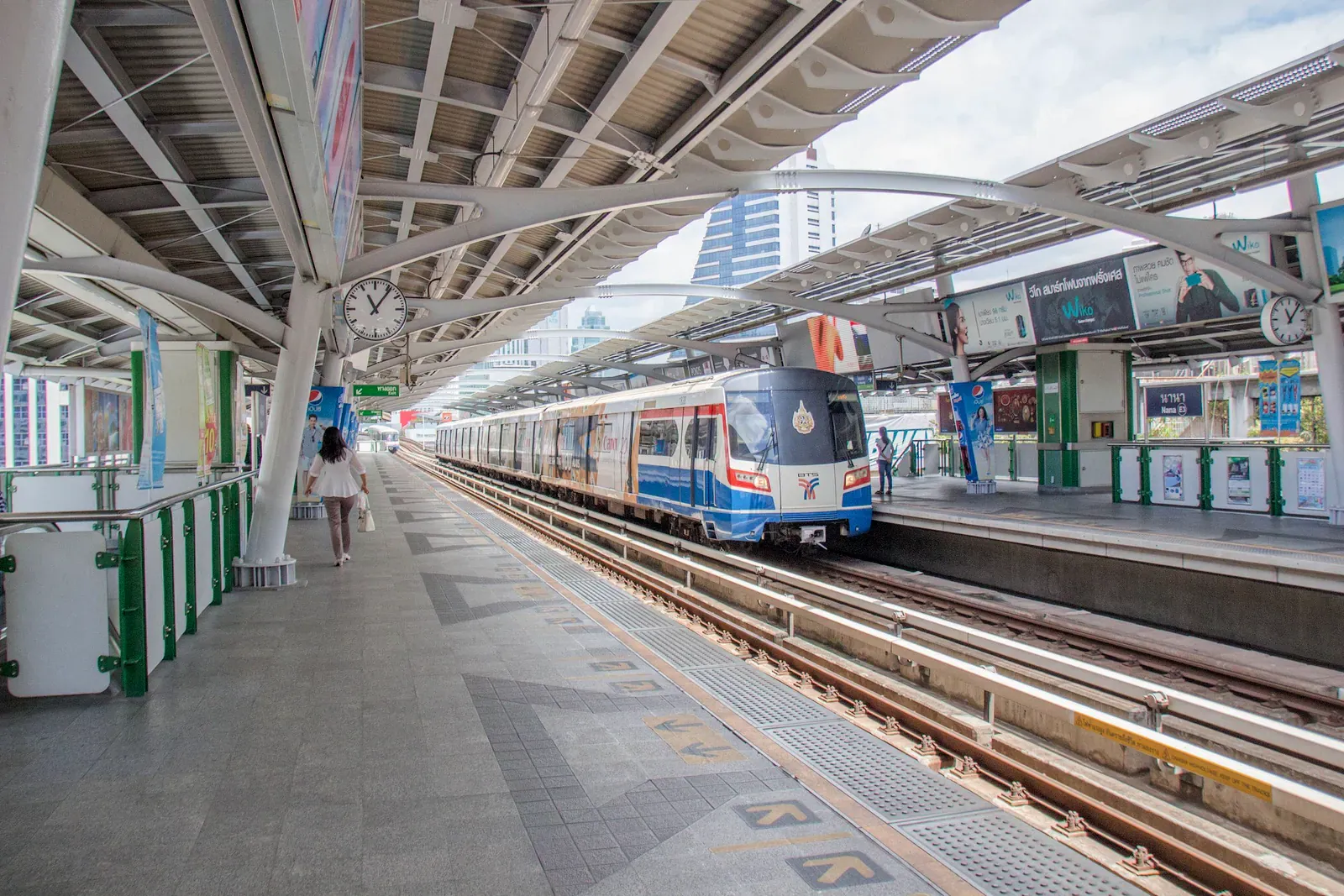
Living
Renting Near a BTS Station in Bangkok: What It Costs
What a 5-minute walk to a BTS station actually costs in Bangkok rent, by line and station, with a real premium by walking distance, dated.
On this page
The walk to your BTS station is worth real money in Bangkok rent, and the jump happens faster than most listings admit. A one-bedroom within 500 metres of a station commonly runs THB 25,000-45,000 (~715-1,290 USD, checked September 2026); the same size unit an 800-metre walk away commonly drops to THB 18,000-28,000 (~515-800 USD). That is not a gentle slope, it is a step, and knowing where the step sits lets you pick a walk-time budget before you fall for a listing you can’t actually afford.
How much does 500m actually cost versus 800m?
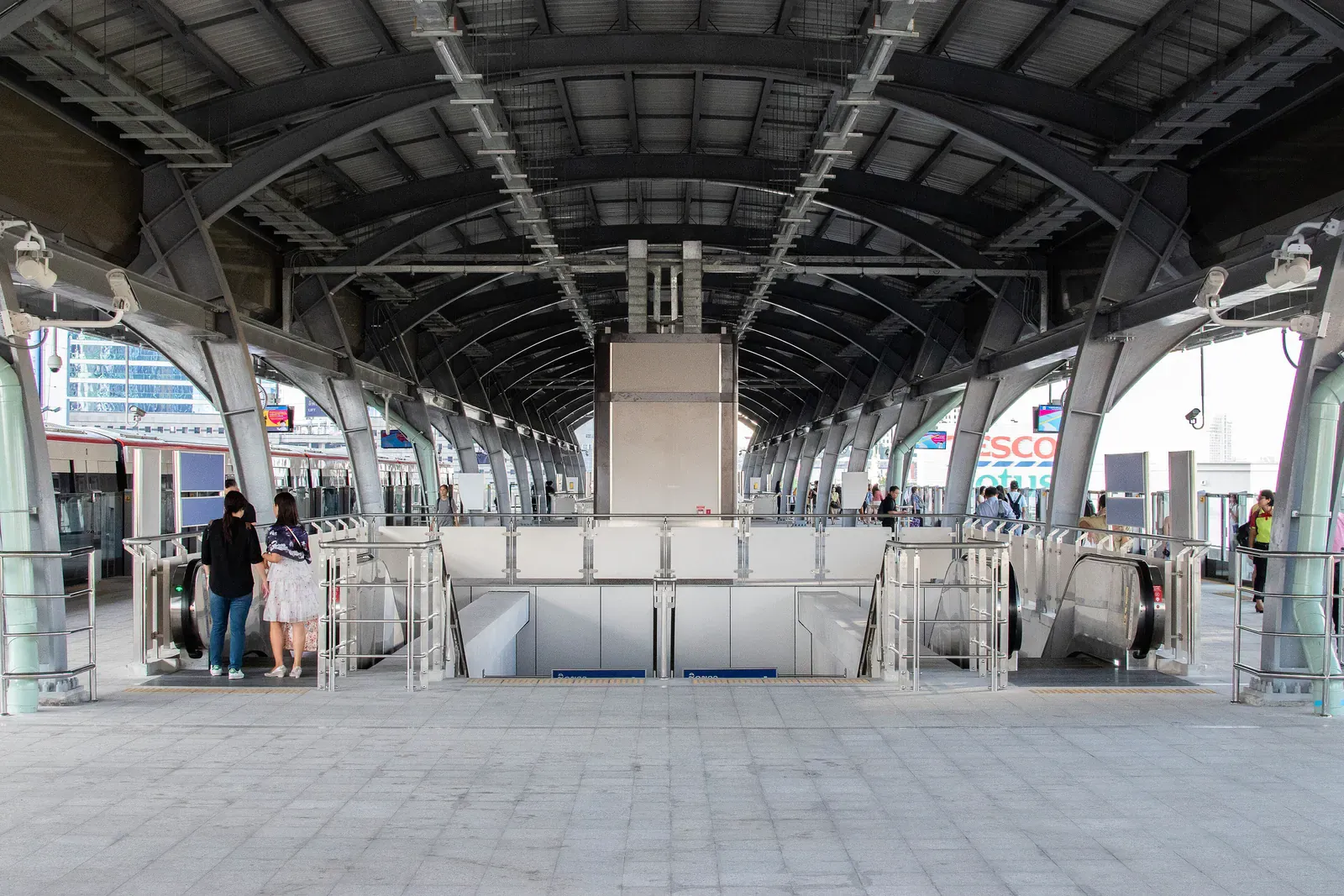
Listing-site averages across FazWaz, Hipflat and Livinginsider point to the same pattern from different angles: a “station condo,” directly attached to or across the skywalk from a station entrance, typically rents for 15-25% more than a comparable unit a genuine 10-minute walk away. The premium is steepest in the first few hundred metres and flattens out past roughly 800m, where the extra distance stops mattering much for price and starts mattering more for convenience.
- Under 5 min (station-adjacent)
- 25,000-45,000
- 5-10 min (500m band)
- 22,000-32,000
- 10-15 min (800m band)
- 18,000-28,000
Source: Editorial estimate from FazWaz, Hipflat and Livinginsider listing averages, checked September 2026
Is a “station condo” worth the premium?
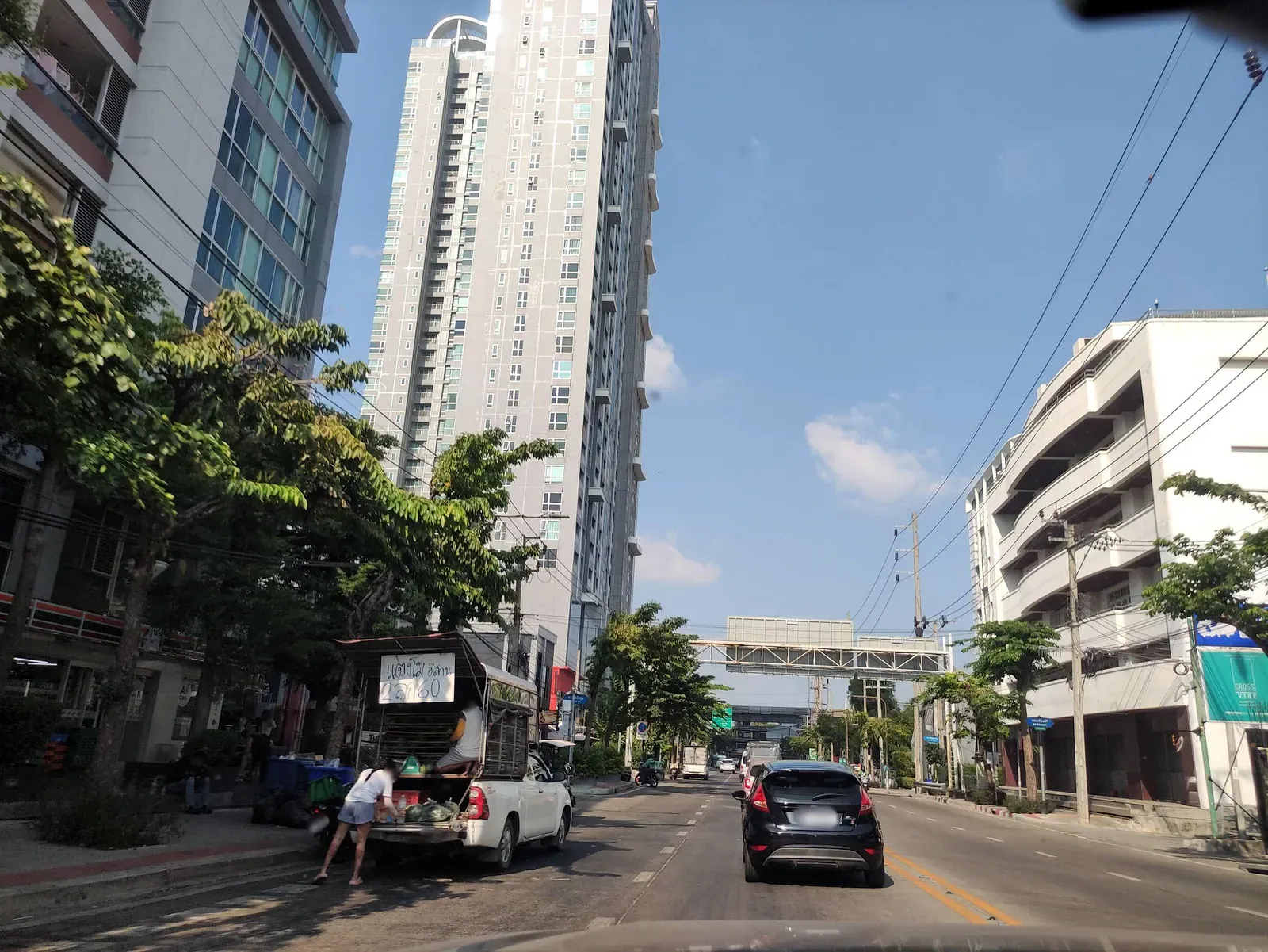
It depends what you’re actually buying with that extra rent. A unit attached to the skywalk saves real minutes twice a day, every day, for as long as you live there, which adds up for anyone commuting five or six days a week. It also usually means more street noise, brighter signage at night, and a busier lobby. If your daily routine barely touches the station, the premium buys you very little; if you’re timing a commute to the minute or hauling groceries home in the rain, it can be the best money in your budget. Test your own case with a walk, not a guess: checking a condo before you sign covers what to verify about noise and window seals on a unit that close to a main road.
Cheaper stations, same walk band, different price
The walk-time premium holds inside any single station’s catchment, but the base price varies a lot by station, mostly on how established or central the surrounding area already is. These are indicative 2026 ranges for a one-bedroom within a comfortable walk of the platform, not quotes for any specific unit:
| Station | Line and code | Typical 1-bed range |
|---|---|---|
| On Nut | BTS E9, Sukhumvit Line | ~THB 16,000-22,000 (~460-630 USD) |
| Phra Khanong | BTS E8, Sukhumvit Line | ~THB 16,000-24,000 (~460-685 USD) |
| Ari | BTS N5, Sukhumvit Line | ~THB 20,000-28,000 (~570-800 USD) |
| Ekkamai | BTS E7, Sukhumvit Line | ~THB 22,000-30,000 (~630-860 USD) |
| Asok | BTS E4, Sukhumvit Line (MRT interchange) | ~THB 22,000-28,000 (~630-800 USD) |
| Chong Nonsi | BTS S3, Silom Line | ~THB 25,000-35,000 (~715-1,000 USD) |
Ratchathewi (BTS N1) and Wongwian Yai (BTS S8) sit at the budget end of their own lines, cheaper than the table’s named stations but with a smaller pool of newer buildings, worth a look if the walk-time budget matters more to you than the newest tower on the block.
Does the premium differ between lines?
Not structurally. The same 500m-versus-800m step shows up on both the Sukhumvit Line and the Silom Line, but the Silom Line’s core stretch through Sathorn and Silom sits inside Bangkok’s central business district, so its base prices run higher across every walk band, station-adjacent or not. A 10-minute walk from Chong Nonsi still costs more than a 10-minute walk from On Nut. Line matters for the starting price; walk time is what moves you up or down from there. For the full line-by-line breakdown, see Bangkok rent by BTS and MRT line.
How to actually time the walk, not trust the map
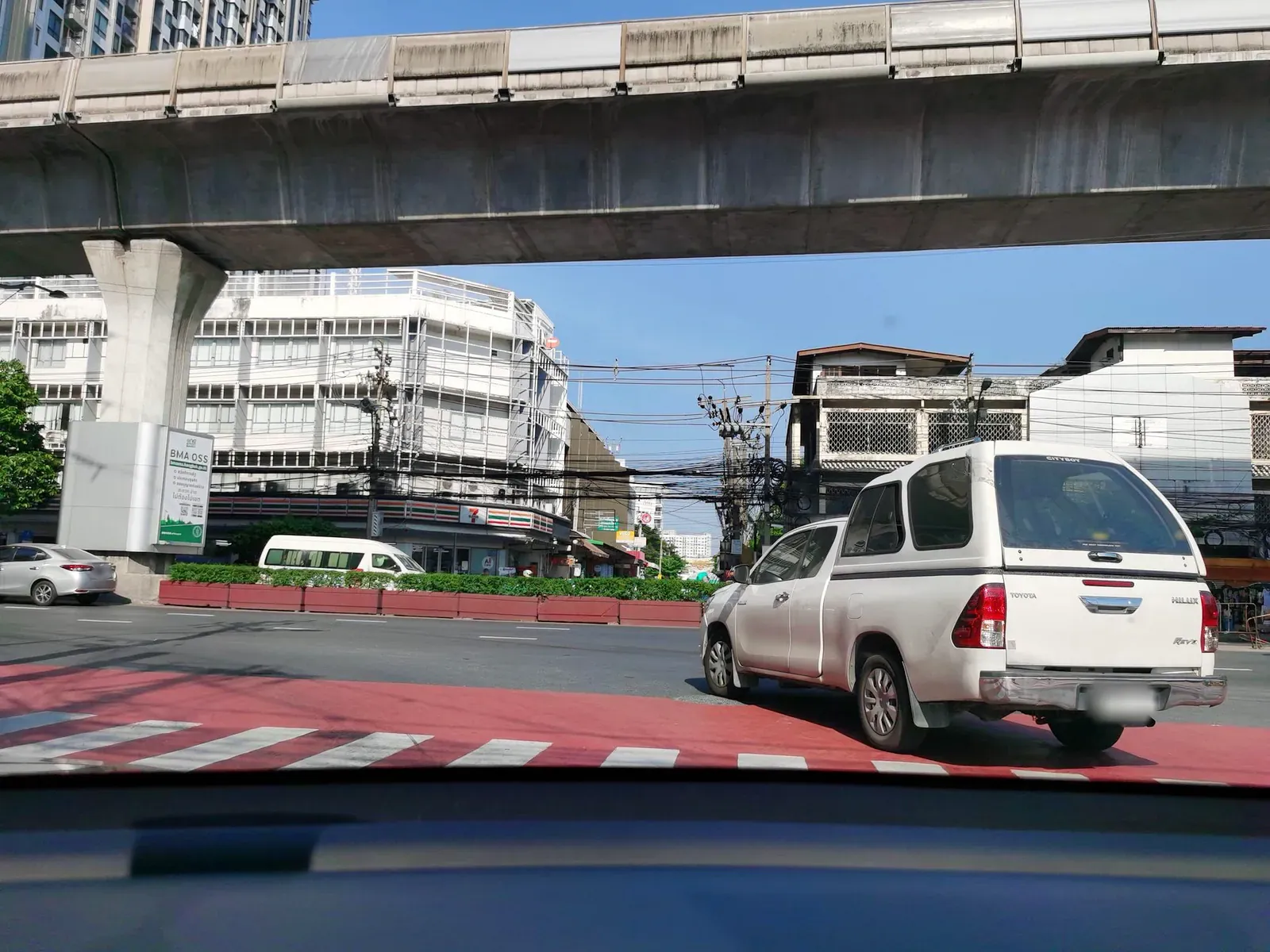
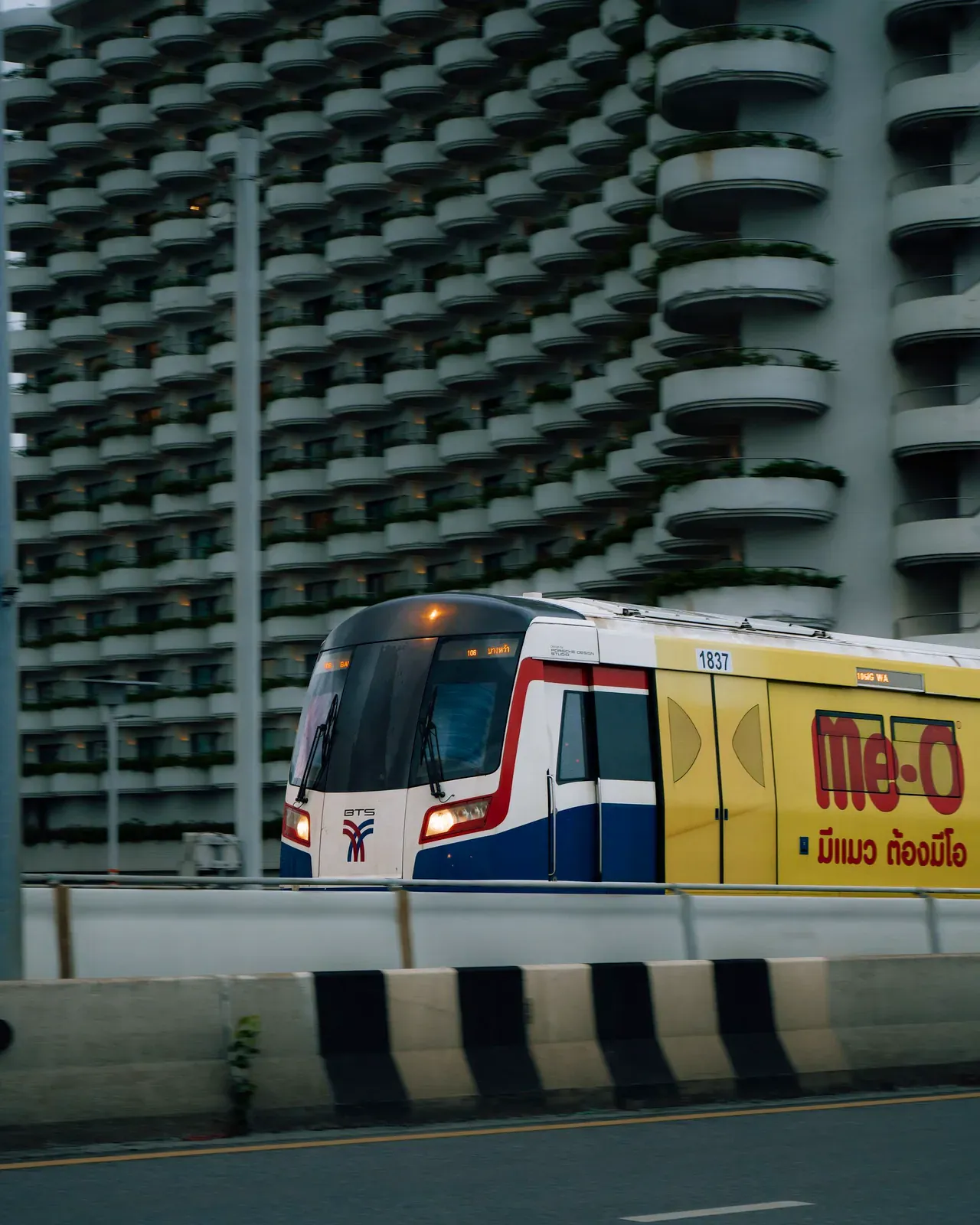
A map’s straight-line distance and a real Bangkok walk are different things: sois don’t run in grids, overpasses add stairs, and a shaded 400m walk in the evening feels nothing like the same walk at 2pm in April. Before you commit to a “5 minutes from BTS” claim:
- Walk the actual route yourself, at the time of day you’d normally commute, not a straight line on a map app.
- Time it both ways; a walk that’s flat and shaded one direction can involve a footbridge and full sun the other.
- Check for a covered path (skywalk, arcade, shophouse overhang) versus open pavement in the rain.
- Count the road crossings; a station 400m away with two signal-free crossings can be slower than one 600m away with a clear footbridge.
- Ask the agent for the exact soi and walk it before viewing, not after signing.
What else changes with distance besides rent
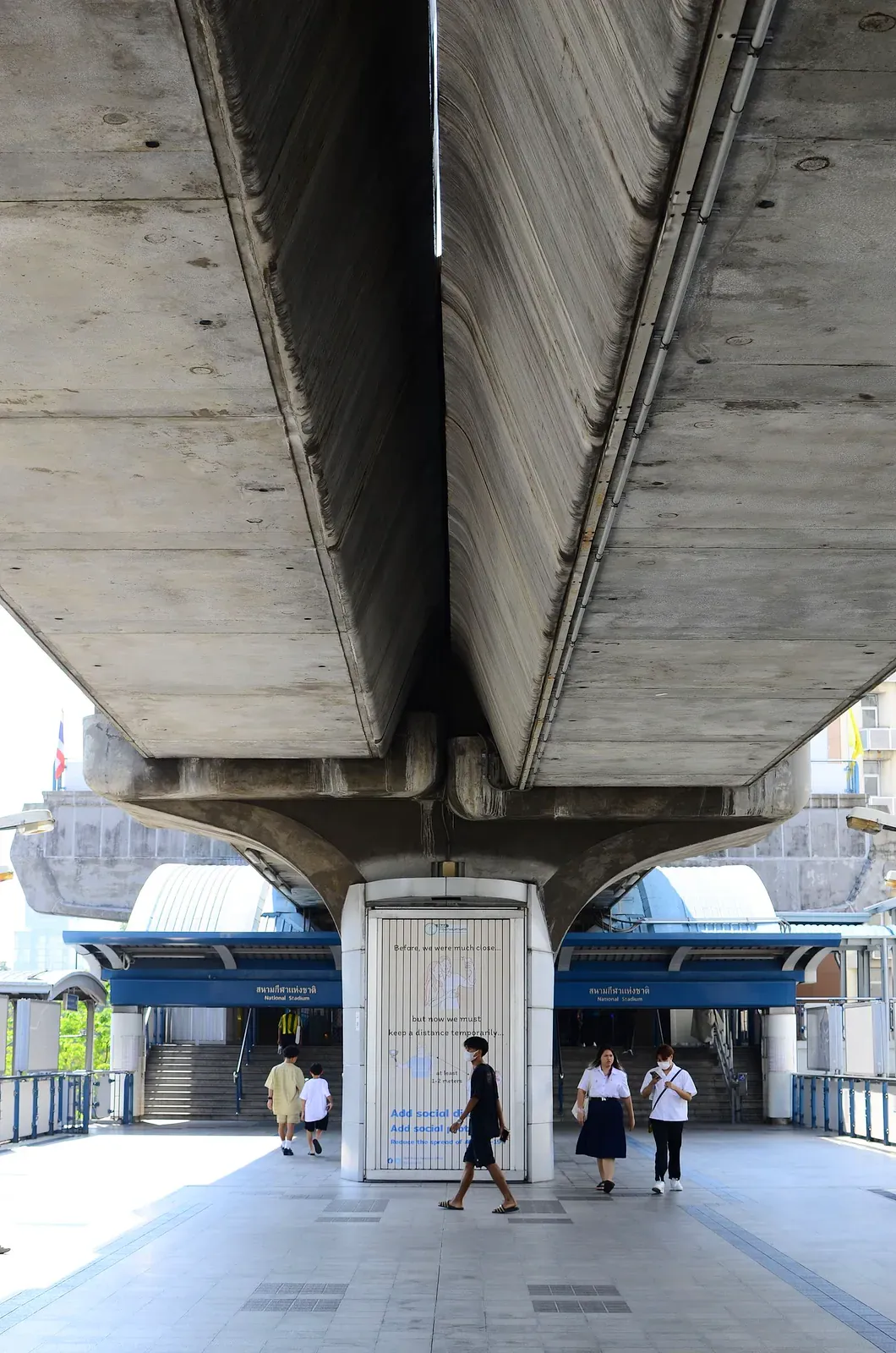
Closer to the station usually means more traffic noise and brighter street lighting at night; a few hundred extra metres often buys a quieter, more residential soi even within the same catchment. It can also shift flood exposure: some of the quieter interior sois sit lower than the main road the station fronts, so the noise trade-off doesn’t automatically buy better drainage. Floor level interacts with both: a higher unit in a station-adjacent tower can be both loud from the street below and immune to soi-level flooding, while a ground-floor unit further out trades noise for flood risk. None of this shows up in a listing photo, which is exactly why a proper viewing checklist matters more the closer or further you push your search.
Pay more to be close, or bank the savings?
There’s no universal right answer, only a right answer for your own routine. Someone commuting daily into the Sathorn or Silom core on a fixed schedule generally gets real value from the premium: minutes saved twice a day, five days a week, compound into hours over a year, and a delayed train or a sudden downpour hurts less when the walk on either end is short. Someone working remotely most days, or commuting off-peak with more flexible timing, often does better banking the difference and accepting a 10 to 15-minute walk, especially if that walk is along a covered, well-lit route rather than open pavement beside a main road. Run the math on your own week before you assume “closer is always better”: multiply your actual commute days by the minutes saved each way, and compare that total to what the premium actually costs over a full year’s lease, not just the monthly difference on paper.
For the wider search process once you’ve picked a walk-time budget, see renting a condo in Bangkok. If you’re weighing an older, cheaper building against a newer tower at the same distance, old apartment versus new condo in Bangkok covers that trade-off directly, and monthly and short-term rentals is worth reading first if you’re not ready to commit to a year lease near a specific line yet.
Last verified: September 2026.
Written by
Mike Brochlowski
Founder and editor, travel photographer and designer
I'm Mike Brochlowski, a travel photographer and designer, and I currently live on Koh Samui, Thailand. I built BangkokWiki to put practical, checked information about Bangkok in one place. Every page is researched from official and primary sources, and the text names them. Where a page shows a checked date, that is when its facts were last confirmed. I also run samui69.com, a non-commercial guide to Koh Samui. If you spot an error or something out of date, tell me through the contact page and I will check it and correct the page.
Read all articles
Visas and paperwork
Staying in Thailand longer?
Visas, extensions, documents and banking for longer stays. Rules and fees change often and offices apply them differently, so check the official source before you act.

Places to stay
Find a hotel
Explore the other desks
More from Living
- 9 min read
 6 min read
Furnished vs Unfurnished in Bangkok: The Breakeven Math
 7 min read
Studio vs 1-Bed vs 2-Bed in Bangkok: Which Saves More

Newsletter
You're subscribed as