Living
LGBTQ+ Bangkok: An Honest Guide to Living and Visiting Here
What it's actually like as an LGBTQ+ visitor or resident in Bangkok: safety, dating, neighbourhoods, work, healthcare, and where the limits still are.
On this page
Bangkok is, by a wide margin, the most LGBTQ+-visible city in mainland Southeast Asia, and Thailand is broadly considered one of the region’s most socially relaxed countries on this subject. Same-sex marriage has been legal nationwide since January 2025. None of that means the picture is simple: social ease is not the same as full legal protection, and what holds in central Bangkok does not automatically hold everywhere else in the country. This guide covers both halves honestly.
Everything below is written for LGBTQ+ readers making practical decisions (where to stay, how to date safely, whether to be out at work, how to find people beyond a night out) rather than as an anthropological account of Thailand’s “tolerance” for outsiders to admire. Some of it will read as reassuring. Some of it is a deliberate correction to assumptions that trip visitors up.
The honest picture: acceptance without full legal equality
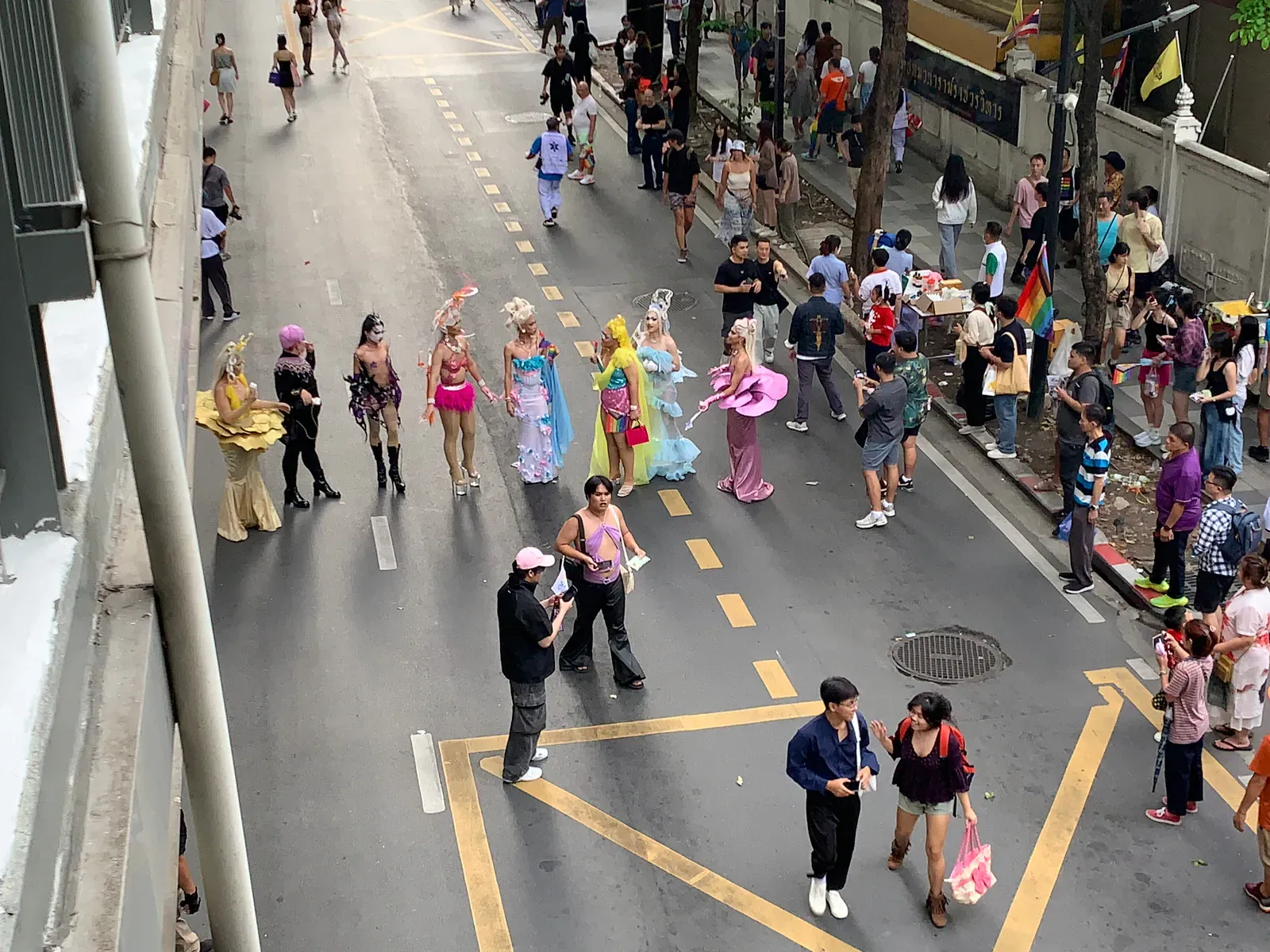
Thailand’s social climate around sexual orientation and gender identity is unusually relaxed by regional standards. Public life includes visible LGBTQ+ media personalities, a long-established entertainment and beauty-pageant presence for trans women, and a general cultural instinct toward not making a scene about other people’s private lives. Bangkok in particular has decades of visible gay and trans social life woven into ordinary neighbourhoods, not confined to a single quarter.
The Marriage Equality Act, which took effect on 23 January 2025, made Thailand the first country in Southeast Asia to register same-sex marriages on equal legal footing with any other marriage: a genuinely structural change, not a symbolic one. The mechanics, what it does and doesn’t cover, and what it means for a foreign partner are covered in full in the same-sex marriage explainer; this guide sticks to the everyday picture.
Set against that, three things are worth saying plainly. First, legal gender recognition for trans people remains unresolved: Thailand has no process letting a trans person change the gender marker on their national ID or passport based on self-identification or even after gender-affirming surgery, and a bill to create one has been debated in parliament without yet passing. Second, social acceptance is not evenly distributed: a tolerant, cosmopolitan Bangkok office is not the same as a conservative family home in a rural province, and plenty of Thai LGBTQ+ people navigate real pressure from family and community that a foreign visitor simply doesn’t see. Third, visible acceptance in the capital’s more international districts is not the whole country, and travelling outward changes the picture, sometimes sharply.
None of this makes Bangkok a difficult place to be LGBTQ+. It makes it a place where the gap between “very accepting” and “fully equal under the law” is real, specific, and worth understanding rather than assuming away.
Everyday safety and public behaviour
Public displays of affection are treated with more reserve in Thailand than in much of the West, and that reserve applies to everyone, different-sex couples included, not specifically to same-sex couples. Holding hands is common and unremarkable among friends of any gender and among couples of any orientation in most urban settings; more overt affection (extended kissing, obvious intimacy) draws attention regardless of who’s doing it, largely because Thai social norms favour general public modesty rather than because of who the couple is.
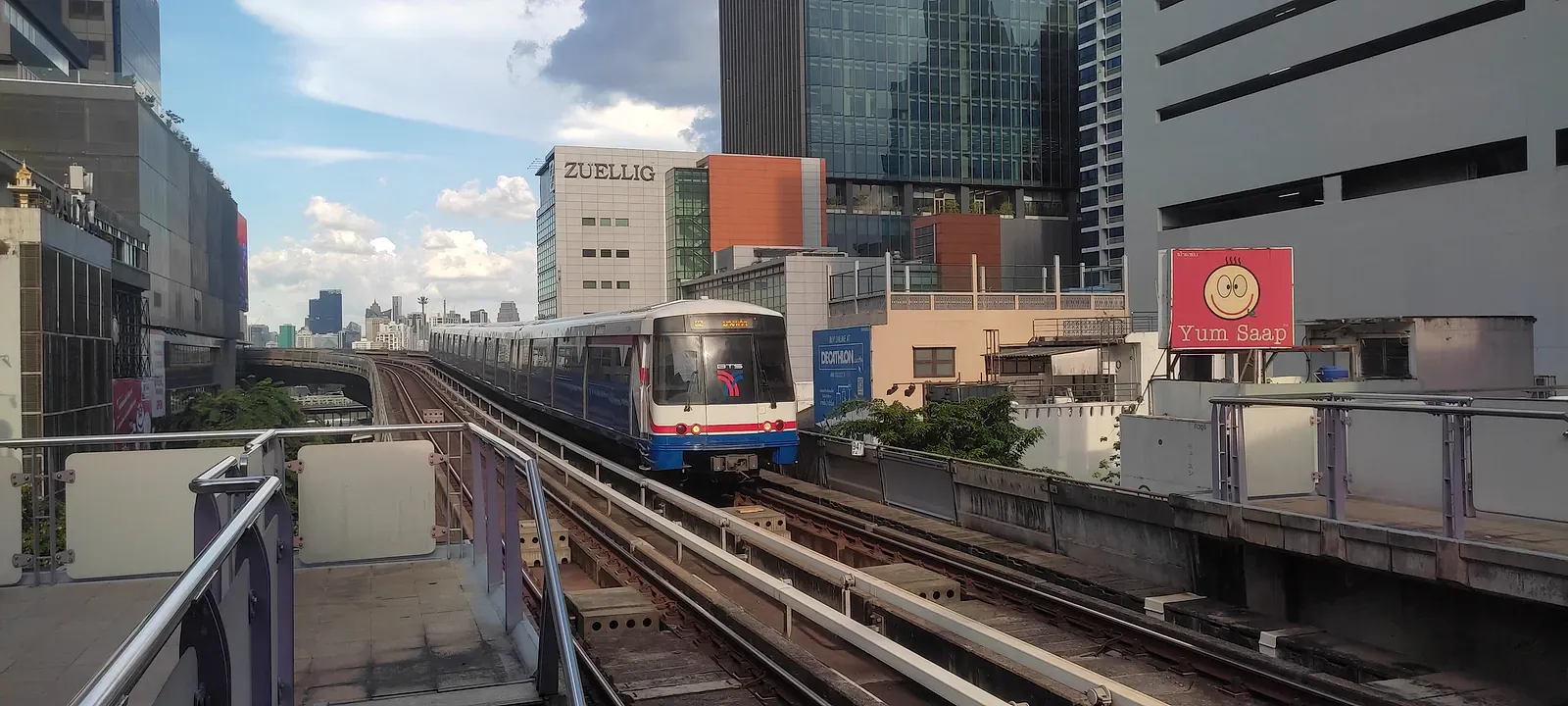
In practice this means a same-sex couple holding hands on the BTS or walking through a shopping mall rarely attracts comment in Bangkok, particularly in central, cosmopolitan districts. It also means neither a same-sex nor different-sex couple should expect a hotel poolside make-out session to go unnoticed anywhere in the country. Reading the room (a temple, a rural town, a family restaurant versus a bar district) matters more than reading a rulebook, because there isn’t one specific to sexual orientation; general social norms apply across the board.
Verbal harassment or open hostility toward LGBTQ+ people is genuinely uncommon in everyday Bangkok life compared with many other capital cities, and violent hate-motivated incidents are rare, though not unheard of, and rarely reported in detail even when they happen. The more common friction points are subtler (a landlord’s hesitation, an older relative’s silence, an assumption at a government counter) rather than confrontation on the street.
Hotels: is a shared room ever an issue
Almost never, in any hotel used to international guests. Thailand’s hospitality industry, from budget guesthouses to five-star chains, is thoroughly accustomed to same-sex couples booking a double or a single large bed, and staff at any property with meaningful tourist or business traffic will not query it. This has been true for years, well before the Marriage Equality Act, because Thai hospitality culture treats a paying guest’s room arrangements as none of its business.
The rare exception sits at the very small, family-run end of the market in more conservative or rural areas, where a booking might draw a raised eyebrow or an awkward moment at check-in, not a refusal, in most cases, just a beat of unfamiliarity. If travelling outside Bangkok to a smaller town, reading recent reviews from LGBTQ+ guests before booking a small guesthouse removes any doubt. Within Bangkok itself, this is essentially a non-issue at any property with more than a handful of rooms.
Dating apps and staying safe on them
Dating apps are the dominant way both residents and visitors meet people in Bangkok, LGBTQ+ or otherwise, and app culture here mirrors most large Asian cities: heavy usage, a wide range of intentions from casual to serious, and a meaningful population of foreign users alongside Thai ones. The apps that dominate global gay dating culture are all active and well-used in Bangkok, alongside apps with a more mixed or broader LGBTQ+ user base.
A few safety habits matter more here than they might at home, mostly because a first date is, by definition, a meeting with a stranger in an unfamiliar city:
- Meet the first time in a public place (a café, a bar, a shopping mall) rather than agreeing to a private address immediately, however far along the chat felt.
- Tell someone where you’re going, even just a message to a friend with the person’s profile name and the meeting location and time.
- Be specific about what you’re verifying before meeting: some profiles are not what they present as, and a quick video call before meeting in person is a normal, low-friction way to confirm the basics.
- Treat any request to move money before meeting as a hard stop. A pattern of profiles asking for help with an “emergency,” a transferred gift, or a deposit before a meeting is a scam, not a slow-burn romance, and it targets foreign users specifically.
- Keep your phone charged and your location shareable with someone you trust for at least the first meeting or two.
None of this is unique to Bangkok or to LGBTQ+ dating specifically. It’s the same baseline caution that applies to app dating anywhere, but a new city and a language gap both raise the stakes slightly, and it’s worth taking the extra minute.
Where the scene concentrates, and what living there is like
Bangkok’s most visible LGBTQ+ social geography centres on Silom Soi 2 and Soi 4, just off Sala Daeng BTS station and Silom MRT, where a dense cluster of bars, clubs and cabaret-style venues has anchored the city’s gay nightlife for decades. The full map of clusters, crowds and what a night out actually looks like in each is covered in the nightlife and venues guide; this section is about living nearby rather than going out.
Silom and the neighbouring Sathorn district are popular residential choices for exactly this reason: proximity to the social scene, plus Sathorn’s concentration of hotel towers, embassies and corporate offices, makes the area attractive to LGBTQ+ professionals and long-stay expats who want convenience over any particular statement. Rents here sit in the mid-to-upper range for the city, reflecting the central location and rail access rather than anything specific to the LGBTQ+ scene.
Beyond Silom, LGBTQ+ residents are spread through the same neighbourhoods any Bangkok expat or professional Thai resident would consider: Sukhumvit’s Thong Lo and Ekkamai for a younger, internationally minded crowd near the cocktail-bar scene; Ari for a quieter, café-dense, more residential feel; and further-out condo developments along the BTS and MRT extensions for anyone prioritising space and price over proximity to nightlife. There is no LGBTQ+ “gaybourhood” in the residential sense that some Western cities have (no single neighbourhood where LGBTQ+ households visibly cluster as a matter of housing pattern) because the city’s general social ease makes that kind of self-segregation less necessary than it might feel coming from elsewhere.
Finding community beyond nightlife
Bangkok’s LGBTQ+ social life is heavily associated with its bar and club scene, and that association undersells what’s actually available for anyone who wants connection without the nightlife.
Sports and recreation groups are one of the most active channels: LGBTQ+-friendly and explicitly LGBTQ+ running clubs, volleyball and badminton groups, and swimming meetups operate around the city, often organised through social media groups and messaging-app communities rather than a formal membership structure. These groups tend to be genuinely mixed (Thai and foreign, long-term resident and recent arrival) and are one of the easiest low-pressure ways to build a social circle quickly.
Volunteering and advocacy organisations working on LGBTQ+ health, legal rights and community support operate in Bangkok, and several run regular events, workshops or drop-in sessions open to both Thai and foreign participants. These are worth seeking out for anyone who wants to contribute rather than only consume, and they double as a genuine way to meet people with shared values rather than shared taste in bars.
Professional networks exist too: LGBTQ+ chambers of commerce and professional meetup groups connect entrepreneurs, executives and freelancers, and several coworking spaces popular with digital nomads host informal LGBTQ+-friendly meetups or maintain visibly welcoming cultures without a formal programme attached.
Faith communities are a smaller but real presence: LGBTQ+-affirming congregations, mostly Christian, meet in Bangkok, offering a specific kind of community for anyone whose faith matters to them and who has felt pushed out of it elsewhere. They are not widely advertised, so finding one usually means asking within community networks rather than a web search turning up an obvious answer.
Language exchanges and hobby meetups (book clubs, board-game nights, hiking groups) are not LGBTQ+-specific but are commonly LGBTQ+-friendly in Bangkok’s international-resident scene, and several are organised or attended heavily enough by LGBTQ+ residents that they function as informal community hubs regardless of their stated purpose.
The through-line across all of these: Bangkok’s LGBTQ+ community is real, active and easy to find once you look past the nightlife framing that dominates how the city gets described to outsiders.
Work and whether to be out in a Thai workplace
There’s no single answer, because it depends heavily on the type of workplace. Thailand has no comprehensive national law explicitly banning employment discrimination on the basis of sexual orientation or gender identity across all sectors, though a broader gender equality law has been used in some cases to challenge discriminatory treatment, and attitudes among individual employers vary widely regardless of what the law technically requires.
International companies, Bangkok-based startups, and firms in creative, tech and hospitality sectors are generally comfortable environments: being visibly LGBTQ+ rarely affects hiring or day-to-day treatment, and several maintain explicit inclusion policies modelled on their home-country standards. More traditional Thai corporates, government-adjacent employers, and family-run businesses tend to be quieter environments where sexual orientation is neither asked about nor discussed, which functions less as hostility and more as a general workplace norm of not bringing personal life into the office, a norm that, in practice, can feel like a soft closet even where no one would object if asked directly.
For trans employees specifically, the picture is harder: without legal gender recognition, an ID card or work permit that doesn’t match a person’s presentation can create friction at any point identity documents get checked, from onboarding paperwork to a work-permit renewal, regardless of how accepting the actual workplace culture is. This is a documentation problem more than an attitude problem in most cases, but it’s a real one, and it’s worth planning for rather than discovering at the worst moment.
The practical read for most foreign professionals: being out is low-risk in the international and creative sectors that dominate the digital-nomad and relocating-professional experience of Bangkok, and worth reading the specific employer’s culture on a case-by-case basis anywhere more traditional.
Healthcare access and finding a comfortable clinic
Bangkok has some of the best private healthcare in Asia, and LGBTQ+-specific and LGBTQ+-competent care is genuinely well developed here relative to most of the region. Sexual health services (testing, PrEP and PEP access, and ongoing care) are widely available through both dedicated sexual-health clinics and general private hospitals, several of which have built specific expertise and a comfortable, non-judgemental approach precisely because Bangkok has long served both a large expat LGBTQ+ population and significant medical-tourism demand in this area.
Finding a clinic that’s a genuinely comfortable fit is mostly a matter of asking within community networks: the sports groups, professional networks and community organisations mentioned above are a faster route to a good recommendation than a general search, since word of mouth reliably surfaces which providers are known for being LGBTQ+-competent versus merely willing. A first conversation with any clinic, in person or by phone, about what you’re looking for is a normal way to gauge fit before committing.
For trans residents and visitors, gender-affirming care (from hormone therapy to surgical options) is available through private providers in Bangkok, and the city has a long-established reputation in this specific field, partly because of medical tourism. This guide won’t detail treatment specifics, dosages or outcome claims; that’s a conversation for a qualified clinician, not a travel guide. What’s worth knowing going in is that services exist, providers with relevant experience are findable, and starting the search through community recommendation rather than a general clinic directory tends to save time.
Trans and non-binary visitors: documents, immigration and healthcare
Immigration and airport processes are where a mismatch between a passport’s gender marker and a person’s presentation is most likely to create friction, simply because it’s a moment when an official is actively comparing a document to the person holding it. Thai immigration officers process a very high volume of travellers daily and, in most reported experiences, this passes without incident or comment. It is not, however, guaranteed to be frictionless everywhere, and a longer conversation or a request for clarification is possible, particularly at a smaller checkpoint with less international traffic than Suvarnabhumi or Don Mueang.
Practical preparation reduces most of the risk: carrying a passport that’s current and not about to expire, being ready to answer basic questions calmly, and, for anyone whose documents are inconsistent with each other (an ID or visa issued under a different presentation, for instance), carrying supporting paperwork if relevant to the specific situation. None of this is legal advice about a specific document strategy; it’s the same general preparedness that smooths any border crossing, with slightly higher stakes for a trans traveller.
Within Thailand, day-to-day interactions requiring ID (hotel check-in, SIM card registration, opening a bank account) will use whatever document is presented, and Thai staff handling tourists are generally unfazed by a mismatch between presentation and a passport photo, since this is not an unusual thing for hospitality and retail staff in Bangkok to encounter. Government processes tend to be stricter and slower than commercial ones, an asymmetry worth expecting rather than being surprised by.
On healthcare specifically: trans and non-binary visitors and residents can access general and LGBTQ+-competent care through the same channels described above, and Bangkok’s private hospital sector generally handles this well, though individual staff comfort still varies by provider, again, a reason to ask within community networks before your first appointment rather than choosing at random.
LGBTQ+ families in Bangkok
Bangkok is home to a growing number of LGBTQ+ families, both Thai and international, and the practical infrastructure around raising children here (international schools, paediatric care, family-friendly housing) doesn’t distinguish by family structure. International schools are accustomed to a wide range of family configurations among their expat intake and rarely make an issue of two mothers or two fathers on enrolment paperwork.
Where it gets more complex is legal parentage, particularly for a family formed through surrogacy or adoption involving a same-sex couple, since Thai law in this area has specific restrictions and has been amended more than once in recent years. The Marriage Equality Act extended adoption eligibility to married same-sex couples on the same basis as different-sex married couples, a genuinely significant change, but the practical process (and how it interacts with a family’s home-country law on parentage and citizenship for a child born through surrogacy or adopted while resident in Thailand) is genuinely specialised. Any LGBTQ+ family building a household in Thailand through these routes should get advice from a Thai family lawyer with direct experience in this area, and separately confirm how their home country will treat the resulting parentage, since the two questions don’t automatically align.
For families simply relocating with existing children, day-to-day life is straightforward: Bangkok’s international-school network, paediatric healthcare and family social infrastructure work the same way for an LGBTQ+ family as for any other.
Older LGBTQ+ residents: gay men and lesbians moving here
Bangkok has a long-established population of older LGBTQ+ expats, particularly gay men, many of whom relocated here specifically for retirement, and the city’s broader appeal for retirees (cost of living, healthcare quality, climate, an established expat infrastructure) applies just as much to this group as to any other retiree demographic covered elsewhere on this site.
A few things are worth knowing specifically. Retirement visa routes in Thailand are based on age and financial requirements, not relationship status, so an older LGBTQ+ person retiring alone faces the same process as anyone else; a retiring same-sex married couple now has a marriage-based pathway to consider too, though how that interacts with existing immigration categories for a foreign spouse is worth confirming directly with the Immigration Bureau rather than assumed. Healthcare for older LGBTQ+ residents runs through the same well-regarded private hospital system available to any retiree, with the LGBTQ+-competent care discussed above layered on top for anyone who wants it.
Socially, older LGBTQ+ arrivals often find Bangkok’s mix of an established long-term expat community and a genuinely intergenerational local gay social scene easier to integrate into than expected, particularly compared with the more nightlife-dominated image the city has from the outside. Community and professional networks mentioned earlier skew toward a working-age membership on the whole, but several (sports groups especially) include a meaningful older cohort, and informal social circles among long-term retirees are easy enough to find through the expat community generally, LGBTQ+ or not.
Onward travel: how attitudes shift outside Bangkok
Bangkok’s relative ease does not automatically extend across Thailand, let alone the wider region, and travelling onward is where a visitor’s calibration needs to reset. Within Thailand, tourist-heavy destinations (Chiang Mai, Phuket, Pattaya, the southern islands) generally mirror Bangkok’s social ease, sharing the same exposure to international visitors and the same tourism-driven incentive to be welcoming. Rural provinces and smaller towns are more socially conservative in practice, as rural areas anywhere tend to be, though this rarely means open hostility, more a matter of lower visibility and less familiarity.
Travelling further afield in the region changes the picture more sharply. Neighbouring countries vary enormously: some have broadly similar social attitudes to Thailand, while others criminalise same-sex activity outright or impose severe restrictions, sometimes including the death penalty on the books even where rarely enforced. Checking the specific legal status of same-sex relationships in any onward destination before travelling is essential, not optional: a comfortable assumption carried over from Bangkok can be genuinely dangerous elsewhere in the region, and this is worth verifying through a current, country-specific source rather than a general impression.
What foreigners get wrong about LGBTQ+ Bangkok
A handful of assumptions consistently trip up first-time visitors and new arrivals, and naming them plainly is more useful than leaving them to be discovered the hard way.
The most persistent one concerns trans women in Thai public life. Thailand’s visible cultural presence of trans women (in entertainment, beauty pageants, service industries and everyday public life) leads many visitors to assume this visibility translates into legal recognition or full social equality. It doesn’t automatically do either: as covered above, there is currently no legal process for a trans person to change their gender marker in Thailand, and cultural visibility coexists with real employment discrimination, family rejection and the same documentation friction described earlier. Treating visible trans women as evidence that “everything is basically fine here” (or, worse, as a novelty or a tourist curiosity rather than as people living ordinary lives) is a genuinely common and genuinely unwelcome foreigner mistake.
A second assumption is that Thailand’s social ease means there’s no closet at all: that every Thai person is comfortably, visibly out to family and colleagues the way a foreign visitor from a more legally protected country might be. Many are; plenty aren’t, and the reasons are specific to Thai family structure and social expectation, not a simple deficit of tolerance. A foreign visitor projecting their own coming-out experience onto a Thai friend or partner’s family situation usually misreads it.
A third: assuming marriage equality settled everything. It’s a major structural change, but it didn’t touch gender recognition, and it hasn’t erased the slower, quieter friction points around employment, family and rural attitudes described throughout this guide. Reading the Marriage Equality Act as the end of the story rather than one very significant chapter in an ongoing one gives a more accurate picture of where things actually stand.
Common questions
Is Bangkok safe for LGBTQ+ travellers?
Yes, by a wide margin relative to most of the region: hostility and hate-motivated incidents are uncommon, same-sex couples can hold hands and stay in shared hotel rooms without issue, and the city has a large, visible LGBTQ+ social scene. General nightlife and personal-safety precautions that apply to any traveller still apply here.
Can same-sex couples share a hotel room in Bangkok?
Yes, without question at any hotel accustomed to tourist or business travellers, which covers the overwhelming majority of Bangkok properties. This has been standard practice for years, independent of the 2025 Marriage Equality Act.
Is Thailand fully equal for LGBTQ+ people now that same-sex marriage is legal?
No: marriage equality is a major, genuine change, but Thailand still has no legal gender recognition process for trans people, no comprehensive nationwide employment non-discrimination law covering sexual orientation and gender identity, and social acceptance still varies by region and by family. See the marriage law explainer for what the 2025 law does and doesn’t cover.
Where do LGBTQ+ expats tend to live in Bangkok?
There’s no single “gaybourhood,” but Silom and neighbouring Sathorn are popular for proximity to the established LGBTQ+ social scene, and residents otherwise spread through the same central neighbourhoods (Sukhumvit’s Thong Lo and Ekkamai, Ari, and condo developments along the rail lines) that any Bangkok professional or expat would consider.
Is it safe to be openly trans in Bangkok?
Bangkok is broadly comfortable day to day, and Thailand’s cultural visibility of trans women is genuinely unusual for the region, but the absence of legal gender recognition creates real friction around identity documents, employment and some government processes. Community networks are the fastest way to find trans-competent healthcare and practical, current advice.
How do I meet other LGBTQ+ people in Bangkok beyond bars and clubs?
Sports and recreation groups, volunteering and advocacy organisations, LGBTQ+ professional networks, and general hobby or language-exchange meetups popular with the international community are all active and generally easy to find through social media groups once you start looking past the nightlife-dominated image of the scene.
Written by
Mike Brochlowski
Founder and editor, travel photographer and designer
I'm Mike Brochlowski, a travel photographer and designer, and I currently live on Koh Samui, Thailand. I built BangkokWiki to put practical, checked information about Bangkok in one place. Every page is researched from official and primary sources, and the text names them. Where a page shows a checked date, that is when its facts were last confirmed. I also run samui69.com, a non-commercial guide to Koh Samui. If you spot an error or something out of date, tell me through the contact page and I will check it and correct the page.
Read all articles
Visas and paperwork
Staying in Thailand longer?
Visas, extensions, documents and banking for longer stays. Rules and fees change often and offices apply them differently, so check the official source before you act.

Places to stay
Find a hotel
Explore the other desks
More from Living
- 5 min read
 9 min read
Renting Near an International School in Bangkok
 9 min read
Bangkok's Expat Enclaves: How Nationality Shaped Its Areas

Newsletter
You're subscribed as