
Living
Moving to Bangkok Checklist: Full Timeline
A phased moving to Bangkok checklist covering visas, documents, shipping, banking and the first-month admin, from three months out to settled.
On this page
Most relocations to Bangkok go wrong for the same reason: something with a long lead time (a visa, a school place, a document from home) gets started too late, and everything downstream compresses into a stressful arrival week. The fix is a timeline that works backwards from the move date, not a to-do list. This one runs from three months out through the first month of living here.
Three months out: the visa route decides everything else
The single biggest branch point in any Bangkok move is the visa category, because it determines what you can and can’t do on arrival: open a bank account, sign a long lease, enrol children in school, work legally. Thailand’s system is built around several structurally different routes: one tied to a confirmed job and work permit, one for a dependant of someone already on a valid visa, one for retirement age, one for enrolment in accredited education, and newer categories aimed at remote workers and long-stay visitors whose income comes from outside Thailand. Each has different proof requirements, different processing windows and a different relationship to your passport, your employer, and your family situation.
Requirements, fees and processing times for every category change without much notice, and the accurate, current version of any of them lives with the Thai Immigration Bureau and your nearest Royal Thai Embassy or consulate, not in a blog post, including this one. Three months out, the job is to identify which structural category applies to you, contact the embassy or a licensed visa adviser to confirm the current document list and timing, and start collecting what’s asked for immediately. Some routes can be finished in weeks; others, especially anything involving sponsorship, qualification verification or dependant status, routinely take longer than people expect.
Alongside the visa decision, three months out is also when to:
- Check passport validity. Many visa and entry rules require a minimum number of months of validity beyond your travel or visa-expiry date. Renew now if there’s any doubt: a passport renewal is one of the few delays entirely in your control.
- Start school applications if children are coming. Admissions cycles, entrance assessments and waiting lists move on their own calendar, and this is covered in full in the guide to relocating with children, including why choosing the school often has to happen before choosing the neighbourhood.
- Get medical and dental work done at home. Bangkok has strong private healthcare, but routine and elective work (a dental clean, an optical prescription update, a repeat prescription refill) is simpler to finish before you fly than to set up from scratch in an unfamiliar system in your first weeks.
- Start collecting the documents that are painful to get from abroad. Birth certificates, marriage certificates, police clearance certificates, professional qualifications and academic transcripts, and existing medical records are all far easier to request while you’re still standing in the country that issued them. Add pet paperwork now if an animal is coming: the sequencing is time-critical and covered separately in the guide to pets, shipping and logistics.
Which documents need translation, notarisation or legalisation
This is the detail that catches people out. A document issued abroad often isn’t accepted in Thailand as-is: it may need an official English translation, a notary’s certification, or a further step (sometimes called legalisation or an apostille-equivalent process) confirming the notary’s own authority, depending on your home country and what the document is being used for. The chain varies by document type and by which Thai authority will eventually receive it, and it changes over time. Confirm the exact chain required for each document with the relevant Thai authority or your embassy before you leave: redoing this from Bangkok, without the original issuing office nearby, is slower and more expensive than doing it at home.
Six weeks out: ship, insure and start closing accounts down
By six weeks out, the visa process should be moving and the document folder should be filling up. This is when logistics decisions get made.
Shipping versus buying here. Most rentals in Bangkok, especially condos aimed at foreign tenants, come furnished with a full kitchen, wardrobes, air-conditioning and often white goods. That changes the shipping calculation completely: the honest question isn’t “what do I own” but “what is genuinely worth the cost, time and customs exposure of moving into a space that already has furniture.” Sentimental items, specialist equipment, and anything expensive to rebuy usually clear that bar; furniture, most kitchenware, and bulky household goods usually don’t. The full comparison of air freight, sea freight, timelines and what Thai customs treats sensitively is in the pets and shipping guide. For a cost comparison of each shipping method by container size, see international movers to Bangkok: cost breakdown.
Insurance. Health insurance is the priority: some visa categories require proof of coverage, and even where it isn’t mandatory, the cost of private hospital treatment without insurance in Bangkok can be severe. Decide now whether you’re bringing a home-country policy, buying international cover, or planning to rely on a Thailand-based plan once you have residency status, since some policies have waiting periods before certain claims are covered.
Bank and card arrangements for the transition. Confirm your home cards will work abroad, check foreign transaction fees, and consider a second card as backup in case one is blocked for suspicious activity on arrival, a common and avoidable stress. A Thai bank account isn’t usually possible before you arrive with the right visa status; the transition period runs on foreign cards and cash. Anyone wiring a deposit or setup funds from abroad during this window should compare providers first: see sending money to Thailand compared for bank wire, Wise and card-based options costed side by side.
The quiet admin that gets forgotten:
- Mail redirection or a trusted person to forward anything important
- Cancelling or pausing subscriptions and phone contracts you won’t use from Bangkok
- Notifying your home country’s tax authority of a change in residence status, where relevant: the rules on this differ by country and by how long you’ll be away, so check with a tax adviser rather than guessing
- Confirming what happens to any home-country address-linked services (voter registration, driving licence renewal reminders, insurance policies tied to a home address)
Arrival week: get functional before you get settled
The first days should be treated as a separate, short phase with its own goals, distinct from finding a permanent home.
- Temporary accommodation. Book a serviced apartment or hotel for two to four weeks rather than signing a lease sight unseen. This gives time to view real options and compare neighbourhoods without the pressure of a hotel bill running out mid-search.
- A local SIM card, bought at the airport or a mall on day one. A working Thai number turns out to matter for almost everything that follows, more on that below.
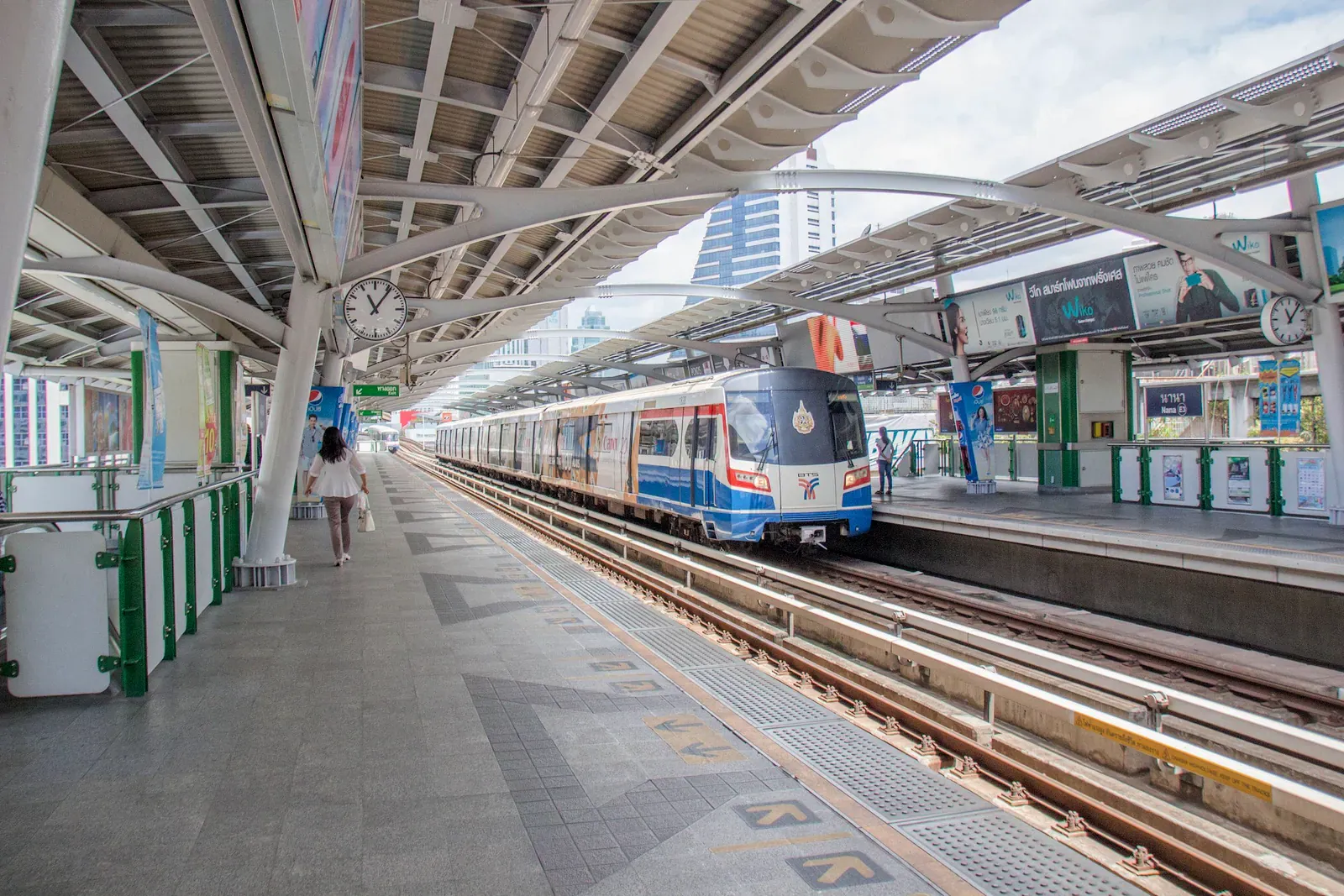
- A transport card for the BTS and MRT networks, which is the fastest way to move around the city while you’re still unfamiliar with it.
- Cash and a working card. Withdraw enough baht for the first few days’ expenses and confirm at least one card works in local ATMs before relying on it.
- Address reporting. Thailand requires certain foreign residents to have their address on file with Immigration, a duty that in practice often falls partly on the landlord of wherever you’re staying, even temporary accommodation. Ask early what’s expected in your situation, since the responsibility and the paperwork differ depending on visa type and length of stay, and confirm current requirements with Immigration or a licensed adviser rather than assuming last year’s rule still applies.
First month: signing a lease and getting wired up
Once temporary accommodation buys some breathing room, the first month is about converting from “visiting” to “living here.”
Signing a lease. Bangkok rental contracts are usually one year, often with a security deposit of two months’ rent and the first month paid upfront. Read the contract for what happens to the deposit, who pays for what maintenance, and the notice period for ending the lease early: foreign tenants sometimes sign without checking this and regret it later. Once moved in, a vetted handyman service is usually faster than chasing a landlord for small repairs; see home services in Bangkok for how to book one safely.
Utilities and internet. In a condo, utilities are frequently billed through the building rather than directly, which simplifies setup; a house usually means separate accounts with the electricity and water authorities. Internet installation for a landline-fibre connection typically takes some days to schedule, so book it as soon as the lease is signed, not after moving in.
A Thai bank account, and why it’s harder than it sounds. Banks generally want to see a visa with a reasonable remaining duration, sometimes a work permit or proof of address, before opening an account for a foreigner: requirements differ by bank and change periodically, so confirm with the branch directly. This is one of the strongest arguments for getting the visa category right from the three-month mark: without the account, everyday life (rent transfers, bill payments, the PromptPay QR system most small vendors use) runs on cash and foreign cards for longer than it should.
A local phone number as the key to almost everything. Delivery apps, ride-hailing, food ordering, many banking and government-linked services, and most loyalty or membership sign-ups in Thailand expect a Thai mobile number for verification. Get this sorted in the first days, not the first month: it unblocks a surprising amount of daily life.
Driving licence conversion, in outline. Many foreign residents convert or apply for a Thai driving licence rather than driving indefinitely on a foreign one or an international permit, once their visa status supports it. The process generally involves a medical certificate, proof of residence and a test, and the exact requirements depend on your home licence and visa category: confirm the current process with the relevant Department of Land Transport office.
Health insurance activation, embassy registration, and finding a doctor before you need one. Activate any policy purchased before travel and understand its claims process. Many embassies offer voluntary registration for citizens living abroad, useful for emergencies and consular updates. Choosing a doctor, dentist and preferred hospital network while healthy (rather than searching during an urgent problem) is one of the most underrated moves in a Bangkok relocation. Related guides: German Embassy Bangkok guide, South and East Asian embassies in Bangkok, Oceania, Africa and Latin America embassies in Bangkok.
What people forget
- What doesn’t work from abroad. Many Thai government and banking portals, and some property listings, are hard or impossible to use meaningfully before you have a Thai address and phone number. Don’t expect to complete much administrative groundwork remotely.
- What needs a Thai number specifically, as opposed to just any working phone: most delivery, ride-hailing and food apps; many bank verification steps; most co-working space and gym sign-ups; and increasingly, building entry systems in newer condos.
- Documents to carry copies of, physical and digital, at all times in the early weeks: passport photo page and visa stamp, proof of address, insurance card, and the lease. Immigration or a landlord occasionally asks for these with little notice.
- The first-month budget spike. Between the lease deposit, transport card top-ups, a new phone plan, insurance premiums, furnishing gaps a “furnished” condo didn’t cover, and the general inefficiency of not yet knowing where anything cheap is, the first month reliably costs more than any month after it. Budgeting an indicative buffer of an extra ฿30,000-60,000 (roughly USD 850-1,700, indicative for 2026) above expected monthly costs is a reasonable cushion for most single movers; families should budget considerably more, as covered in the family relocation guide.
Master checklist by phase
| Phase | Key actions |
|---|---|
| Three months out | Choose visa route and start it; check passport validity; start school applications; finish home medical/dental work; begin collecting documents; confirm translation/legalisation requirements |
| Six weeks out | Decide shipping vs buying; arrange insurance; confirm bank/card access abroad; redirect mail; cancel home subscriptions; notify home tax authority if relevant |
| Arrival week | Book temporary accommodation; get a SIM card; get a transport card; withdraw cash and test a card; confirm address-reporting duties |
| First month | Sign lease; set up utilities and internet; open a Thai bank account if eligible; get a Thai phone number; start driving licence conversion; activate insurance; register with embassy; choose a doctor and dentist |
Renting before you’ve seen the city: a caution
Some movers, pressed for time, try to sign a full-year lease from abroad based on photos and a video call. This is workable but riskier than it looks: photos flatter a unit, a video call can’t convey the noise from a nearby road or the smell from a neighbouring restaurant’s kitchen exhaust, and a neighbourhood that looks convenient on a map can turn out to have poor pavement access or a flooding history in the rainy season. Where the timeline allows, the temporary-accommodation window in arrival week exists precisely to avoid this trap. If a lease genuinely must be signed remotely, ask a trusted contact already in Bangkok, or a relocation agent, to view the unit in person and walk the surrounding block at both a quiet and a busy time of day before committing.
Coordinating two households during the transition
For couples or families where one person arrives first (often the visa or work-permit holder, going ahead to start a job while a partner finishes things at home), the transition period runs as two households for a few weeks or months rather than one. This is worth planning for explicitly rather than letting it happen by accident. Decide who holds which original documents (originals are hard to courier reliably and are better kept with whoever needs them for an appointment), agree a shared list of what’s been ordered, cancelled or started so nothing is duplicated or missed, and set a realistic date for when the second household closes down and joins the first. Video calls to view potential apartments together, even where only one person can attend in person, keep the decision joint rather than leaving one partner arriving to a home they had no say in.
A note on accuracy
Visa categories, address-reporting duties, banking rules and driving licence conversion are all governed by Thai authorities whose requirements change, sometimes with little warning. This checklist describes the general shape of the process as a planning aid; it is not legal or immigration advice. Confirm current requirements with the Thai Immigration Bureau, your Royal Thai Embassy, or a licensed visa or relocation adviser before making decisions that depend on timing or eligibility.
Still deciding? Read living in Bangkok: pros and cons.
Common questions
How far in advance should I start the visa process for moving to Bangkok?
Three months is a reasonable planning horizon for most routes, though some (particularly anything involving dependant status, sponsorship or qualification verification) can take longer. Start by confirming the current requirements for your specific category with a Royal Thai Embassy or a licensed adviser rather than assuming a fixed timeline.
Can I open a Thai bank account before I arrive?
Generally no. Thai banks typically require an in-person application with a visa showing reasonable remaining validity and, often, proof of address or a work permit, which makes this one of the first-month tasks rather than a pre-departure one.
Do I need a Thai phone number immediately?
Yes, as close to immediately as possible. A huge share of daily services (delivery apps, ride-hailing, banking verification, building access in newer condos) assume a Thai mobile number, and going without one for weeks makes ordinary tasks noticeably harder.
What documents should I keep copies of during the first weeks?
Passport photo page and visa stamp, proof of current address, insurance details and your lease. Keep both physical and digital copies, since Immigration or a landlord can ask for them without much notice.
Is it worth shipping furniture to Bangkok?
Rarely, if the destination is a furnished condo, which most foreign-tenant rentals are. Shipping tends to make sense for items that are sentimental, specialised or expensive to rebuy, not for furniture or general household goods: see the pets and shipping guide for the fuller comparison.
What’s the biggest budgeting mistake in the first month?
Underestimating the one-off costs that stack in the first few weeks: deposit, transport card top-ups, a new phone plan, insurance premiums and furnishing gaps. Build in a clear buffer above expected monthly spending rather than budgeting only for ongoing costs.
Written by
Mike Brochlowski
Founder and editor, travel photographer and designer
I'm Mike Brochlowski, a travel photographer and designer, and I currently live on Koh Samui, Thailand. I built BangkokWiki to put practical, checked information about Bangkok in one place. Every page is researched from official and primary sources, and the text names them. Where a page shows a checked date, that is when its facts were last confirmed. I also run samui69.com, a non-commercial guide to Koh Samui. If you spot an error or something out of date, tell me through the contact page and I will check it and correct the page.
Read all articles
Visas and paperwork
Staying in Thailand longer?
Visas, extensions, documents and banking for longer stays. Rules and fees change often and offices apply them differently, so check the official source before you act.

Places to stay
Find a hotel
Explore the other desks
More from Living
- 12 min read
 12 min read
Relocating to Bangkok With Children
 9 min read
Renting Near an International School in Bangkok

Newsletter
You're subscribed as