Living
Moving to Thailand With Pets: Shipping Guide
How pet import to Thailand and household shipping actually work: microchips, permits, airline rules, customs categories and realistic timelines.
On this page
Bringing a pet and shipping a household into Thailand are the two logistical problems most likely to blow a relocation timeline, because both run on lead times measured in months, not weeks, and both involve a government authority whose current rules you must confirm yourself before relying on anything written here. This guide covers the general shape of each process, the practical decisions that determine whether it goes smoothly, and life with a pet once you’re settled in Bangkok, alongside the general moving checklist and, for families, the guide to relocating with children, both of which touch on these logistics from a different angle.
The general shape of importing a pet into Thailand
Bringing a dog or cat into Thailand generally involves the same handful of structural steps, in roughly this order:
- Microchipping, with an internationally readable chip implanted before any of the following steps, so the animal’s identity is fixed to every subsequent document.
- Rabies vaccination, given after the microchip and with a required minimum interval before travel that Thai authorities set and periodically adjust: this is a genuinely time-critical step, and getting the sequence or timing wrong is one of the most common reasons an otherwise well-prepared pet import gets delayed.
- A veterinary health certificate from an accredited or official veterinarian, confirming the animal’s health and vaccination history, generally valid for only a short window before travel.
- An import permit from Thailand’s Department of Livestock Development (DLD), applied for in advance of travel, which authorises the animal’s entry and is generally tied to a specific timeframe.
- Clearance on arrival at the airport, where the animal’s documents, microchip and (for some routes) the animal itself are checked against what was approved.
This is a structure, not a current checklist. The precise vaccination timing windows, which additional vaccines are expected beyond rabies, which breeds face restrictions, permit validity windows and exact document formats all change, and they can differ by the animal’s country of origin. Confirm every one of these details directly with the Department of Livestock Development and with your airline well in advance of travel: ideally as one of the first things arranged in a relocation, given how far ahead some steps need to start relative to a rabies vaccination and permit issuance.
What actually decides whether a pet’s move goes well
The structural steps above are necessary but not sufficient. The details below are where relocations with pets tend to succeed or run into serious trouble.
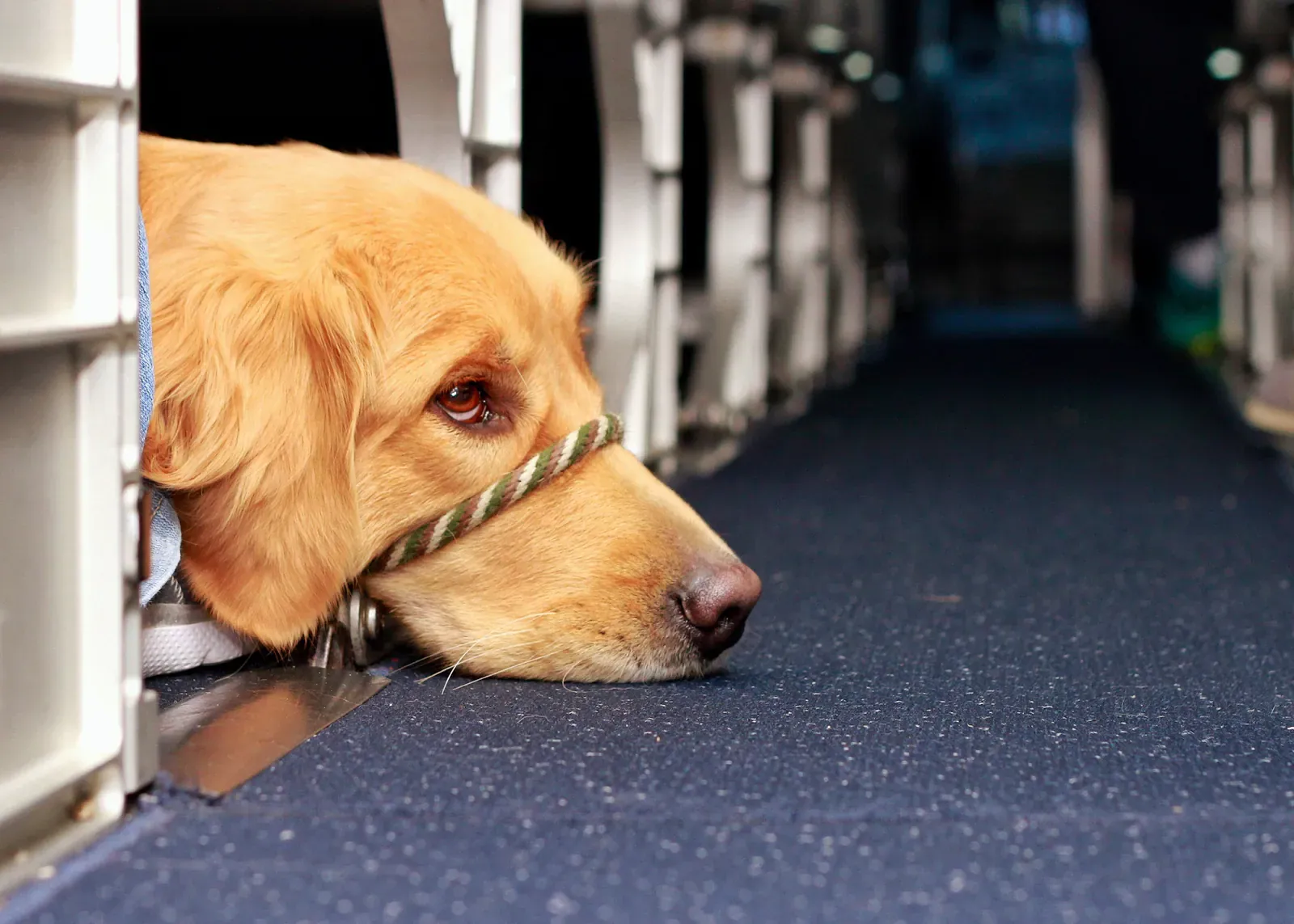
Airline policy varies enormously. Some airlines allow small pets in the cabin under a weight and carrier-size limit; others only accept pets as excess or accompanied baggage in the hold; others require the animal to travel as manifest cargo, a separate and more involved booking process with its own paperwork and timeline. These policies differ airline by airline and route by route, and change without much notice: check directly with the specific airline you intend to fly, not a general assumption based on another carrier or another route.
Breed and snub-nosed restrictions. Brachycephalic (snub-nosed) breeds (many bulldogs, pugs and similar cat and dog breeds) face heightened health risk from air travel due to their airway structure, and many airlines restrict or refuse to carry them, particularly in cargo holds. Some countries and airlines also apply breed-specific restrictions unrelated to airway structure. Confirm both angles for your specific animal and airline before booking anything else.
Heat embargoes. Airlines commonly refuse to carry animals in the cargo hold when ground temperatures at departure, transit or arrival airports exceed a threshold, precisely because Bangkok and much of Thailand run hot for large parts of the year. This can force a booking onto specific flight times (early morning or late evening) or specific months, and it’s worth checking before locking in a flight date.
Crate standards and acclimatisation. Airlines specify minimum crate dimensions and construction standards (usually aligned to widely used international transport crate standards), and an animal that’s never been inside its travel crate before the journey will find the experience far more stressful than one gradually acclimatised to it over the preceding weeks: a short daily period in the crate, building up well before departure, meaningfully reduces travel stress.
Flight routing matters more than price. A direct flight, even at a premium, removes the risks of a layover: extreme temperature swings between aircraft and tarmac, extended time in a crate, and the chance of a mishandled transfer. Where a direct option exists, it’s usually worth paying for.
Agents, and when they’re worth it. Pet relocation agents handle the permit application, health certificate coordination, airline booking and airport clearance as a package, for a fee. This is worth strong consideration for a first-time mover, a nervous or elderly animal, a tight timeline, or simply a lack of spare time to chase paperwork across two countries. A confident, organised owner with time to spare can do it independently, but the margin for a costly mistake (a vaccination given a day too late, a permit that’s expired by arrival) is real.
Arrival day. Expect the pet clearance process at the airport to take time, sometimes a few hours, involving document checks and possibly a physical inspection. Arrange to be there in person or have your agent present, and don’t book onward domestic travel or tight appointments for the same day.
Life with a pet in Bangkok
Finding a vet and the standard of care. Bangkok has a wide range of veterinary practices, including some with genuinely advanced diagnostic and surgical capability comparable to Western standards, alongside smaller neighbourhood clinics for routine care. Choosing a vet before an emergency arises, the same principle as choosing a family doctor, makes a real difference when something goes wrong. See choosing a vet in Bangkok for how to pick between a teaching hospital and a private clinic.
Condo pet policies. Pet policies among Bangkok condo buildings range from fully pet-friendly to a strict no-pets rule enforced at the juristic office level, with plenty of buildings somewhere in between (allowed with size or breed limits, or allowed but not advertised). This is worth confirming in writing before signing a lease, not assuming from a listing description, since enforcement varies from a formal registration process to informal tolerance that can change with new management.
Heat and walking schedules. Bangkok’s heat and humidity make midday walks genuinely risky for many dogs, particularly short-nosed breeds and older animals. Early morning and evening walks are the norm among long-term resident pet owners, and pavement or road-surface temperature is worth checking by hand before a walk in the hottest months.
Street dogs and the rabies question. Thailand has a substantial street dog population, and while rabies exposure risk for a well-supervised pet is low, it isn’t zero, particularly from an unvaccinated stray. Keeping vaccinations current and supervising interactions is standard practice.
Parasites and year-round prevention. The climate supports parasites (fleas, ticks and heartworm-carrying mosquitoes) through most or all of the year, unlike many temperate countries where prevention is seasonal. Talk to a local vet about a year-round parasite prevention schedule rather than applying a home-country seasonal routine.
Boarding and pet-sitting. Bangkok has an active boarding and pet-sitting market for travel and short absences; vetting a facility or sitter in advance, before it’s urgently needed, avoids a rushed choice later.
Bringing an animal home again, or the alternative. Many countries have their own import requirements for a pet returning from Thailand, sometimes as involved as the process described above, and worth researching well before a planned return move rather than close to it. Some owners, facing a shorter posting or a country with prohibitive re-import rules, ultimately face the harder question of what happens if a pet’s life ends while still abroad, or if taking it onward simply isn’t feasible. This is a real and painful possibility worth thinking through honestly before committing to bringing a pet at all, not after arriving.
Shipping a household to Bangkok
Air freight versus sea freight. Air freight is faster (often measured in days to a couple of weeks door to door) but substantially more expensive per unit of volume, making it suited to a smaller, higher-priority shipment. Sea freight is far cheaper for volume but slower, with transit plus port and customs handling commonly running from several weeks to two or three months depending on origin and routing. Build the sea freight timeline backwards from your actual move date with real margin, since a delayed shipment sitting at a port racks up storage charges.
What’s actually worth moving into a furnished rental. As covered in the moving checklist, most Bangkok rentals aimed at foreign tenants come furnished. That shifts the calculation toward shipping items that are sentimental, specialised, or genuinely expensive or impossible to replace locally, and away from furniture, most kitchenware, and general household bulk, which is usually cheaper and simpler to buy new or secondhand in Bangkok.
What Thai customs treats sensitively. Certain categories consistently attract closer scrutiny, additional paperwork, or outright restriction, and are worth checking before you ship rather than after a shipment is held: electronics (particularly multiples of the same item, which can look like commercial import rather than personal use), alcohol, medicines (especially prescription and controlled substances, where bringing more than a short personal supply without documentation can be a serious problem), drones (subject to registration rules that have tightened over time), and anything in a shipment that looks commercial in quantity or packaging rather than clearly personal. Check the current rules for anything in these categories with Thai Customs or a licensed shipping agent before you pack it, not after it’s in transit.
Household-goods relief, in outline. Some arriving foreigners, typically those on a qualifying long-term visa such as certain work-permit-based categories, may be eligible for duty relief on a shipment of used personal and household effects, generally subject to conditions around how long the goods were owned and used before the move, how soon after arrival the shipment lands, and limits on quantities of things like electrical appliances. Eligibility and conditions depend on your specific visa category and change over time: confirm with Thai Customs or a licensed customs broker before assuming duty-free treatment applies to your situation.
Insurance and valuation. Shipping insurance for a household move is generally sold against a declared value, and it’s worth insuring for genuine replacement cost rather than an understated figure chosen to lower the premium: the saving is small against the risk of an inadequate payout after loss or damage.
Packing and inventories. A detailed, itemised inventory, ideally with photos, supports both the customs declaration and any insurance claim, and is far easier to produce while packing than to reconstruct afterward from memory.
Storage at home as the alternative. For anyone uncertain about how long the move will last, keeping the bulk of a household in storage at home and shipping only a working subset to Bangkok avoids paying twice (once to ship goods over, once to ship them back) if the posting turns out to be shorter than expected.
What to carry in your luggage instead. Anything needed in the first weeks before a shipment arrives (a laptop and chargers, key documents and their copies, a week or two of any specific medication with its prescription, comfort items for children, and a change of climate-appropriate clothing) should travel with you, not in a shipment that might land weeks after you do.
Combined timeline
| Timeframe before move | Pet actions | Shipping actions |
|---|---|---|
| 4-6 months out | Confirm current DLD and airline requirements; microchip the animal | Get sea freight quotes if shipping a full household |
| 2-3 months out | Complete rabies vaccination on the required schedule; begin crate acclimatisation | Decide air vs sea freight; start an itemised inventory |
| 4-8 weeks out | Obtain veterinary health certificate window; apply for DLD import permit; confirm airline booking and flight routing | Book the freight slot; arrange insurance and valuation; check customs-sensitive categories |
| 1-2 weeks out | Final health certificate within its validity window; reconfirm airline and heat-embargo status | Pack, photograph and finalise the inventory |
| Arrival | Airport clearance with documents in hand | Track shipment; arrange delivery once cleared through customs |
Multiple pets and older or anxious animals
Moving more than one pet at once multiplies the paperwork rather than simplifying it: each animal generally needs its own microchip record, vaccination timeline, health certificate and permit, even if they travel on the same flight, and airline rules on how many animals one passenger can accompany in the cabin or hold are often stricter than people expect. Plan each animal’s timeline independently and build in margin for one to be delayed without forcing the other to wait.
Older animals and those with an anxious temperament deserve extra thought before committing to the move at all. Long-haul travel and a new climate are genuinely harder on a senior pet with joint problems or an underlying health condition, and a vet who knows the animal well is better placed than a general guide to say whether the move is a reasonable risk. For an anxious animal, building in more crate-acclimatisation time than the minimum, and discussing calming options with a vet well before the flight rather than the week of, both help meaningfully.
Working with a relocation agent for the whole move
Some of the same agents who handle household shipping also coordinate pet relocation, and using one company for both can simplify communication, though it isn’t necessary: many movers use a dedicated pet relocation specialist alongside a separate household shipping company without issue. Whichever route is chosen, get a clear written scope of what the agent handles versus what remains the owner’s responsibility (commonly: the owner still needs to arrange the vet visits and initial paperwork, while the agent handles permit submission, airline booking and customs coordination), and get a realistic quote and timeline in writing before committing, since both pet relocation and household shipping quotes can vary significantly between providers for what looks like the same service.
A note on accuracy
Pet import and customs rules are set by Thai government authorities and airlines, and they change, sometimes significantly and with little notice. Nothing here should be treated as a current, actionable checklist for vaccination timing, permit validity, restricted items or duty relief eligibility. Confirm every current requirement directly with the Department of Livestock Development, Thai Customs, your airline, and a licensed pet relocation agent or customs broker before making any binding arrangement, and treat this article as a map of the process rather than a substitute for that verification.
Common questions
How far in advance should I start a pet’s import process for Thailand?
Several months, ideally. The rabies vaccination and its required minimum interval before travel is usually the pacing step, and the import permit and health certificate both have their own validity windows that need to be timed against it. Confirm the current sequence and timings with the Department of Livestock Development well before booking flights.
Is sea freight or air freight better for a move to Bangkok?
Air freight suits a smaller, time-sensitive shipment and is faster but costs more per unit of volume; sea freight suits a full household on a longer timeline and is far cheaper but can take from several weeks to a couple of months. Choose based on how much time margin the move actually has, not just cost.
Do all Bangkok condos allow pets?
No. Policies range from fully pet-friendly to a strict ban enforced by building management, with many buildings in between. Confirm a specific building’s policy in writing before signing a lease rather than assuming from the listing.
What items get extra scrutiny from Thai customs?
Electronics in unusual quantities, alcohol, medicines (especially prescription or controlled ones), drones, and anything that looks commercial rather than personal in a household shipment. Check current rules for these categories with Thai Customs or a licensed broker before shipping.
Should I use a pet relocation agent?
It’s worth serious consideration for a first pet import, a nervous or elderly animal, or a tight timeline, since an agent handles the permit, certificate coordination, airline booking and airport clearance together. A confident, organised owner with time can manage it independently, but the cost of a timing mistake is high.
What’s the biggest risk in the pet import timeline?
Getting the rabies vaccination timing or the permit and certificate validity windows wrong, since both are strict, time-bound requirements set by the Department of Livestock Development. Confirming the current exact timings early, rather than relying on a remembered figure, is the single most protective step.
Written by
Mike Brochlowski
Founder and editor, travel photographer and designer
I'm Mike Brochlowski, a travel photographer and designer, and I currently live on Koh Samui, Thailand. I built BangkokWiki to put practical, checked information about Bangkok in one place. Every page is researched from official and primary sources, and the text names them. Where a page shows a checked date, that is when its facts were last confirmed. I also run samui69.com, a non-commercial guide to Koh Samui. If you spot an error or something out of date, tell me through the contact page and I will check it and correct the page.
Read all articles
Visas and paperwork
Staying in Thailand longer?
Visas, extensions, documents and banking for longer stays. Rules and fees change often and offices apply them differently, so check the official source before you act.

Places to stay
Find a hotel
Explore the other desks
More from Living
- 12 min read
 12 min read
Relocating to Bangkok With Children
 9 min read
Renting Near an International School in Bangkok

Newsletter
You're subscribed as