
Living
Pet-Friendly Condo in Bangkok: What Actually Allows It
A renter's guide to pet-friendly condos in Bangkok: the BMA pet law taking effect in January 2027, juristic-person rules, deposits and weight limits.
On this page
A “pet friendly” tag on a Bangkok listing means the agent thinks it will help the unit rent faster, nothing more. The building’s actual rule, set by its juristic person and registered with the Land Department, decides whether your dog or cat can legally live there, and most Bangkok condo buildings still vote no. This guide covers who really makes the call, what the city’s pet-control ordinance will change when it takes effect on 10 January 2027, and what to get in writing before you sign anything.
Why “pet friendly” on a listing is not the same as approved
Agents attach a pet-friendly tag because the owner said pets are fine, not because the juristic person confirmed it. The two are often different answers: an owner can genuinely believe their building allows pets while the juristic office enforces a stricter written rule nobody on the sales side checked. Treat the tag as a lead to verify, not a fact to rent against.
Who actually decides: the juristic person, not the landlord
Under the Thai Condominium Act B.E. 2522, the co-owners set their own bylaws through the Condo Juristic Person (CJP) committee, and those house rules govern the whole building regardless of what an individual landlord promises. A landlord can say yes to your cat all day; if the registered house rules say no pets, that “yes” carries no weight against the juristic office, and you can end up asked to remove the animal months into a lease.
What the BMA pet ordinance will change from January 2027, and what it doesn’t
Bangkok’s animal-control rules are changing at the city level, separate from any single building’s bylaws. The BMA Ordinance on the Control of Keeping or Releasing Animals B.E. 2567 was published in the Royal Gazette on 15 January 2025 and was due to take effect on 10 January 2026, but the Bangkok Metropolitan Council voted in January 2026 to postpone it by one year, to 10 January 2027 (Nation Thailand, 7 January 2026). Once in force, it requires every dog and cat in the city to be microchipped and registered within 120 days of birth or 30 days of the animal arriving in Bangkok, with proof of rabies vaccination. It also caps how many pets a unit can hold by floor area: one pet for a 20 to 80 square metre unit, two for anything larger, with wider limits for houses on land. Owners already over the new cap can keep their current pets if they register them and notify their district office within 90 days of the ordinance taking effect; under the original timetable that was 9 April 2026, and a revised date had not been confirmed as of September 2026. Registration is already open voluntarily through BMA district offices and its online pet registration system. Non-compliance carries fines up to THB 25,000 (~746 USD, checked September 2026).
None of this overrides a building’s own rules. The ordinance sets a citywide ceiling on pet ownership and registration; a condo’s house rules can still be stricter, including a flat ban, and the stricter rule wins inside that building. For tenants, one clause matters directly: as reported by The Thaiger (9 January 2026), the ordinance asks renters for the landlord’s written permission before registering a pet, a requirement the BMA said it would review before the 2027 start date.
Weight limits, breeds, and how many pets in practice
Buildings that do allow pets rarely allow anything. The pattern across Bangkok’s pet-friendly stock is a weight cap, commonly around 10 kilograms and occasionally stretched to 15, one or two animals per unit, and a requirement to keep pets leashed or carried through lobbies and lifts. The city ordinance separately names five controlled breeds with extra public handling rules wherever they live: Pit Bull Terrier, Bull Terrier, Staffordshire Bull Terrier, Rottweiler, and Fila Brasileiro. Owners must notify their district office, and in public the dog needs a muzzle and a short lead, with handlers required to be between 15 and 65 years old. A building can still ban a controlled breed outright even where the ordinance permits it with those precautions.
| Check | What it usually looks like | Why it matters |
|---|---|---|
| Weight cap | ~10 kg, sometimes 15 kg | Excludes most medium and large dogs outright |
| Pets per unit | 1-2, tied to floor area under the BMA ordinance from 10 January 2027 | A second pet may need a bigger unit, not just approval |
| Registration | Juristic office sign-off plus city microchip and vaccination record | Both are required; one without the other is incomplete |
| Common areas | Leash or carrier in lobbies, lifts, and corridors | Ignoring it is the fastest way to trigger a complaint |
What a pet-owning tenant should budget for
Bangkok’s standard tenancy deposit is two months’ rent plus one month in advance, three months’ rent in total, as covered in rental contracts and deposits. Buildings that accept pets often add a separate pet deposit on top, commonly THB 5,000-15,000 (~149-448 USD, checked September 2026), sometimes higher in premium towers, plus a monthly pet fee of roughly THB 1,000-2,000 (~30-60 USD) in some buildings. Treat these as a market pattern, not a fixed rule; get the exact figure in writing, and weigh it against the full cost breakdown of renting in Bangkok before you commit.
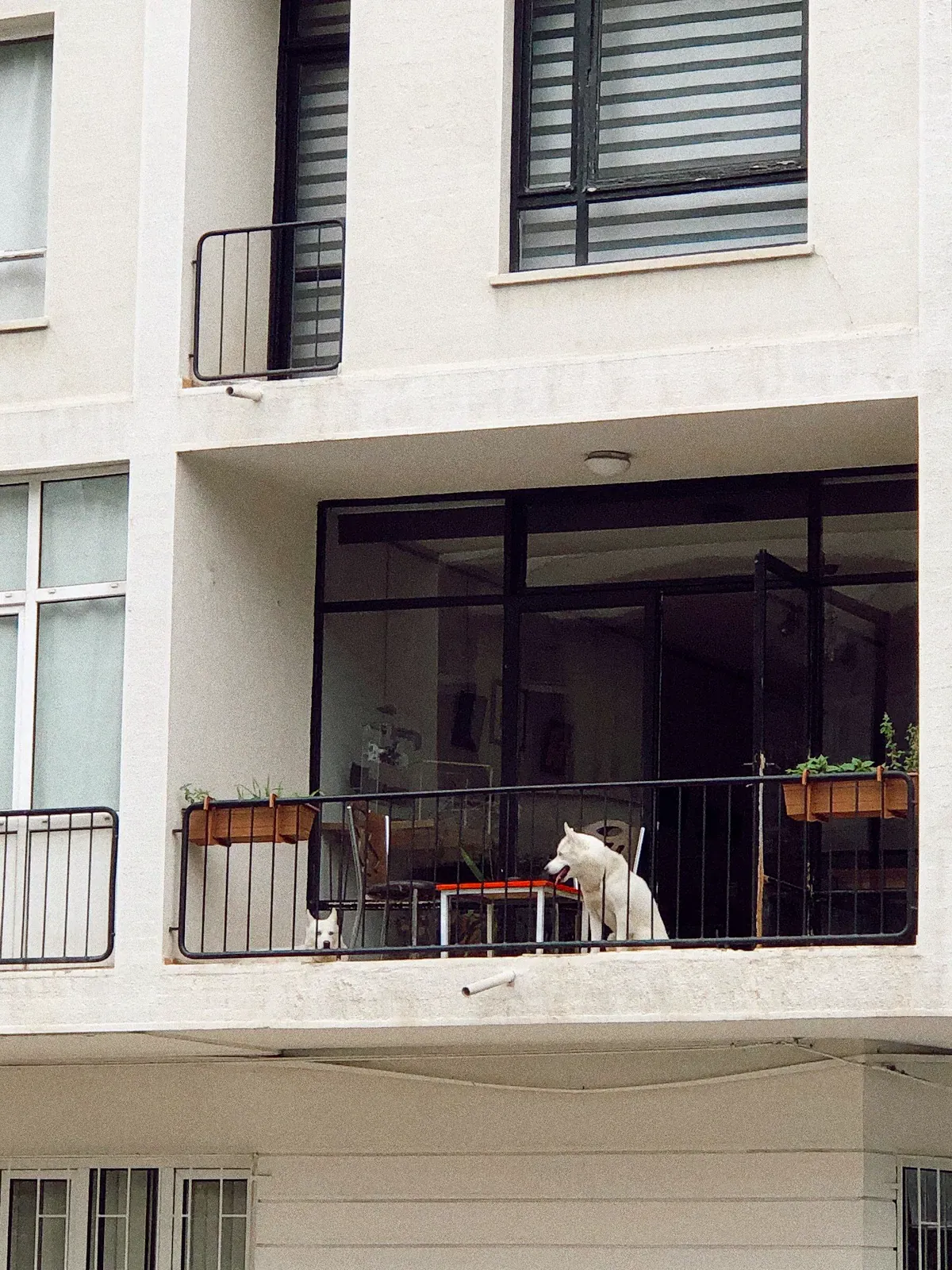
A condo owner in Bangkok was reported fined over THB 140,000 in 2022 for keeping a pet against the building’s registered rules (Thai Newsroom, 2022), a reminder that “the owner said it’s fine” protects nobody once the juristic office gets involved.
Before you tour: get this in writing
A fifteen-minute condo viewing is the wrong moment to discover the building bans dogs. Work through this before you book a tour, not after you have fallen for a unit:
- Ask the agent or landlord for the juristic office’s written pet policy, not a verbal summary.
- Confirm the weight and breed limits by species, not just “pets allowed.”
- Ask how many pets the specific unit’s floor area permits under the BMA ordinance, in force from 10 January 2027.
- Get the pet deposit and any monthly fee stated as a number, not “small.”
- Add a pet clause naming your specific animal, by breed and weight, directly into the lease.
- Keep your pet’s microchip, registration, and vaccination paperwork ready; the juristic office may ask for it before approving a move-in.
Skipping this list is how tenants end up mid-lease with a landlord who didn’t actually know the building’s rule, and a juristic office with no reason to make an exception for an unregistered pet. For the wider process, see renting a condo in Bangkok and checking a condo before you sign. For a deposit or lease dispute once you’re in, start with Thailand’s 2025 tenant rights law.
Last verified: September 2026.
Written by
Mike Brochlowski
Founder and editor, travel photographer and designer
I'm Mike Brochlowski, a travel photographer and designer, and I currently live on Koh Samui, Thailand. I built BangkokWiki to put practical, checked information about Bangkok in one place. Every page is researched from official and primary sources, and the text names them. Where a page shows a checked date, that is when its facts were last confirmed. I also run samui69.com, a non-commercial guide to Koh Samui. If you spot an error or something out of date, tell me through the contact page and I will check it and correct the page.
Read all articles
Visas and paperwork
Staying in Thailand longer?
Visas, extensions, documents and banking for longer stays. Rules and fees change often and offices apply them differently, so check the official source before you act.

Places to stay
Find a hotel
Explore the other desks
More from Living
- 9 min read
 6 min read
Furnished vs Unfurnished in Bangkok: The Breakeven Math
 11 min read
Condo vs House vs Townhouse: Renting Right in Bangkok

Newsletter
You're subscribed as