Living
Rama 9 vs Ratchada: Bangkok's New-Money Condo Areas
Rama 9's office towers against Ratchada's nightlife and condo density: transit, rent, rental yields and who actually lives in each, sourced and dated.
On this page
Rama 9 is Bangkok’s office-and-mall new CBD; Ratchada is the denser, louder condo corridor next door built around nightlife and food rather than boardrooms. Pick Rama 9 for daytime polish and a shorter commute to a desk job in one of its towers. Pick Ratchada for cheaper rent, better food after dark, and a neighbourhood that still feels lived-in rather than planned.
Both sit on the MRT Blue Line a few stops apart, and both get pitched by agents as “the next big thing,” which is exactly why a plain comparison matters more than another single-area write-up. For how the wider rail network reshaped areas like these, see How BTS and MRT Growth Reshaped Bangkok’s Neighbourhoods; for the transit-first budget hub a few stops away, see the Victory Monument Area Guide; for door-to-door timing against the rest of the city, see Commute Times Across Bangkok by Area. Visitors can see hotels in Ratchada, Huai Khwang and Rama 9.
Rama 9’s new CBD, in one sentence
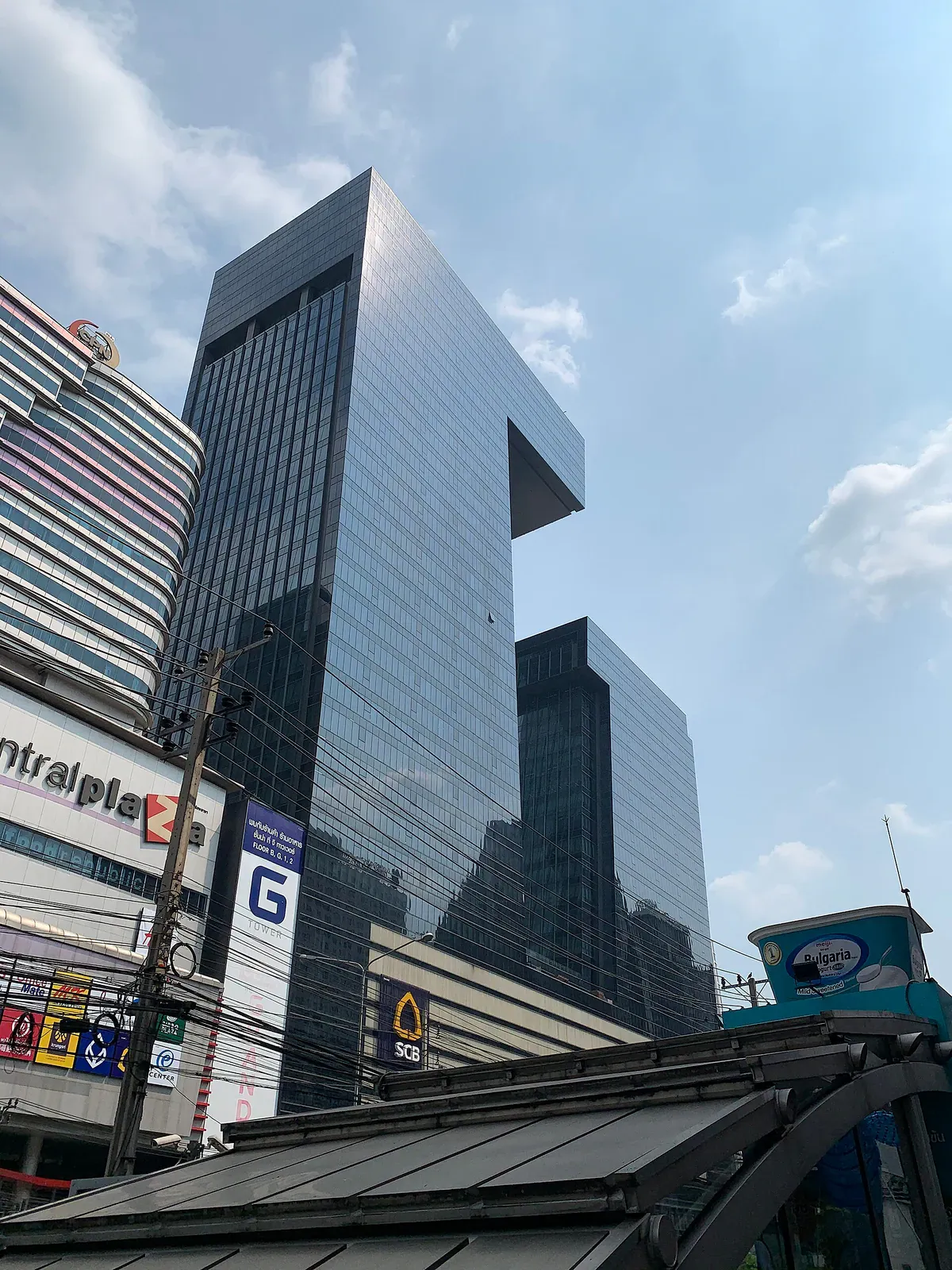
Rama 9 has been Bangkok’s fastest-growing office submarket since roughly 2015, anchored by Grade A towers G Tower Grand Rama 9 and The Ninth Towers, with rents running an estimated 20-30% below comparable space in Asok or Silom for newer, larger floorplates (OfficeBangkok.com, 2026; officespacebangkok.com, 2026). It earned the “new CBD” label from that office push, not from nightlife or heritage.
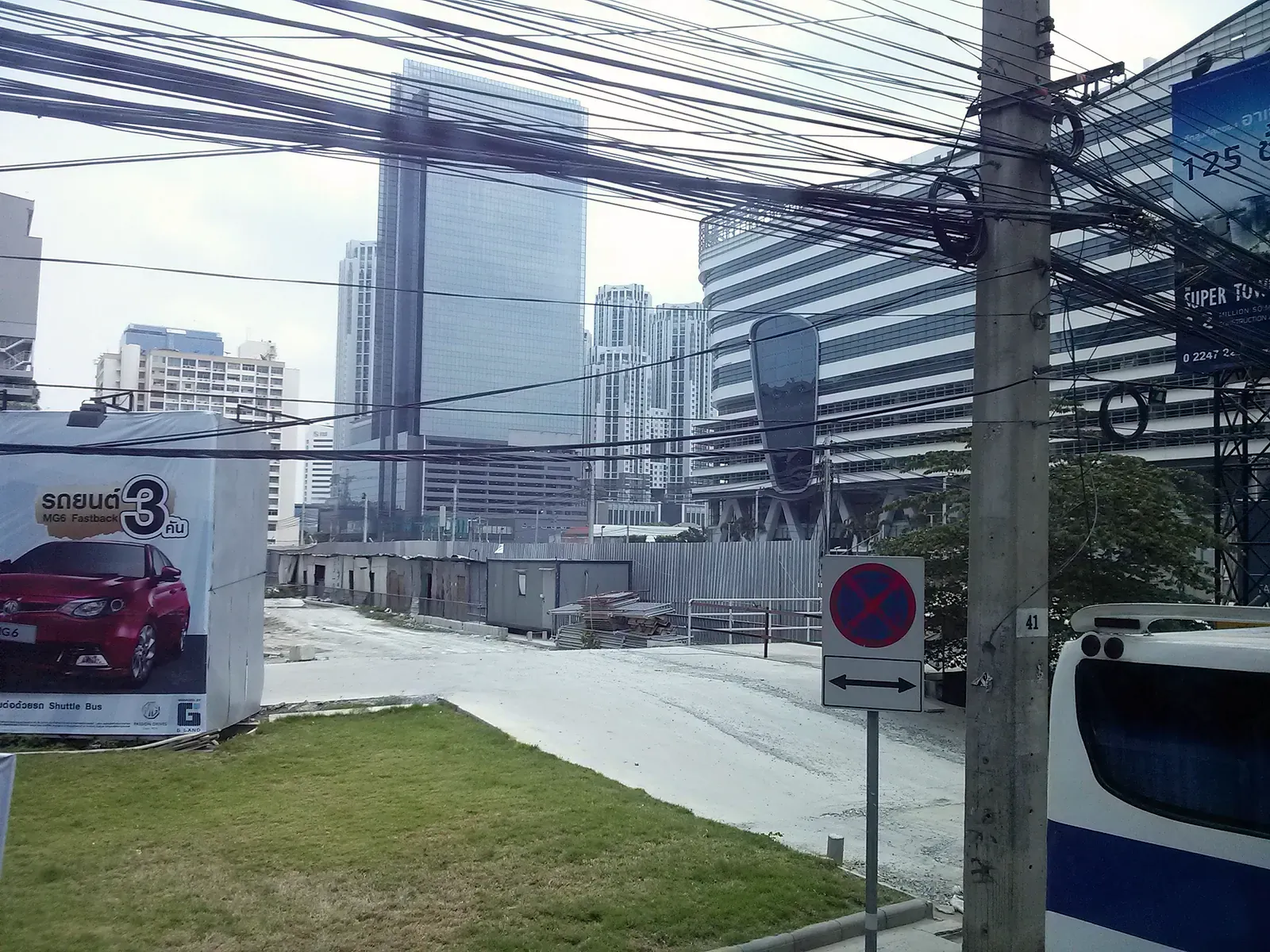
The area’s biggest headline is still under construction: a 615-metre, 125-floor Super Tower on the Grand Rama 9 site broke ground in October 2026 and is scheduled to finish in 2033, positioned to become Thailand’s tallest building (officespacebangkok.com, 2026). Until then, Rama 9’s skyline is a working construction zone as much as a finished district, something worth knowing before anyone books a “skyline view” unit sight unseen. Rama 9 isn’t the only Bangkok submarket being built around one anchor project: the Bang Sue Area Guide covers a similar case forming around the Krung Thep Aphiwat mega-station.
Ratchada’s character: dense living wrapped around food and nightlife
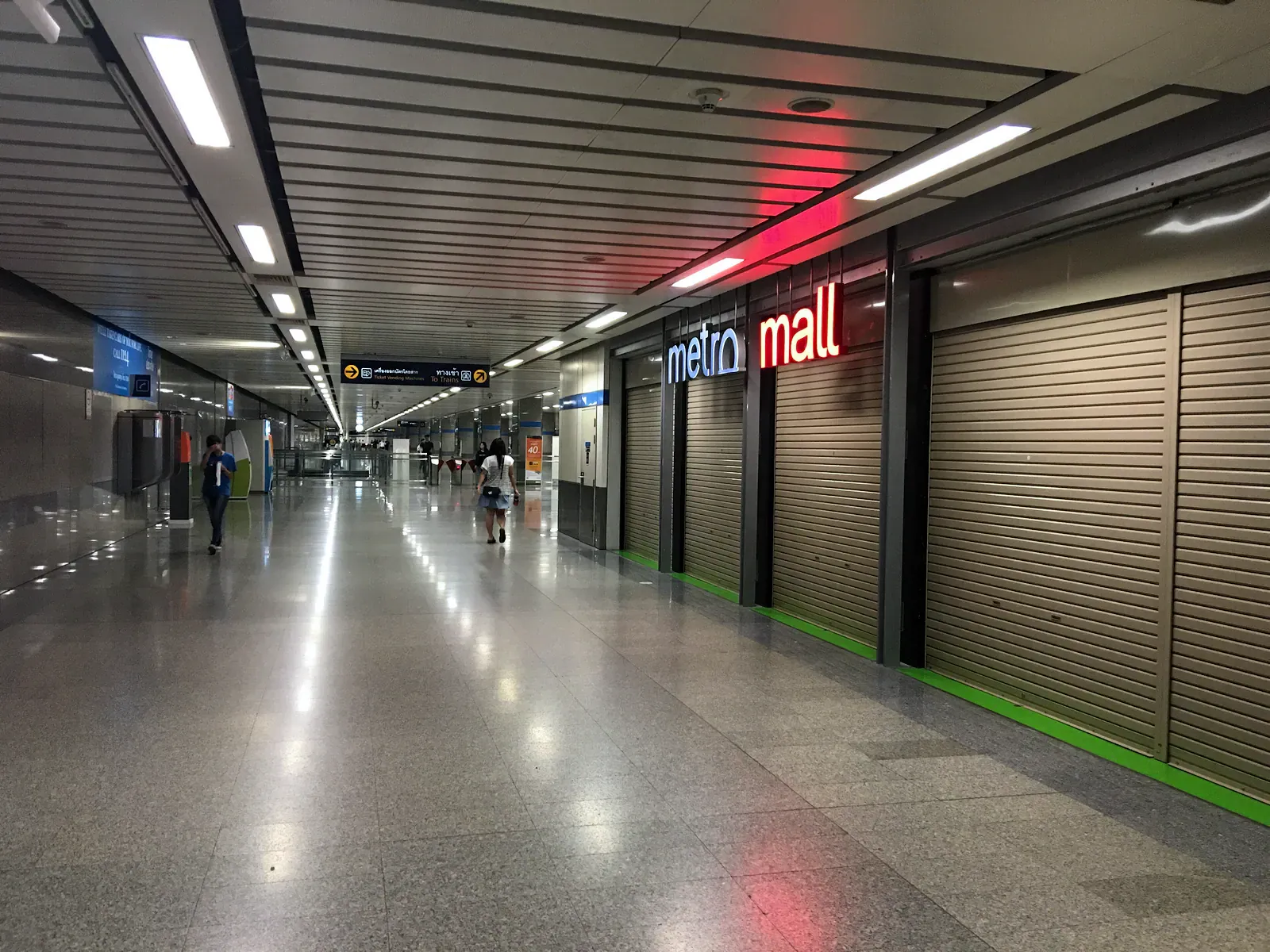
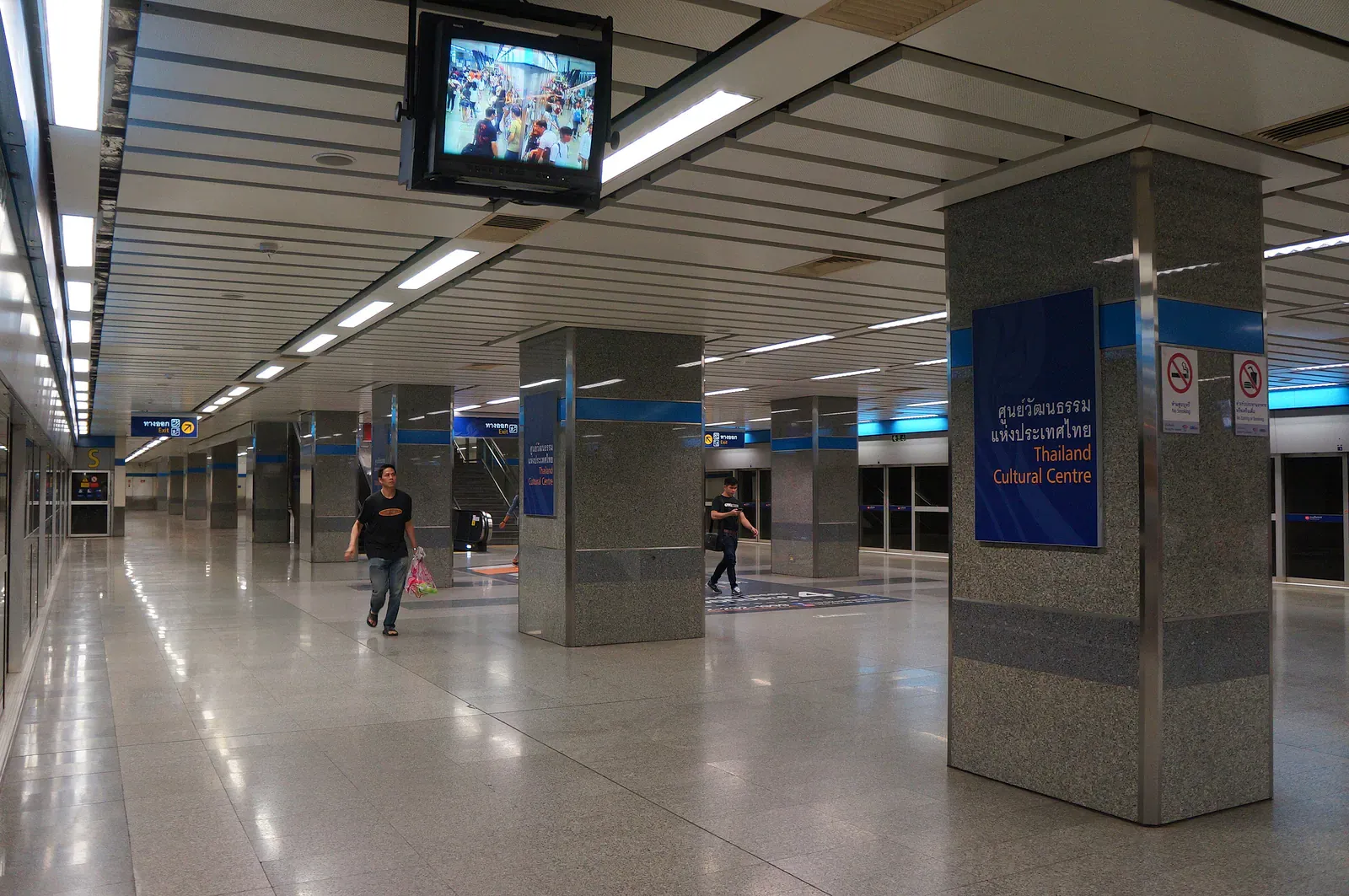
Ratchada, more precisely the Ratchadaphisek corridor through Huai Khwang district, grew as residential and commercial infill rather than a planned CBD. The MRT runs its full length with stations at Huai Khwang, Sutthisan, Ratchadaphisek and Thailand Cultural Centre, giving direct access to Sukhumvit, Silom and Chatuchak without a transfer (Superagent, 2026). What fills the ground floor along that corridor is street food, karaoke bars, massage shops and small restaurants that keep the area busy well past midnight, especially around Huai Khwang station itself.
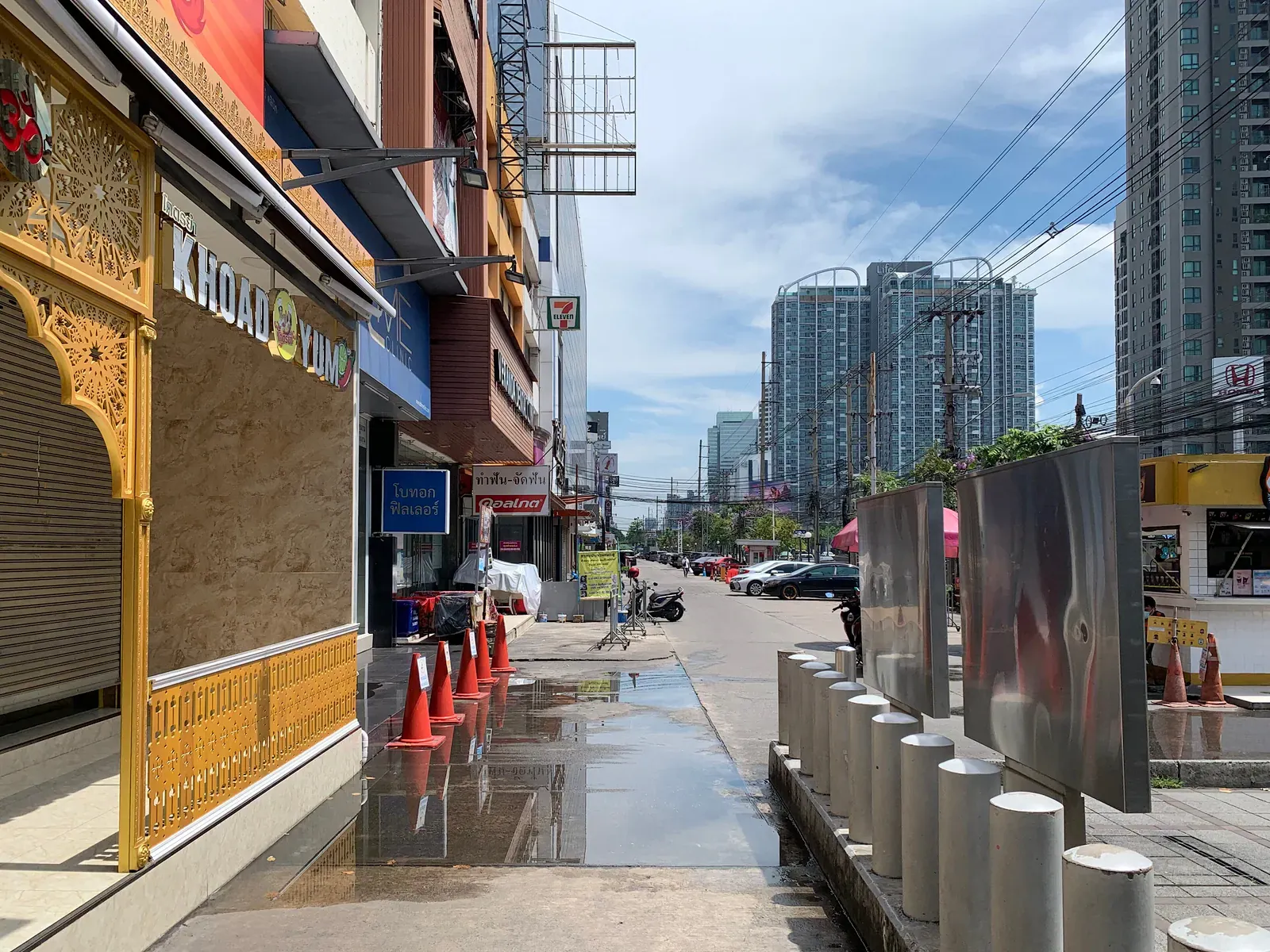
That density is also why Ratchada reads as the more affordable, more local of the two areas. It never had Rama 9’s office-tower ambitions, and its condo stock grew to house people who work elsewhere in the city rather than in the neighbourhood itself.
Daytime Ratchada looks almost nothing like its evening version. Mornings bring shophouse breakfast vendors, dry cleaners and motorcycle taxi queues rather than the after-dark crowd the area is known for; the nightlife identity is real, but it switches on in the evening rather than defining the whole day. Anyone judging the area from a single daytime visit is seeing half the picture, and the same is true in reverse for a late-night-only visit that skips the ordinary residential mornings entirely.
Getting between the two
Rama 9 and Ratchada sit close enough that the comparison is partly academic for daily life: Phra Ram 9 MRT and Huai Khwang MRT are one stop apart on the Blue Line, a few minutes’ ride or a walkable distance for anyone comfortable with Bangkok’s heat and patchy footpaths. That closeness means plenty of residents treat the two as one extended corridor rather than a hard choice: living in Ratchada’s cheaper stock while working a Rama 9 office job is a common, practical pattern, not a compromise.
Transit and daily life, side by side
| Rama 9 | Ratchada (Huai Khwang corridor) | |
|---|---|---|
| Nearest MRT stations | Phra Ram 9 | Huai Khwang, Sutthisan, Thailand Cultural Centre |
| Daytime character | Office towers, malls, business lunches | Shophouses, street food, small offices |
| After dark | Quiet once offices empty | Busy past midnight, especially near Huai Khwang |
| Studio rent (2026 listings) | 10,000-18,000 THB (roughly 290-520 USD) | 10,000-18,000 THB (roughly 290-520 USD), older stock skews cheaper |
| Who lives there | Professionals, some investors, growing nomad interest | Long-term local residents, budget-conscious nomads, mixed local and expat |
Who actually lives in each
Rama 9 skews toward people whose work is in the building or a short walk from it: corporate staff at the office towers, and a growing number of remote workers drawn by newer condo stock and mall-anchored convenience (True Digital Park and the surrounding towers add a tech-worker crowd). Investors also buy here specifically for the CBD growth story, which pushes prices for newer units above what the immediate rental market alone would justify.
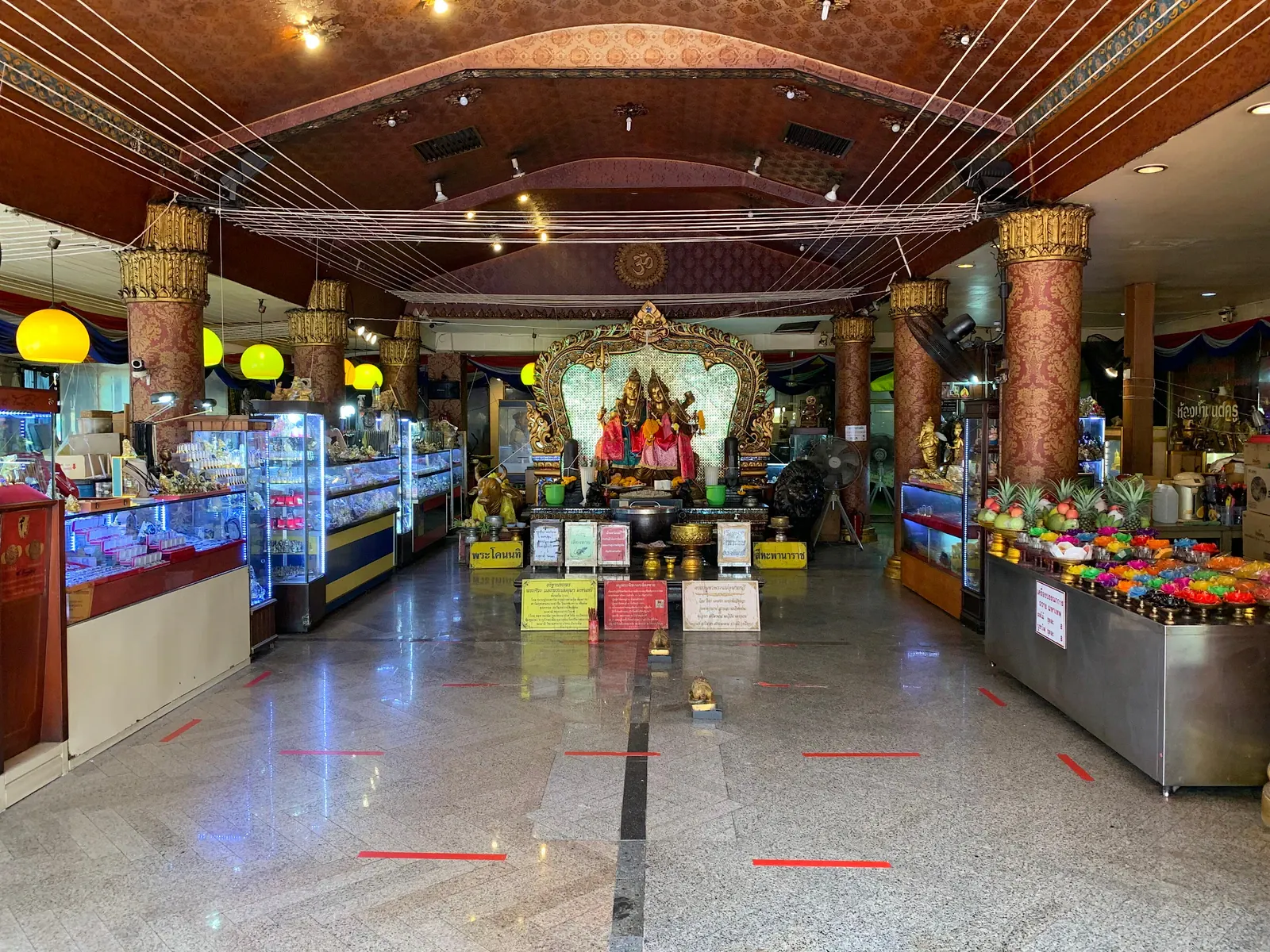
Ratchada’s residents are more mixed: long-term Thai families in older buildings, a substantial local nightlife workforce, and budget-conscious nomads and expats drawn by MRT access at a lower price than Sukhumvit. It’s a genuinely local neighbourhood that happens to have good rail access, not a district built for one type of resident. That mix also shows up in the building stock itself: older, cheaper apartment blocks sit within a few streets of newer condo towers built specifically to catch MRT-driven demand, so two units on the same soi can differ sharply in price and finish depending on when they were built.
Rent and rental yields, sourced and dated
Both corridors post similar headline studio rents in current listings, generally 10,000-18,000 THB (roughly 290-520 USD) a month, with one-bedroom units running 16,000-25,000 THB (roughly 460-720 USD) depending on building age (Bamboo Routes rental yield data, checked September 2026). What differs is the investment case: rents in the Rama 9 and Ratchada corridor climbed an estimated 8-14% over the past year while purchase prices flattened, which lifts yield on a disciplined buy, and both areas post gross yields in the 5-7% range, among the higher figures in the city (Bamboo Routes, 2026).
- Rama 9 / Ratchada corridor
- 5-7%
- City average, established areas
- 3-5%
Source: Bamboo Routes rental yield reports, checked September 2026. Net yields after tax and fees typically run 2.5-4 percentage points lower.
Treat any single figure as a range, not a promise. Yield claims in agency marketing routinely quote gross numbers before tax, management fees and vacancy, so a “6% yield” listing should be checked against those deductions before anyone treats it as take-home return.
The night market that keeps almost dying
Ratchada’s Train Night Market, known locally through its Esplanade site, is a useful case study in why “check the date” matters here. The original market closed years ago; a replacement called The One Ratchada ran on the same plot from 2022 until it shut down abruptly in May 2025 (Nation Thailand, 2025). The original Train Night Market then reopened on the same site in March 2026, a five-minute walk from Thailand Cultural Centre MRT (multiple 2026 travel sources). Anyone researching Ratchada from an older blog post is likely reading about a market that, at time of writing, no longer exists under that name.
The practical lesson: Ratchada’s food and market scene is more volatile than Rama 9’s fixed office towers. That volatility is part of the character, not a flaw, but it means checking current status before planning around any specific venue.
Which one for you
- Rent value
- 4 out of 5
- Transit access
- 4.5 out of 5
- Nightlife and food Rama 9
- 2 out of 5
- Nightlife and food Ratchada
- 4.5 out of 5
- Daytime polish Rama 9
- 4 out of 5
- Local, lived-in feel Ratchada
- 4 out of 5
Editorial rating, 1 to 5, scored separately where the two areas diverge sharply.
- Pick Rama 9 if: your work is in one of its towers or a short commute matters more than nightlife, you want newer condo stock, or you’re buying into the CBD growth story with eyes open about the Super Tower construction years ahead.
- Pick Ratchada if: you want MRT access at a lower price than Sukhumvit, you eat out most nights and want that scene on your doorstep, or you’d rather live somewhere with an established local character than a district still being built.
- Check either way: current listings for actual rent (the ranges above move), and whether a specific venue or market you’re planning around is still open under the name you found it by.
Neither area out-competes Sukhumvit or Sathorn on prestige, and neither tries to. What they offer instead is MRT access at a price the older core doesn’t match, split between a business-day identity and a nightlife-and-food one on the same corridor. For most readers weighing the two, the honest shortcut is to pick by daily routine rather than by which name sounds more like a growth story: a desk job and a shorter commute point toward Rama 9, a food-first, lived-in evening routine points toward Ratchada, and plenty of residents end up choosing a middle-ground building on the stretch where the two corridors meet.
Written by
Mike Brochlowski
Founder and editor, travel photographer and designer
I'm Mike Brochlowski, a travel photographer and designer, and I currently live on Koh Samui, Thailand. I built BangkokWiki to put practical, checked information about Bangkok in one place. Every page is researched from official and primary sources, and the text names them. Where a page shows a checked date, that is when its facts were last confirmed. I also run samui69.com, a non-commercial guide to Koh Samui. If you spot an error or something out of date, tell me through the contact page and I will check it and correct the page.
Read all articles
Visas and paperwork
Staying in Thailand longer?
Visas, extensions, documents and banking for longer stays. Rules and fees change often and offices apply them differently, so check the official source before you act.

Places to stay
Find a hotel
Explore the other desks
More from Living
- 9 min read
 10 min read
Freelancer, Employee or Founder: Bangkok Nomad Life
 6 min read
Best Bangkok Neighborhoods for Digital Nomads: Scored

Newsletter
You're subscribed as