Living
Cost of Living by Bangkok Area: Three Budgets Compared
What a month in Bangkok actually costs in budget, mid and premium areas, broken into rent, food and transport, sourced and dated September 2026.
On this page
A single person can live decently in Bangkok on roughly 25,000 THB a month in a budget-tier area, or spend three times that in the premium core without changing their lifestyle much, just their address. The difference isn’t the city, it’s the area: rent alone swings by 20,000 THB or more between an On Nut studio and a Thong Lo one-bedroom. This is a line-item comparison of what three realistic monthly budgets look like, tied to named area clusters rather than a single citywide average.
For how these budgets map onto specific neighbourhoods and lifestyle fit, see Where to Live in Bangkok and Matching Your Lifestyle to a Bangkok Area; for one premium-tier area worked through in detail, see the Silom area guide.
The three tiers in one line
Budget areas trade a longer commute or a less polished streetscape for rent roughly half the premium core’s. Mid-tier areas sit on the same rail lines with a shorter ride in and noticeably newer buildings. Premium areas put you inside the densest restaurant and nightlife strip, at a price that reflects it. None is objectively “better”; they suit different routines and different tolerances for a longer BTS ride.
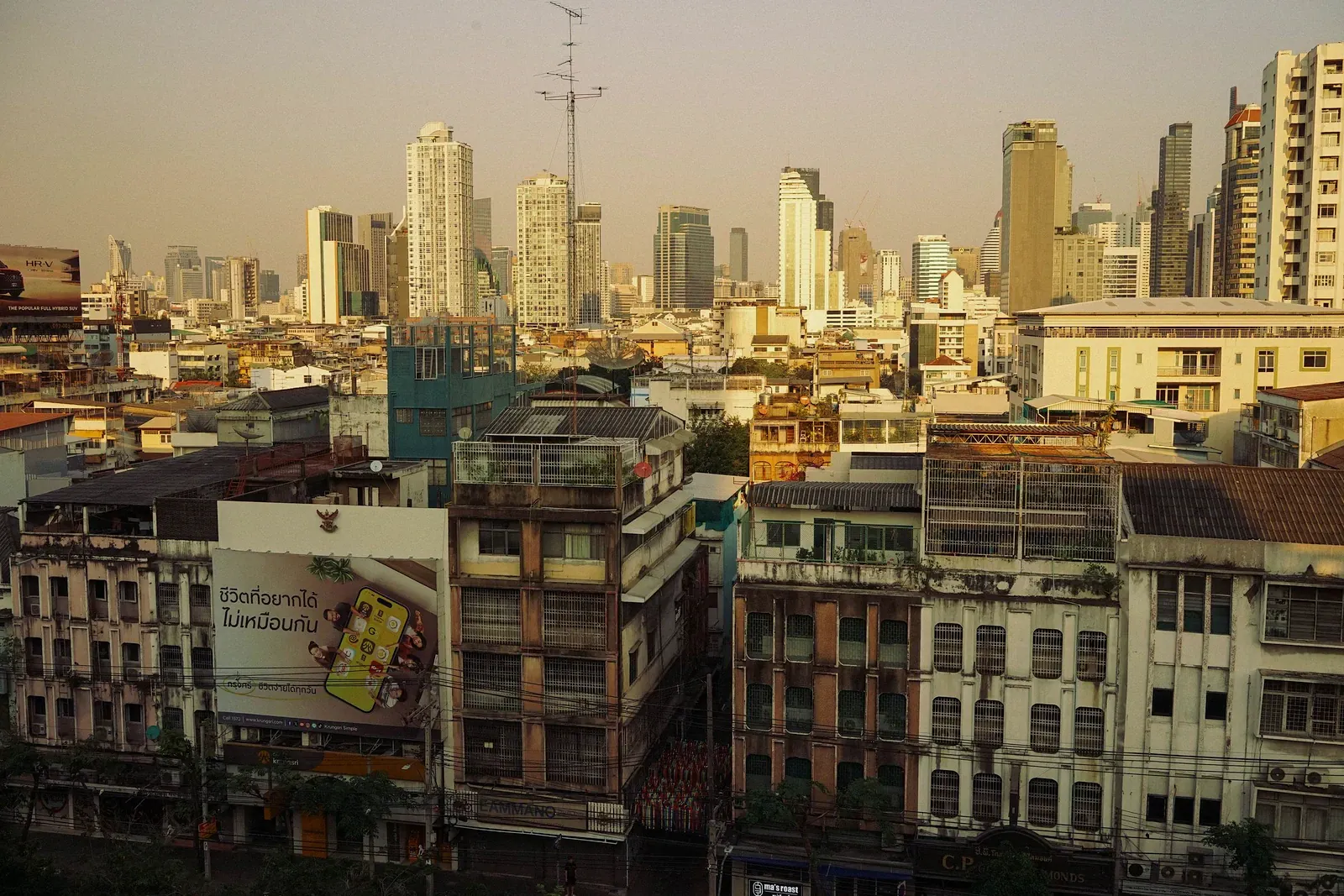
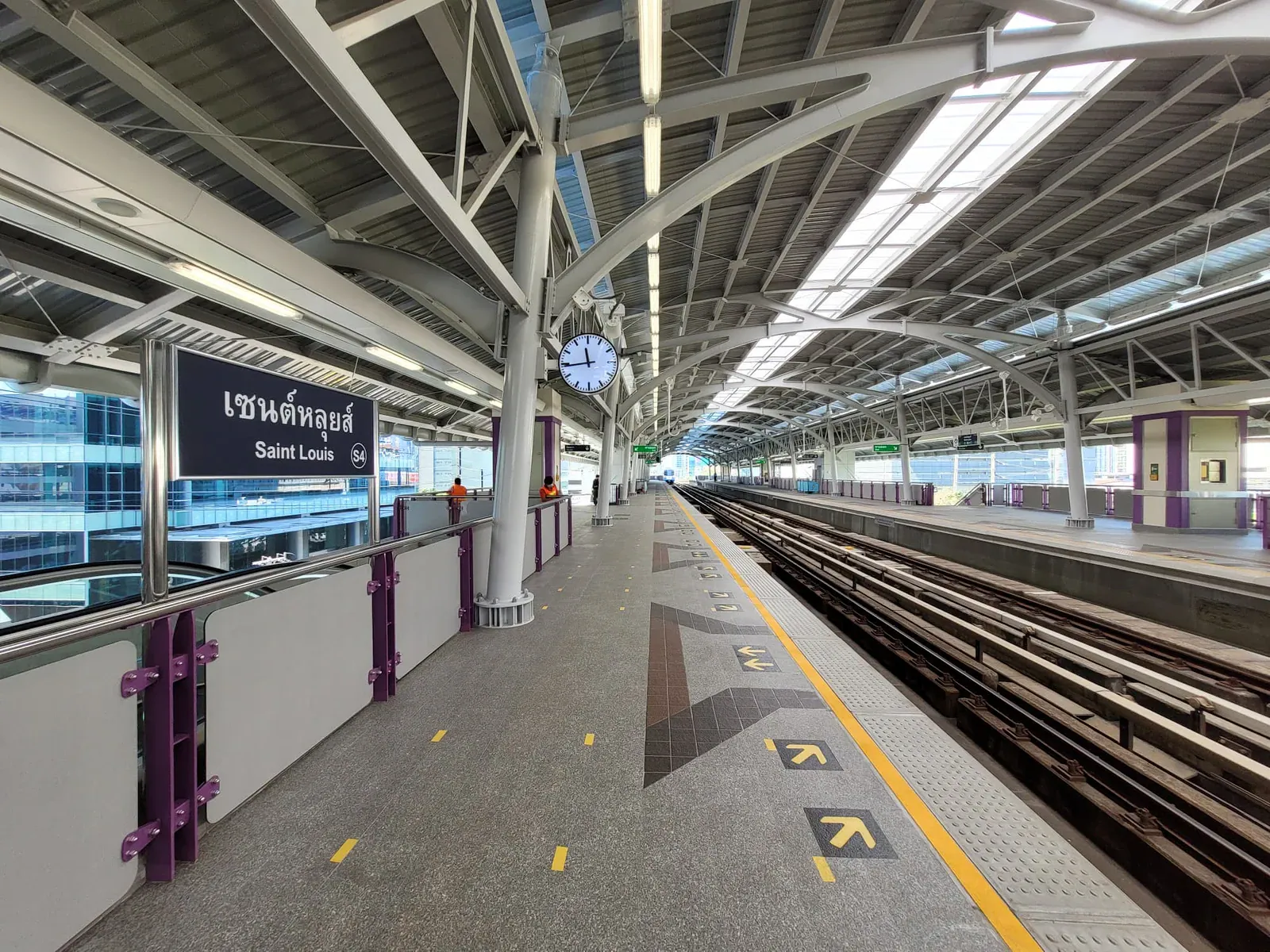
Budget tier: On Nut, Bang Na, Lat Phrao, Thonburi, Victory Monument
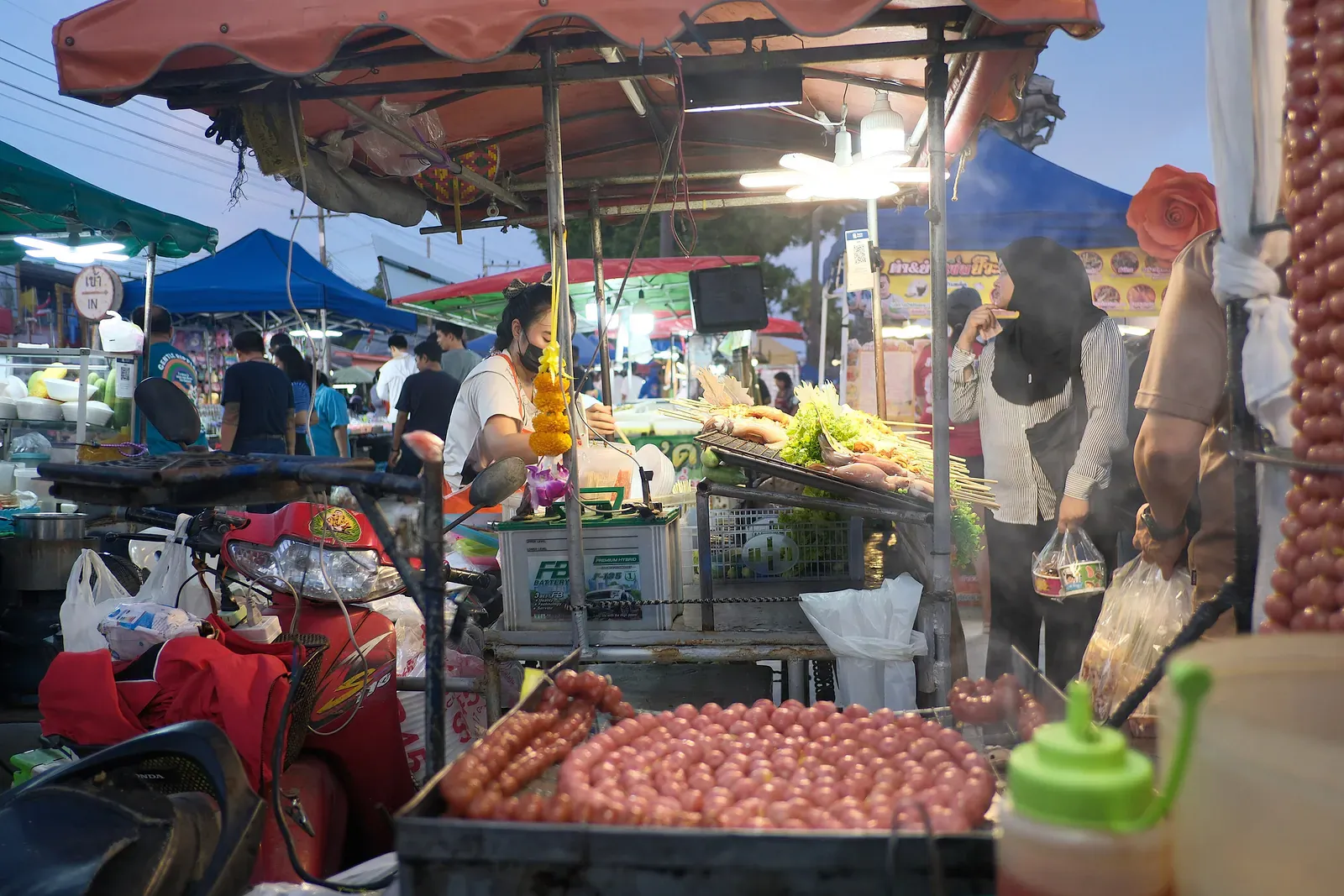
These areas share two things: real BTS, MRT or bus access, and a mostly local, non-touristy daily rhythm. On Nut in particular has become the default landing spot for nomads on a tight budget, still on the Sukhumvit line with a large wet market and a well-known 24-hour supermarket.
| Line item | Range (THB/month) | ~USD |
|---|---|---|
| Rent, 1BR | 10,000 - 18,000 | 285 - 510 |
| Food (mostly street and market) | 9,000 - 13,000 | 255 - 370 |
| Transport (BTS/MRT plus occasional Grab) | 1,500 - 2,500 | 45 - 70 |
| Total | 22,000 - 34,000 | ~630 - 965 |
Checked September 2026. Ranges only, not a quote for a specific unit.
Mid tier: Ari, Ekkamai, Rama 9, Ratchada, upper Sukhumvit
The same rail network, newer buildings, and a shorter ride into the CBD or lower-Sukhumvit restaurant strip. This is where Remitly’s cited “comfortable single professional” figure of 40,000 to 55,000 THB a month tends to land, once rent, food and transport are added together.
| Line item | Range (THB/month) | ~USD |
|---|---|---|
| Rent, 1BR | 15,000 - 28,000 | 425 - 795 |
| Food (mixed local and Western) | 15,000 - 20,000 | 425 - 570 |
| Transport (BTS/MRT plus regular Grab) | 2,500 - 4,000 | 70 - 115 |
| Total | 33,000 - 52,000 | ~940 - 1,480 |
Checked September 2026.
Premium tier: Phrom Phong, Thong Lo, Sathorn, Silom
The densest restaurant and nightlife concentration in the city, the best rail redundancy (two lines crossing at Sala Daeng or Asok), and rent to match. A one-bedroom in Silom alone checks in at an average of roughly 32,000 to 34,000 THB, with premium buildings in Phrom Phong and Thong Lo running from 22,000 THB at the low end to well above 35,000 THB. Some of this tier’s priciest pockets cluster by nationality as much as by budget, Phrom Phong’s Japanese community among them; see Bangkok’s Expat Enclaves by Nationality for how those clusters break down.
| Line item | Range (THB/month) | ~USD |
|---|---|---|
| Rent, 1BR | 32,000 - 50,000 | 910 - 1,425 |
| Food (Western-leaning, regular restaurant dining) | 20,000 - 30,000 | 570 - 855 |
| Transport (regular Grab or taxi) | 4,000 - 6,000 | 115 - 170 |
| Total | 56,000 - 86,000 | ~1,600 - 2,450 |
Checked September 2026. A 2BR or a top-tier building pushes rent alone past 45,000-80,000 THB.
The three totals side by side
- Budget (On Nut, Bang Na, Lat Phrao)
- 22,000-34,000
- Mid (Ari, Ekkamai, Rama 9)
- 33,000-52,000
- Premium (Phrom Phong, Thong Lo, Silom)
- 56,000-86,000
Source: Editorial synthesis of dated 2026 rent, food and transport sources; see the methodology callout above. Checked September 2026.
The jump from budget to mid tier is mostly rent and a step up in food spending. The jump from mid to premium is rent again, plus a food budget that shifts from mixed local-and-Western to mostly Western-priced restaurant dining, which moves the needle more than most people expect going in.
What these numbers don’t include
Where a car or scooter changes the math
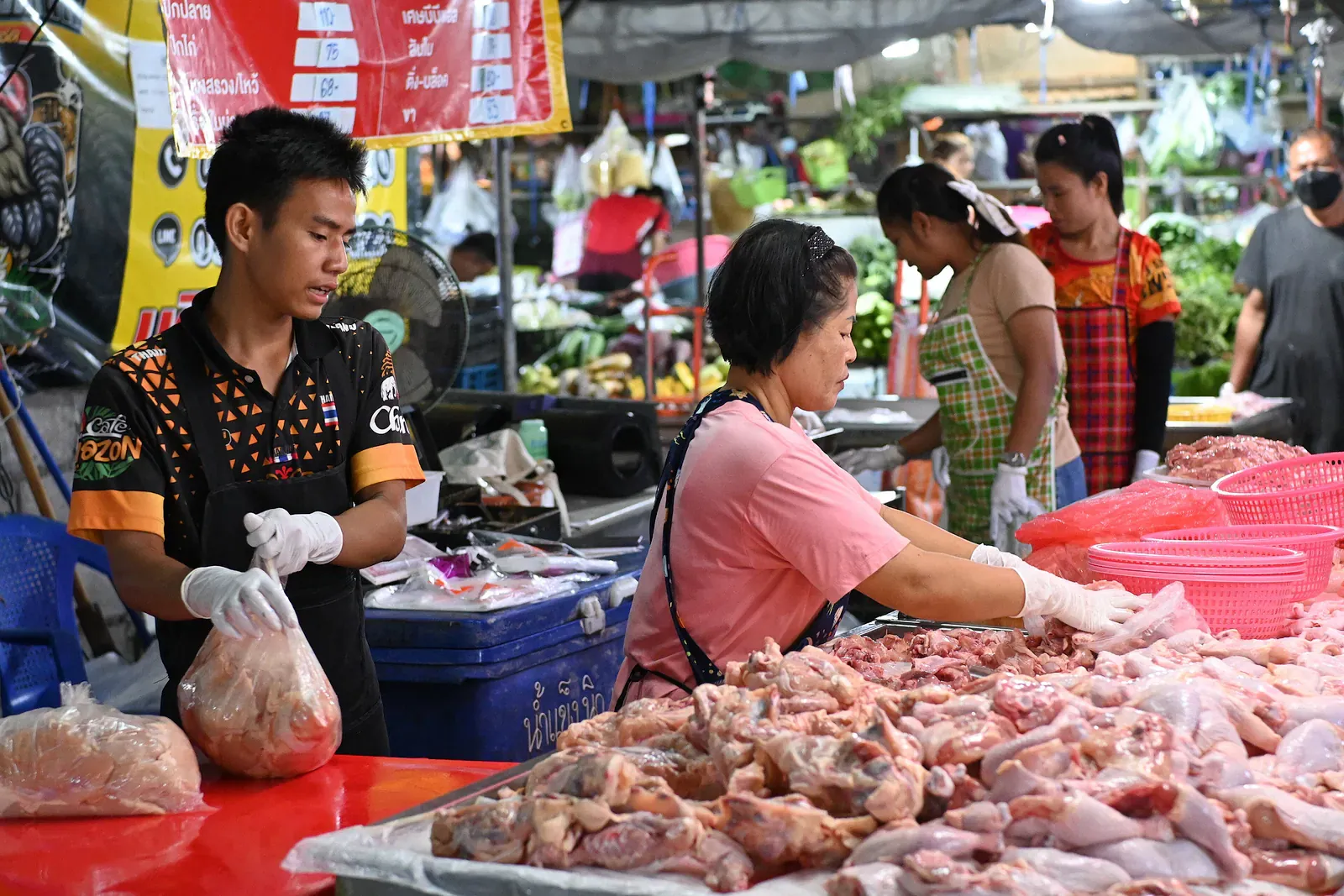
Every figure above assumes rail-based transport plus occasional ride-hailing, which works well for budget and mid-tier areas sitting directly on a BTS or MRT line. Areas with thinner rail coverage (much of Thonburi, outer Lat Phrao, parts of Bang Na) shift more of that transport budget onto a scooter or car, which adds fuel, parking and maintenance costs not reflected in the transport line above but usually still comes in below what a premium-tier resident spends on regular taxis and Grab.
Matching a budget to a tier
Treat the three tiers as a starting filter, not a final answer. Someone commuting daily to a Sathorn or Silom office may find a mid-tier commute costs more in time than the rent saved is worth; someone working remotely with no fixed office has the most freedom to sit in the budget tier without a daily trade-off. For the fuller area-by-area breakdown against lifestyle criteria (walkability, noise, nightlife), see Matching Your Lifestyle to a Bangkok Area; for commute minutes specifically, see Commute Times Across Bangkok by Area.
Common questions
What’s a realistic minimum monthly budget in Bangkok?
Based on the budget-tier figures above, roughly 22,000 to 25,000 THB (~630-710 USD) covers a basic one-bedroom, mostly street and market food, and BTS/MRT transport in an area like On Nut or Lat Phrao. Going meaningfully lower usually means a shared room or a much older, unfurnished unit further from a station.
Is Bangkok cheaper than other Southeast Asian capitals?
Broadly comparable to or cheaper than cities like Kuala Lumpur or Singapore for rent, and Numbeo’s Q1 2026 data puts non-rent costs in Bangkok roughly 35 to 40 percent below Western European capitals. Exact rankings shift with currency movements, so check a current cost-of-living index rather than relying on a fixed comparison.
Does a family need to budget differently?
Yes, mainly for two costs not covered here: international school fees, which can exceed the entire monthly budget above on their own, and a larger unit (2BR or bigger), which pushes rent well past the 1BR figures in every tier. Food and transport scale up with household size but less dramatically than housing and schooling.
Can I mix tiers, for example budget rent with premium-tier food habits?
Yes, and many residents do exactly that. The tiers describe common patterns tied to area character (a Thong Lo resident is more likely to eat out often because that’s what’s on their doorstep), not a rule that rent and lifestyle must match. Your actual total will sit somewhere between the tier ranges depending on habits, not just address.
Written by
Mike Brochlowski
Founder and editor, travel photographer and designer
I'm Mike Brochlowski, a travel photographer and designer, and I currently live on Koh Samui, Thailand. I built BangkokWiki to put practical, checked information about Bangkok in one place. Every page is researched from official and primary sources, and the text names them. Where a page shows a checked date, that is when its facts were last confirmed. I also run samui69.com, a non-commercial guide to Koh Samui. If you spot an error or something out of date, tell me through the contact page and I will check it and correct the page.
Read all articles
Visas and paperwork
Staying in Thailand longer?
Visas, extensions, documents and banking for longer stays. Rules and fees change often and offices apply them differently, so check the official source before you act.

Places to stay
Find a hotel
Explore the other desks
More from Living
- 10 min read
 10 min read
Sukhumvit vs Sathorn: Which Bangkok Area Should You Live In
 9 min read
Bangkok's Expat Enclaves: How Nationality Shaped Its Areas

Newsletter
You're subscribed as