Things to do
Thai Massage in Bangkok: Types, Prices, Etiquette
What Thai massage actually is, which type suits sore legs or a stiff neck, what a fair price looks like, and how to behave once you're on the mat.
At a glance
- Reading time
- 13 min read
- Chapters
- 15
- Published
- Sep 20, 2026
On this page
Thai massage in Bangkok ranges from a ฿250 shophouse foot rub to a two-hour spa ritual with hot oil and a private room. The type you want depends on what you actually need: assisted stretching for a stiff back, pressure work for training-sore legs, or an hour of quiet after a long flight. This guide covers the styles, the tiers of place that offer them, what a session costs, and the etiquette that makes the whole thing straightforward rather than awkward.
The main types, and what each is for
“Thai massage” is a catch-all. In practice you’re choosing between several distinct disciplines, and mixing them up is the most common way to end up disappointed.
| Type | What happens | Best for |
|---|---|---|
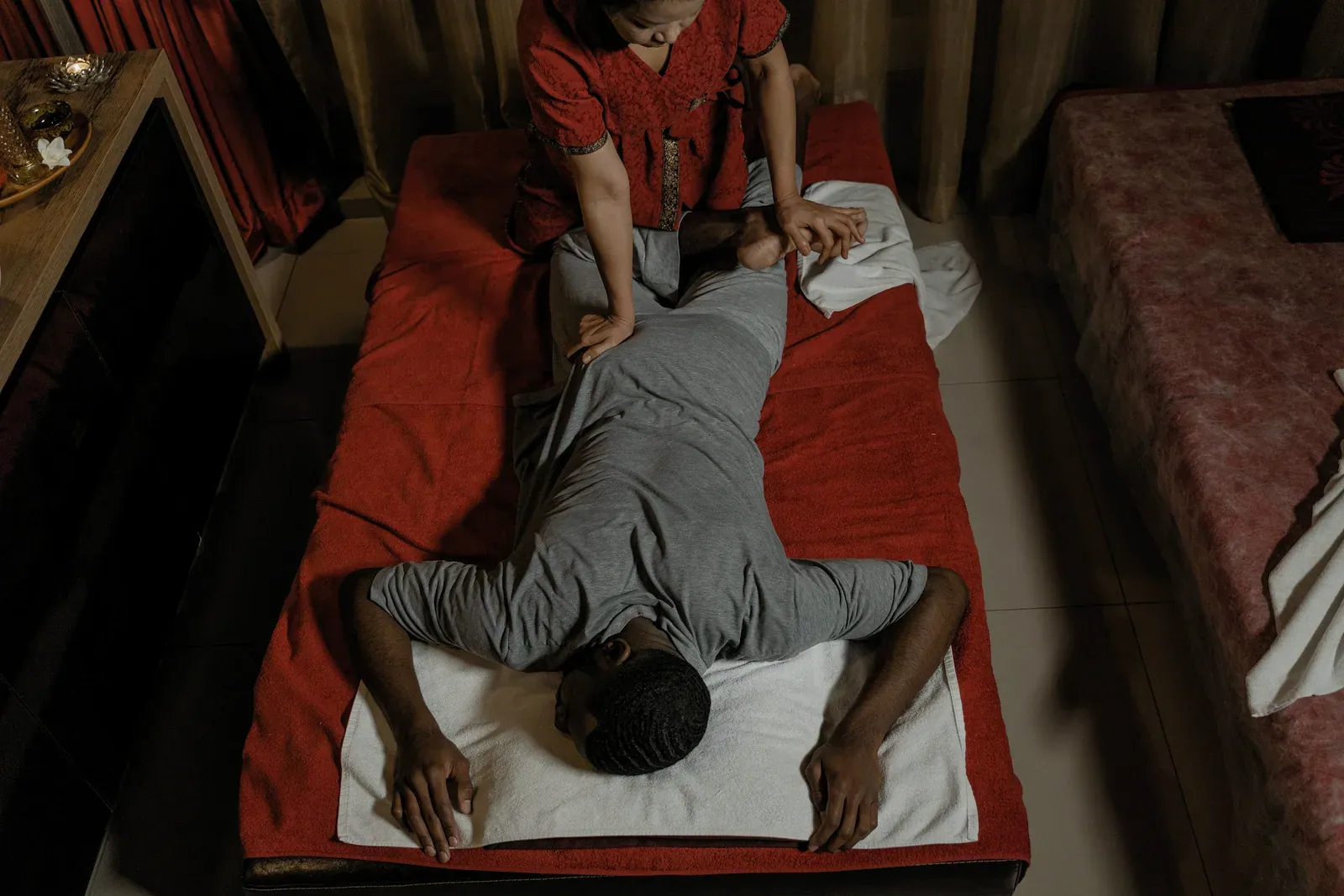
| Traditional Thai (nuad thai) | Done clothed, on a mat on the floor. The therapist uses palms, thumbs, elbows and feet to press along the body’s energy lines (sen), combined with yoga-like assisted stretches. No oil. | Stiffness, poor mobility, a full-body reset. Not gentle: expect real pressure. |
| Oil massage | Table-based, with the client undressed to underwear and draped with a towel. Long strokes with oil, less stretching than traditional Thai. | Relaxation, dry or tired skin, a softer session than nuad thai. |
| Aromatherapy | Oil massage with essential oils blended for a stated mood (usually “relaxing” or “invigorating”). Lighter pressure as a rule. | Pure relaxation, first-timers nervous about pressure. |
| Foot and reflexology | Seated or reclined, feet and lower legs only, sometimes with a wooden or plastic pressure stick. Usually 30-60 minutes. | Feet sore from walking all day; a short, low-commitment session. |
| Head, neck and shoulder | Seated, upper body only, sometimes over clothes. Short sessions, often 30-45 minutes. | Desk-worker tension, a break between sightseeing stops. |
| Herbal compress | Traditional Thai massage plus a hot muslin bundle of steamed herbs (lemongrass, turmeric, camphor) pressed into the muscle. | Deep muscle ache, joint stiffness, a more therapeutic session. |
| Deep tissue / sports massage | Firmer, more targeted pressure on specific muscle groups, sometimes with oil, sometimes dry. Closer to a Western sports-massage model. | Training soreness, DOMS after a hard Muay Thai session, a specific knot rather than a general reset. |
A rough rule for choosing: if your legs are wrecked from pad work or a long run, herbal compress or deep tissue does more than traditional Thai. If you sit at a laptop all day, head-neck-shoulder or oil massage on the upper back solves the actual problem faster than a full-body session. If you just want an hour of calm, aromatherapy is built for that and traditional Thai is not: it can be intense enough to leave you more alert than relaxed.
Traditional Thai massage, nuad thai, was inscribed on UNESCO’s Representative List of the Intangible Cultural Heritage of Humanity in 2019, recognised as a Thai system of bodywork built around the sen lines rather than Western muscle anatomy. That’s a reason it’s taken seriously here as a discipline, not just a spa menu item, but the listing is about cultural heritage, not a guarantee of quality at any given shop.
The tiers: where you actually get a massage
Bangkok’s massage scene runs on a wide spread of settings, and knowing which tier you’re walking into sets expectations correctly.
- Shophouse and streetside shops. Mats or reclining chairs, sometimes behind a curtain, air conditioning that may or may not work well, a laminated price list on the wall. No frills, often very good technique, and the cheapest tier by far.
- Mid-range spas. A proper reception, individual or shared treatment rooms, a wider menu (oil, aromatherapy, packages), often near BTS or MRT stations in areas like Thong Lor, Ekkamai or Silom. For named chains, see Lek, Health Land and Let’s Relax compared; for one chain’s branches, see the Makkha Health & Spa guide. For a scalp-focused treatment instead, see the head spa and hair spa guide.
- Hotel and destination spas. Attached to a hotel or standalone as a wellness destination, higher design standard, longer treatment times built in, prices to match. See day spas and treatments for how to judge whether the premium buys you anything beyond décor. For specific options, see hotel and day spas compared and the Oasis Spa guide.
- Blind-masseur establishments. Staffed by massage therapists who are visually impaired, a respected and long-standing employment sector in Thailand. Technique is typically strong (touch-based work doesn’t depend on sight) and prices sit at the lower-to-mid end.
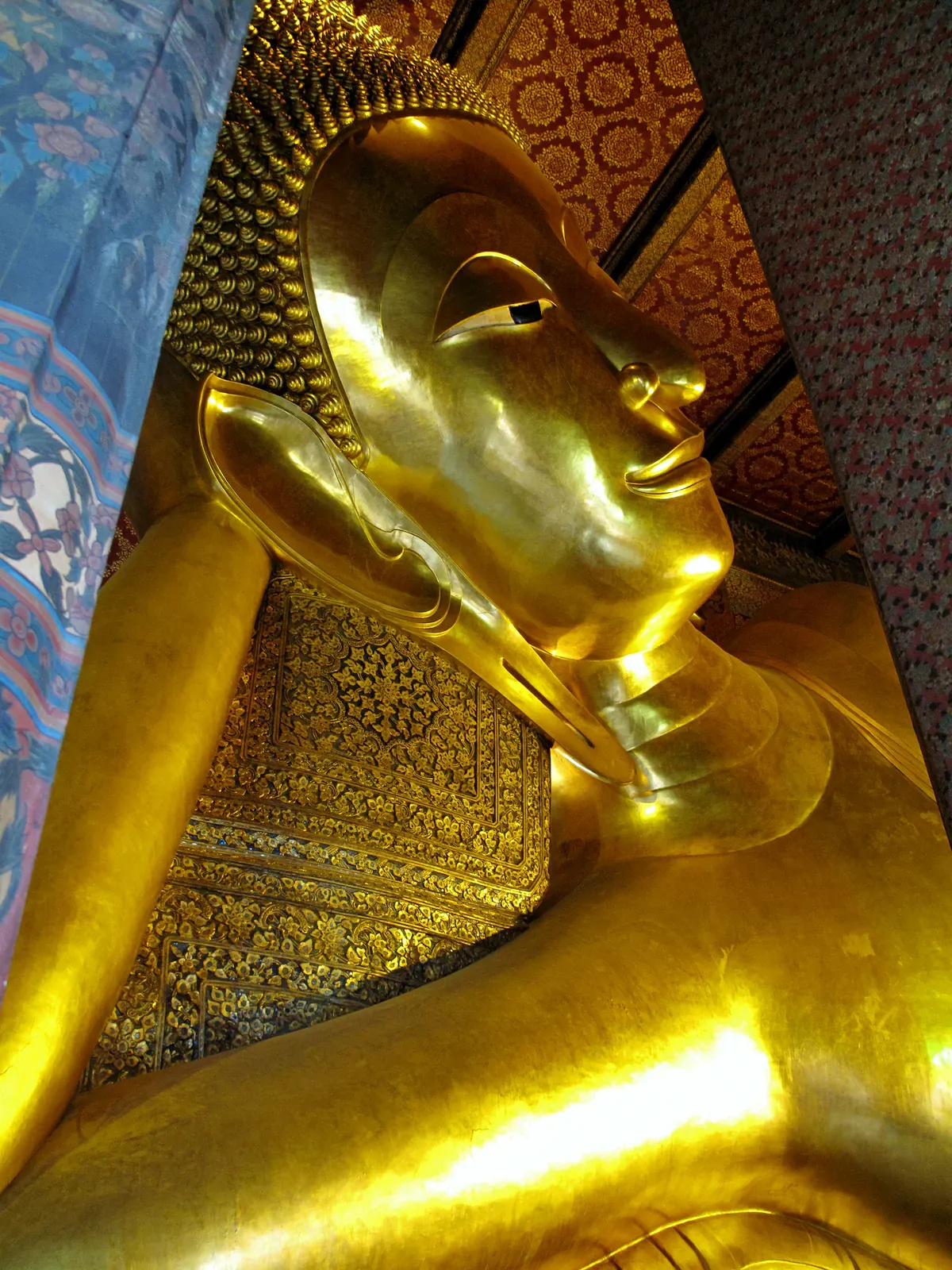
- Training-school clinics. Attached to a massage school, staffed by students or recent graduates under supervision, often cheap because you’re effectively part of the training pipeline. The best-known is the school at Wat Pho, one of Bangkok’s oldest temples, which has taught traditional massage as part of its wider role preserving Thai traditional medicine since the mid-20th century: treat any specific hours, prices or course details as needing a fresh check before you rely on them, since a temple-run school changes these more often than a commercial spa does.
Telling a massage shop from something else
Not every storefront advertising “massage” in Bangkok is a massage shop. This isn’t a moral judgement, just a practical one: walking into the wrong kind of venue wastes time and money and can be uncomfortable for everyone involved. A few signals, used together rather than alone, generally separate the two:
- Signage and frontage. A legitimate massage shop usually has a visible price list, a menu of named treatments (foot, oil, traditional, aromatherapy), and open sightlines into a reception or waiting area. Venues with blacked-out windows, no price list, and staff seated outside calling to passers-by are signalling something else.
- Staff behaviour at the door. A normal shop lets you look at the menu and decide. If staff are aggressive about pulling you in, or the pitch shifts as soon as you ask a specific question about a treatment, that’s a sign to walk on.
- Time of day and location clustering. Legitimate massage shops operate all day and are common near stations, malls and hotels. A cluster of similar-looking venues that only get busy after dark, in nightlife-adjacent sois, is a different market.
- Price structure. A traditional Thai or oil massage with a clear per-hour price that matches the ranges below is a normal shop. Vague pricing, or a price that seems too low for what’s described, is a flag.
If in doubt, choose a shop with visible reception staff, a printed menu, and other customers already inside.
Booking or walking in
Shophouse and mid-range spas mostly take walk-ins, though weekends and evenings near BTS stations can mean a short wait. Hotel and destination spas generally expect a booking, sometimes same-day by phone or app, sometimes a day or two ahead for a specific time slot or a couples’ room. If you have a fixed schedule (a flight to catch, a Muay Thai class booked after), book ahead rather than gambling on availability.
What to wear, and what happens when you arrive
For traditional Thai massage, most shops provide loose cotton pyjama-style clothing to change into; you keep your underwear on beneath it. For oil-based treatments, you undress to your underwear (or fully, by preference, with draping) and lie under a sheet or towel, with the therapist uncovering one area at a time. Foot and head-shoulder sessions usually happen in your own clothes.
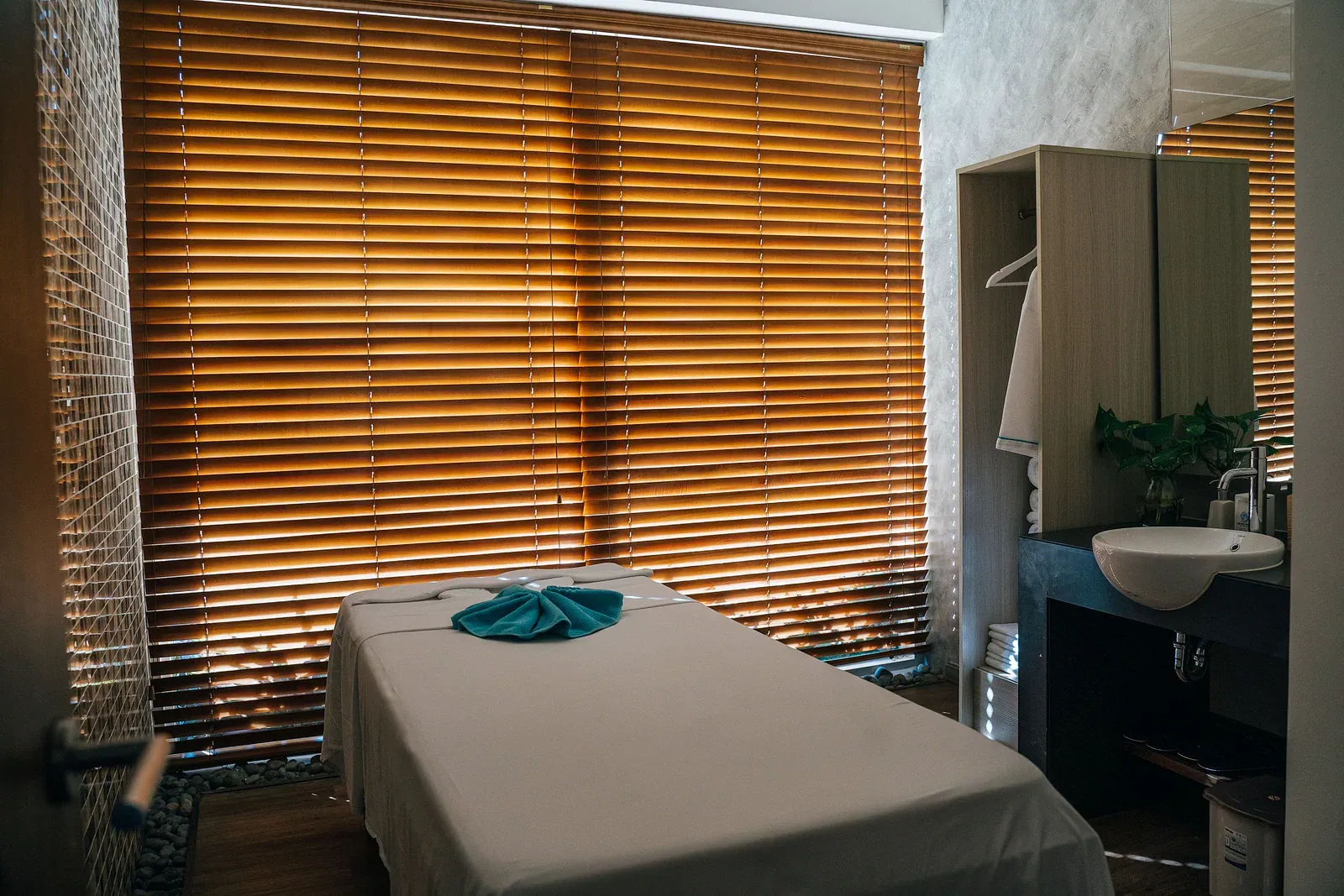
Showering beforehand isn’t mandatory at most shops, but it’s good practice, especially after a workout: many mid-range and hotel spas offer a shower before or after treatment as part of the room. If you’ve just trained, sweaty is normal and staff won’t react to it, but a quick rinse makes the session more pleasant for you as much as anyone else.
Communicating pressure
Thai massage therapists calibrate pressure to the client, but they can’t read minds, and a shophouse session with a language gap relies on a few standard phrases and gestures:
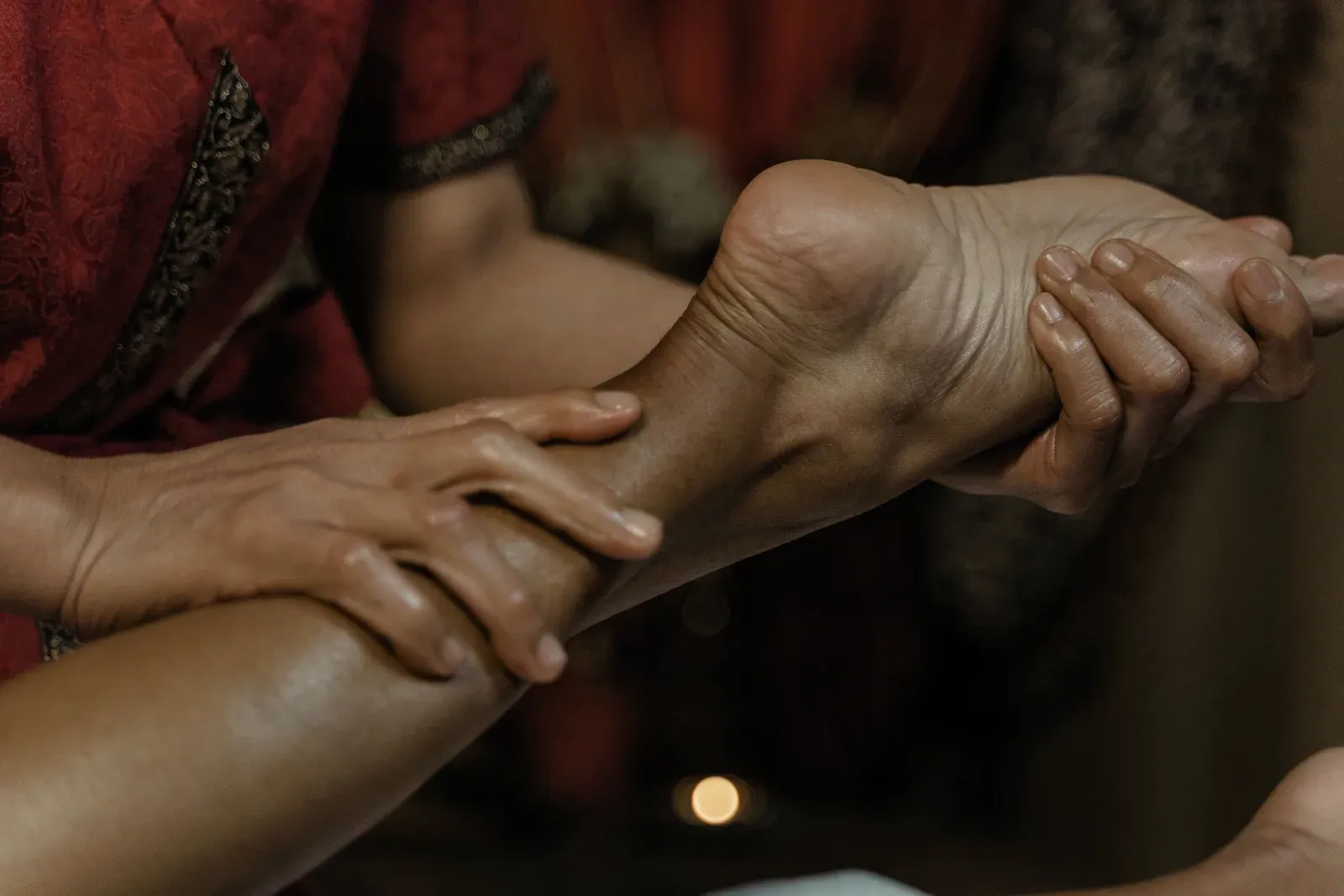
- “Bao bao” (เบาๆ): lighter, please.
- “Nak nak” (หนักๆ): firmer, please, if you want more.
- A raised hand or a wince is understood everywhere; therapists ease off immediately.
- Real pain, sharp or shooting rather than the deep-ache pressure of a good stretch, should be said clearly: “mai sabai” (ไม่สบาย, not comfortable) or simply “stop” works.
Traditional Thai massage is not meant to be agony. Deep pressure and assisted stretching should feel intense but controlled; anything that feels like it’s tweaking a joint the wrong way is worth stopping immediately rather than tolerating out of politeness.
What’s normal, and what isn’t
Cracking joints during stretches, walking on the back (a recognised technique for larger clients or firmer full-body pressure), and a therapist using elbows or knees for deep pressure are all standard. What isn’t standard: a therapist ignoring a clear “lighter” request, unrequested changes to draping, or pressure applied directly to areas you’ve flagged as injured. Any of that is a reason to speak up or end the session: a fair shop will not push back on a customer stopping a treatment early.
Modesty, draping and tipping
Draping conventions are conservative by international standards: oil massage keeps a sheet or towel over areas not being worked on, and traditional Thai massage happens fully clothed. There is no expectation of, and no reason to accept, anything beyond the treatment described on the menu: legitimate shops and spas run a straightforward, professional service.
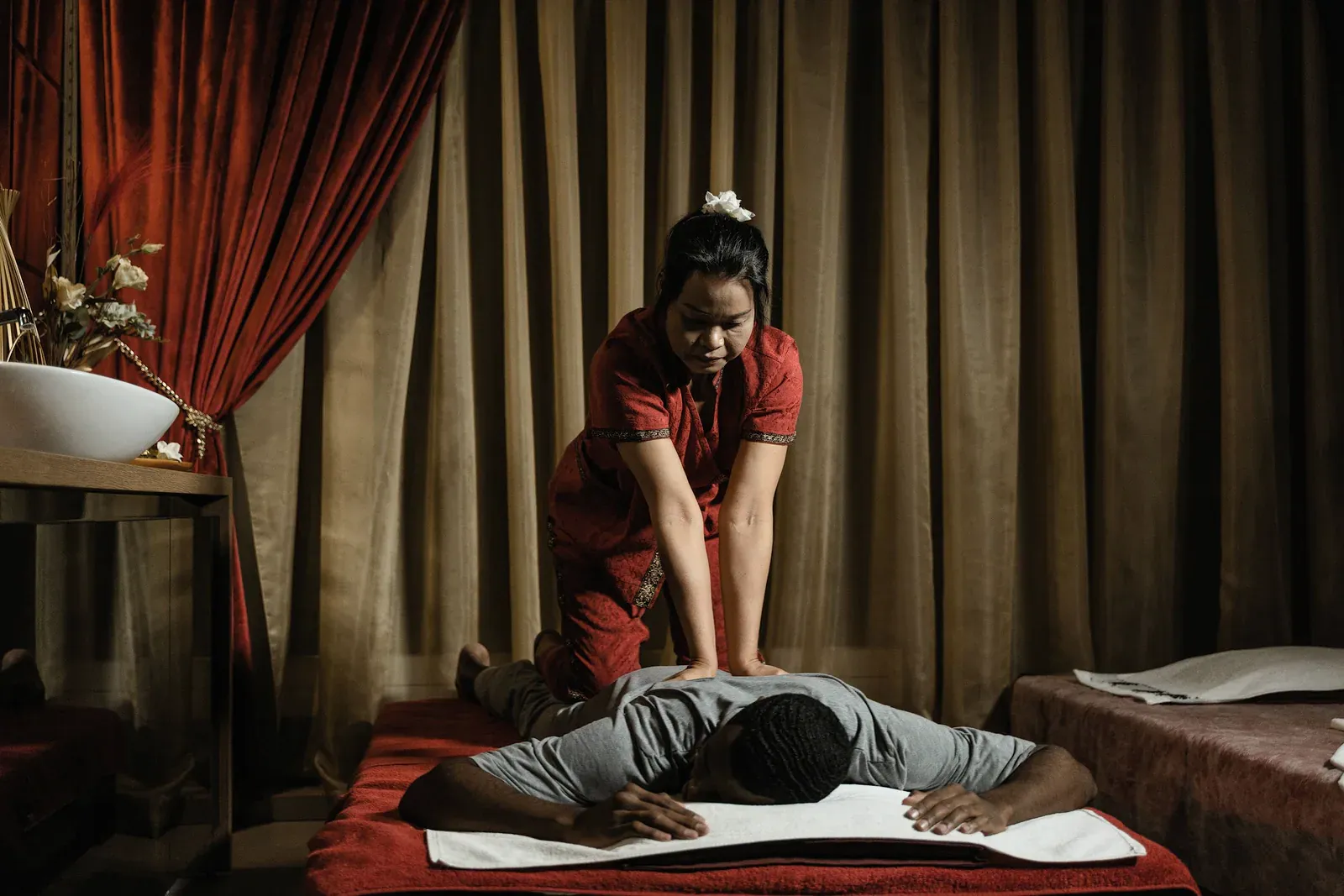
Tipping isn’t obligatory but is normal and appreciated. A rough range: ฿50-100 at a shophouse for a one-hour session, ฿100-200 at a mid-range spa, and ฿200 or more at a hotel spa for a longer treatment, adjusted up for a session you were particularly happy with. Cash, handed directly to the therapist rather than left with reception, is the standard method.
How long a session runs
Foot and head-shoulder sessions typically run 30-60 minutes. Traditional Thai and oil massage are usually offered in 60, 90 and 120-minute blocks, with 90 minutes the most common choice for a full-body session that doesn’t feel rushed. Herbal compress sessions tend to run 90 minutes or more, since the compress itself needs reheating partway through. Book the longer slot if you’re addressing genuine soreness rather than a quick reset: an hour is enough to relax, not always enough to properly work through a tight lower back.
Price bands (indicative, 2026)
| Tier | 60-minute traditional Thai | Notes |
|---|---|---|
| Shophouse / streetside | ฿250-450 (roughly US$7-13) | Cash, no service charge |
| Blind-masseur shop | ฿300-500 (roughly US$8-14) | Often excellent technique for the price |
| Training-school clinic | ฿300-600 (roughly US$8-17) | Prices and hours change; check current details before visiting |
| Mid-range spa | ฿500-1,200 (roughly US$14-34) | Service charge and VAT often added at the higher end of this tier |
| Hotel / destination spa | ฿1,500-4,000+ (roughly US$42-110+) | Service charge (often 10%) and 7% VAT usually added on top |
These are broad indicative bands for 2026, not quotes for any specific business: always confirm the price before the treatment starts, and ask directly whether service charge and VAT are included if it isn’t shown on the menu.
Safety and contraindications
Massage is generally safe, but it isn’t automatically appropriate for every body or every condition. As a general guide rather than medical advice: pregnancy calls for a pregnancy-trained therapist and avoidance of deep abdominal or certain pressure-point work; a recent injury, fracture, or surgery needs clearance from a clinician before deep tissue or assisted stretching; uncontrolled high blood pressure, blood clotting issues, or a fever are all reasons to postpone; and any skin infection or open wound should be pointed out so the therapist avoids the area. This is not medical advice: if you have a condition you’re unsure about, ask a doctor before booking, and tell the therapist about it before the session starts regardless.
Massage after Muay Thai training or a long flight
Post-training soreness responds better to herbal compress or targeted deep tissue than to a general full-body traditional Thai session, since the goal is working specific muscle groups rather than a whole-body stretch. That said, wait a few hours after very intense training before deep pressure work: freshly fatigued muscle can be more sensitive than it feels in the moment. See saunas, ice baths and recovery for how massage fits alongside cold plunge and stretching in a weekly recovery routine.
After a long-haul flight, a gentler session (oil massage or head-neck-shoulder) does more good than an intense traditional Thai stretch, since travel fatigue and dehydration make the body less resilient to deep pressure for the first day or two. Foot massage is a popular choice for this reason: low intensity, immediate relief for swollen feet and ankles.
Learning it yourself: courses
Short courses in traditional Thai massage are widely available in Bangkok, ranging from single-day introductions to multi-week certificate programmes, most commonly at training-school clinics and dedicated massage schools. Course length, content and cost vary enough between providers that it’s worth treating any specific claim about duration or certification as something to verify directly with the school rather than take as fixed. If you’re a long-stayer or training-focused visitor, a short course is a reasonable way to learn basic techniques for a training partner, though it isn’t a substitute for the years of practice behind a good professional therapist.
Accessibility for older visitors
Traditional Thai massage on a floor mat involves getting down to and up from the floor, which isn’t ideal for visitors with limited mobility or joint issues. Table-based oil massage, or a spa that offers a raised mat platform, is usually the easier option. It’s reasonable to ask directly whether a shop can offer table-based traditional Thai massage, or to choose foot and head-shoulder treatments, which are done seated and involve no floor work at all. Hotel and mid-range spas are generally better set up for this than shophouse venues, simply because they have the room layout and equipment to offer alternatives.
For anyone managing a chronic condition (arthritis, osteoporosis, a hip or knee replacement, or ongoing balance issues), a shorter, gentler session at lower pressure is a reasonable request, and a good therapist will adjust rather than push through a standard routine regardless of what’s said at the start. Mentioning a condition before the session begins, even briefly, matters more than which type of massage is chosen: it changes how a competent therapist approaches pressure, positioning and which stretches to skip entirely.
Choosing a therapist and judging technique
There’s no certification badge visible from the street that reliably separates a strong therapist from a weak one, so a few practical signals help instead. A therapist who asks about problem areas, recent injuries or pressure preference before starting is generally more attentive than one who begins without asking anything. Steady, even pressure that builds gradually rather than jumping straight to maximum force in the first minute is a good sign, as is a therapist who checks in partway through a long session rather than working in silence throughout. None of this is foolproof (a quiet therapist can still be excellent) but a shop that’s busy with repeat local customers, not just passing tourists, is usually a reasonable proxy for consistent quality, since locals have less patience for a mediocre massage than a one-time visitor might.
To learn the technique, see Thai massage courses in Bangkok.
Common questions
Is Thai massage supposed to hurt?
Some discomfort during deep pressure and stretching is normal, especially in tight areas, but it should stay in the range of “intense” rather than sharp pain. Say “bao bao” for lighter pressure at any point: a good therapist adjusts immediately.
What’s the difference between Thai massage and oil massage?
Traditional Thai massage is done clothed on a mat, with no oil, and includes assisted stretching. Oil massage is table-based, uses long strokes with oil, and is generally gentler and more purely relaxing.
How much should I tip for a massage in Bangkok?
A rough range is ฿50-100 at a shophouse, ฿100-200 at a mid-range spa, and ฿200 or more at a hotel spa, handed in cash directly to the therapist. It isn’t obligatory, but it’s the norm.
Can I get a Thai massage if I’m pregnant?
Only from a therapist trained in pregnancy massage, and generally not in the first trimester: ask a clinician before booking. This is general guidance, not medical advice, and individual circumstances vary.
Is the Wat Pho massage school worth visiting?
It’s a genuinely significant institution in the history of Thai traditional medicine and training, within the Wat Pho temple complex. Treat any specific price, timing or course detail as something to confirm at the time, since a temple-run school updates these independently of the tourism calendar.
How do I tell a legitimate massage shop from something else?
Look for a visible price list, an open reception area, a normal range of named treatments, and staff who let you browse without pressure. Aggressive touting, blacked-out windows, and vague pricing are signs to walk on to the next shop.
Written by
Mike Brochlowski
Founder and editor, travel photographer and designer
I'm Mike Brochlowski, a travel photographer and designer, and I currently live on Koh Samui, Thailand. I built BangkokWiki to put practical, checked information about Bangkok in one place. Every page is researched from official and primary sources, and the text names them. Where a page shows a checked date, that is when its facts were last confirmed. I also run samui69.com, a non-commercial guide to Koh Samui. If you spot an error or something out of date, tell me through the contact page and I will check it and correct the page.
Read all articles
Where to stay
Pick the area before the hotel
Traffic and heat make Bangkok distances feel longer than they look on a map, so the area shapes a trip more than the hotel does. Our guides match areas to trip types and explain the trade-offs.

Places to stay
Find a hotel
More from Things to do
- 12 min read
 12 min read
Sauna and Ice Bath in Bangkok: A Guide to the Recovery Scene
 10 min read
Hidden temples in Bangkok worth crossing the city for

Newsletter
You're subscribed as