Things to do
Hidden temples in Bangkok worth crossing the city for
Thonburi canal temples, Chinatown's syncretic shrines, ornate outliers and quiet old-town wats beyond the Grand Palace circuit, with transit and honest caveats.
At a glance
- Reading time
- 10 min read
- Chapters
- 10
- Published
- Sep 20, 2026
On this page
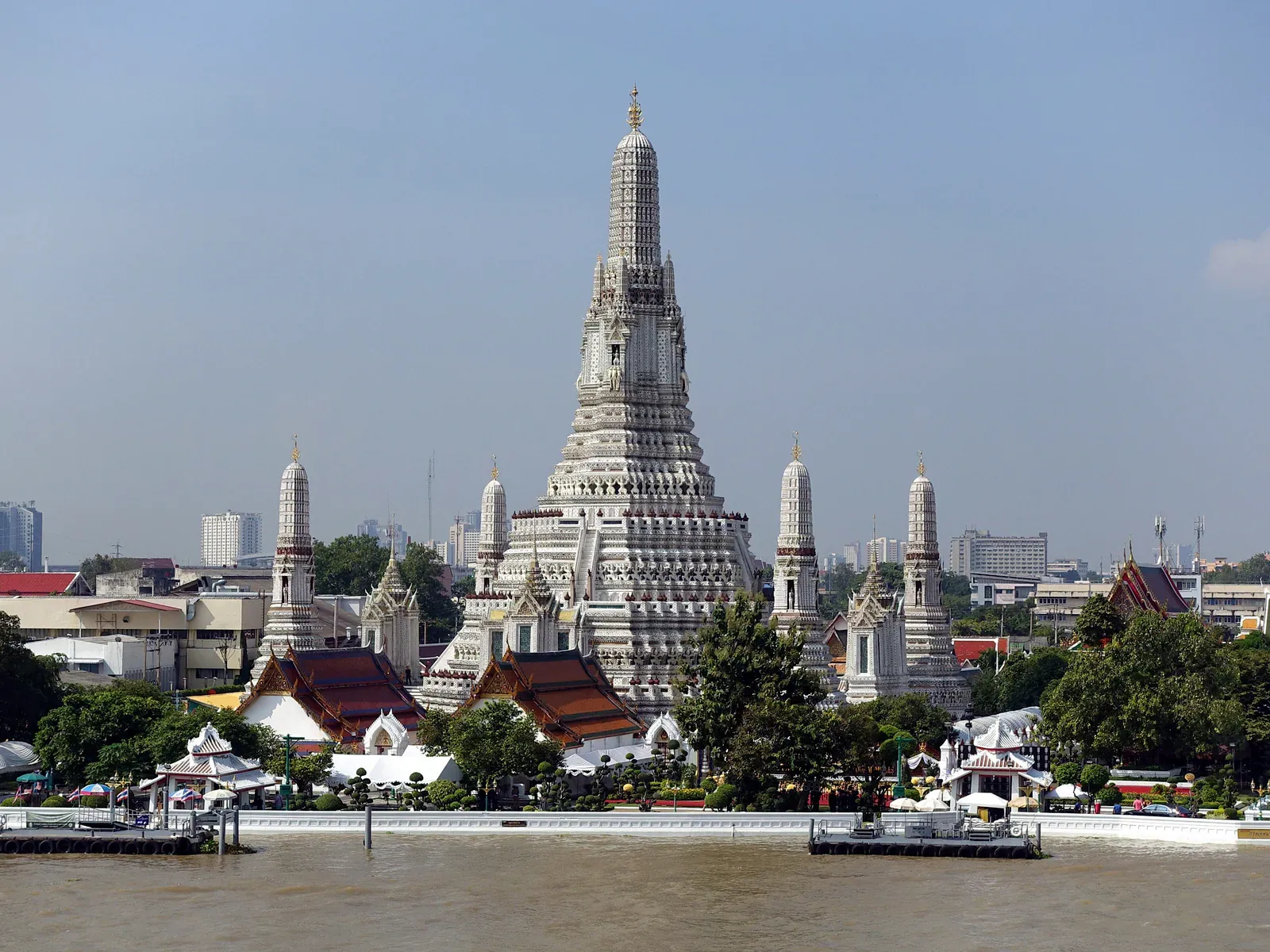
Once the Grand Palace, Wat Pho and Wat Arun are done (see famous Bangkok temples for those), Bangkok has dozens more temples worth the trip: quieter not because they matter less, but because they sit off the express-boat tourist run and see far more Thai worshippers than foreign visitors. This is a guide to where they cluster, what makes each group distinct, and how to visit one respectfully when you’re plainly the only outsider in the courtyard.
Why “quieter” isn’t “lesser”
The big three draw crowds because they’re tied to the monarchy, the old royal district, and a handful of famous images and structures. Most of Bangkok’s several hundred other temples are just as old, just as active, and in some cases architecturally more interesting. They’re simply parish temples serving a neighbourhood rather than tourism landmarks. Visiting one means seeing a Bangkok temple doing what temples actually do day to day: merit-making, a funeral, a school group, an elderly regular sweeping the courtyard, rather than a queue and a gift shop.
Thonburi and canal-side temples
The west bank of the Chao Phraya, Thonburi, was Bangkok’s original capital before the royal court moved across the river, and it kept a denser concentration of old temples along its canals than the more redeveloped east bank. Several sit directly on the water and are still most naturally reached by boat rather than road.
- Wat Prayurawongsawas, near the Memorial Bridge area, has a large white chedi and a hillside garden with a distinctive turtle pond: genuinely quiet grounds a short walk or cross-river ferry from the old town.
- Wat Kalayanamit, close by on the Thonburi bank, houses one of the city’s largest seated Buddha images inside an oversized viharn, and looks directly across the river toward the old town’s temples.
- Smaller canal-side wats scattered along Thonburi’s remaining klongs (canals) are best found by taking a longtail boat tour of the canals themselves rather than targeting one by name: the boat ride is the point, and whichever temple you stop at along the way is a bonus.
Getting there: cross-river ferries from piers like Tha Tien or Ratchawong reach the Thonburi bank in a few minutes; a short walk covers the rest for Wat Prayurawongsawas and Wat Kalayanamit. Allow half a day if you’re adding a canal boat tour rather than just the two temples.
Caveat: canal-side temples have limited shade over open ground, and the Thonburi side generally has fewer facilities geared toward visitors: fewer English signs, no gift shop, sometimes no obvious entrance for a first-time visitor. That’s part of what makes them feel genuinely local.
Old-town temples locals actually use
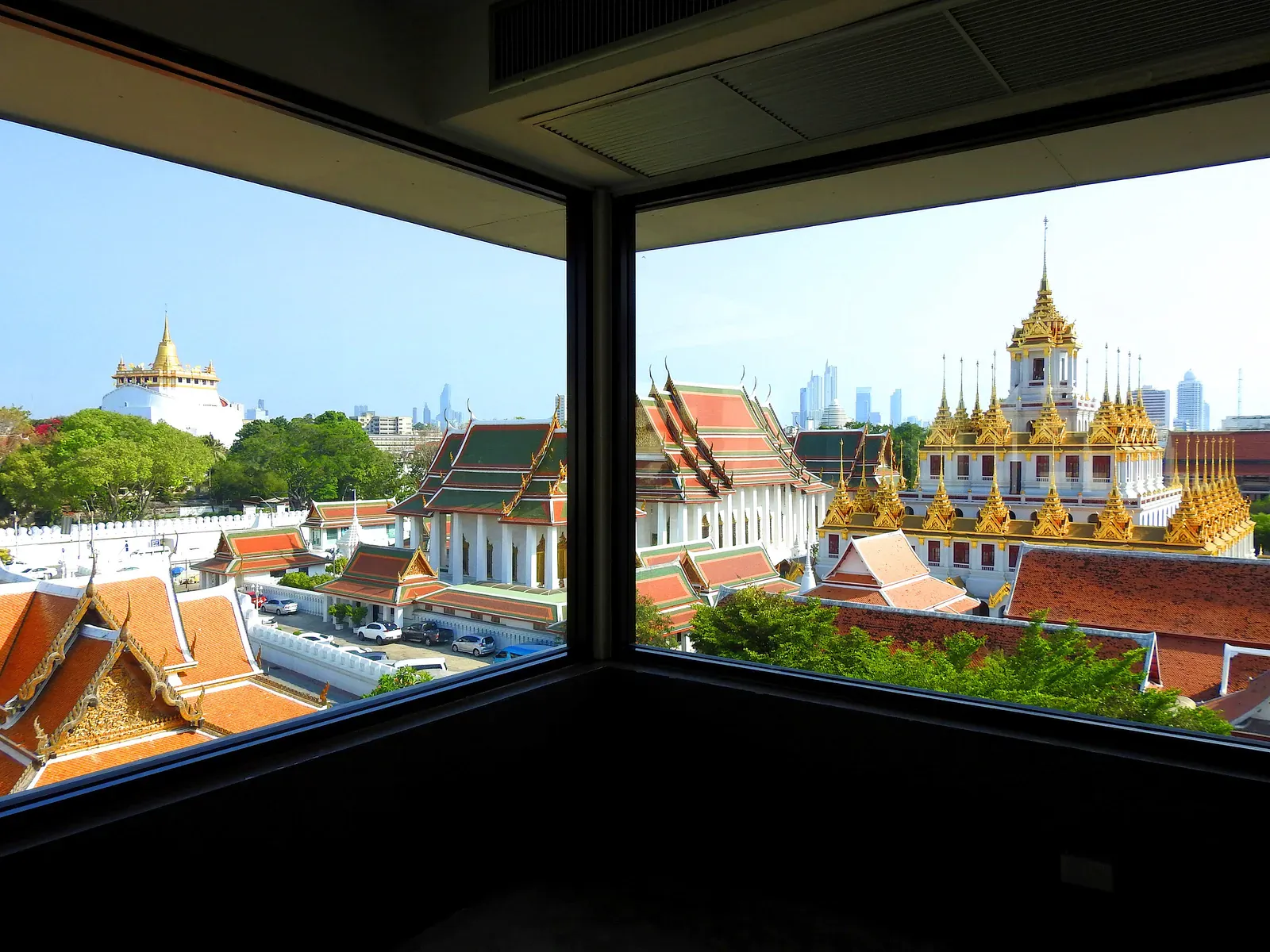
Rattanakosin, the old royal island, has more working temples than the three most visitors see. Two worth the short detour:
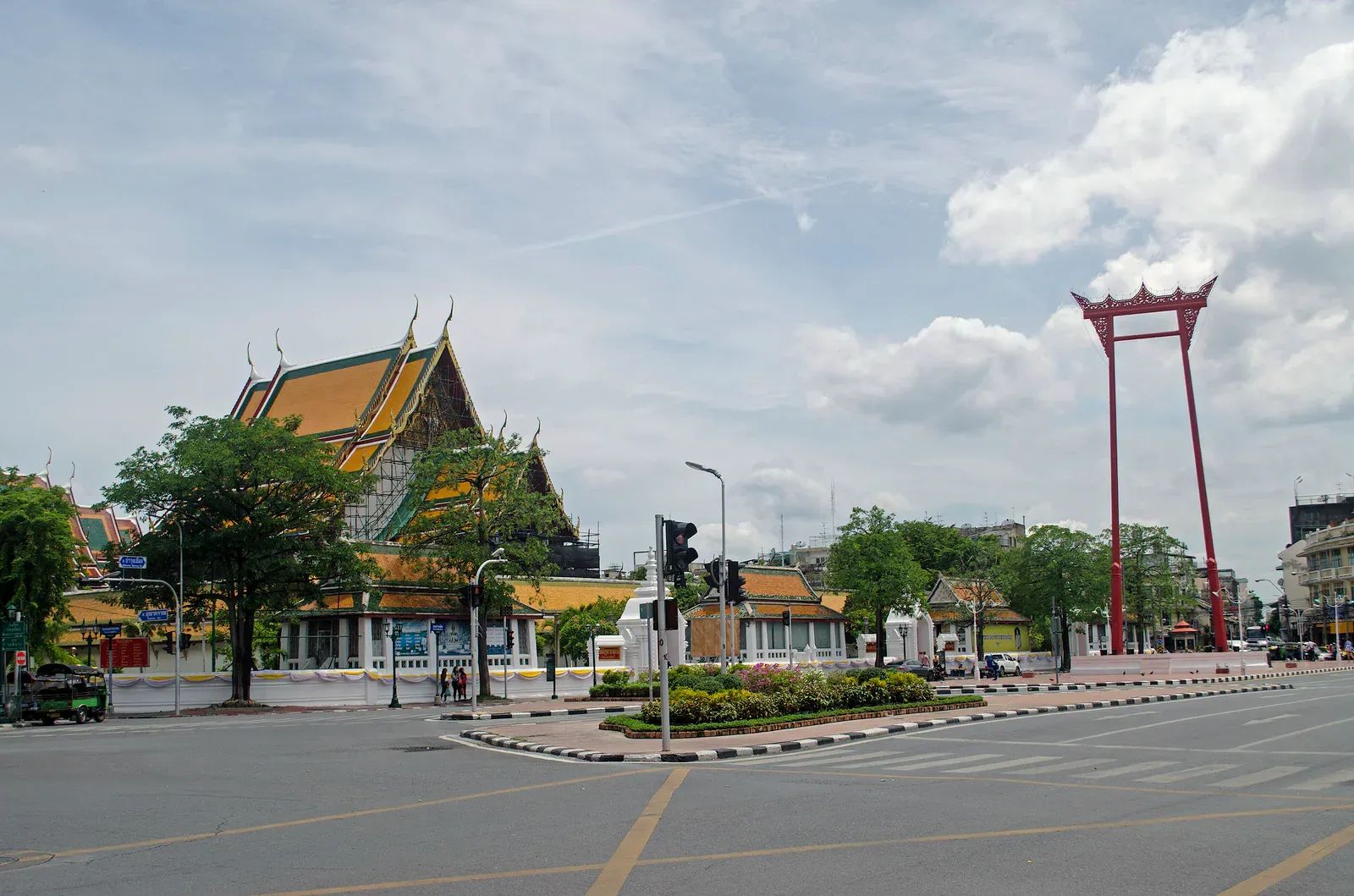
- Wat Bowonniwet Ratchawihan, historically tied to the Thai monarchy and to a period several kings spent ordained as monks there, sits toward the Banglamphu end of the old town near Khao San Road, an easy add if you’re already in the area, and notably calmer than the streets right outside it.
- Wat Rakhang Khositaram, on the Thonburi bank almost directly across from the Grand Palace, is known locally for its bell tower (the temple’s name means “bell temple”) and for a shrine associated with a revered 19th-century monk, Somdet Toh, whose amulets remain among the most sought after in the country. A cluster of amulet stalls sits nearby.
Getting there: both are within walking distance of the Rattanakosin temple circuit, or a short cross-river ferry for Wat Rakhang from the Tha Chang area. Allow thirty to forty-five minutes at each unless the amulet stalls draw you in longer. For the hilltop temple nearby, see our Wat Saket Golden Mount guide.
Chinatown and the Chinese-Thai syncretic sites
Yaowarat, Bangkok’s Chinatown, has its own dense cluster of temples and shrines that blend Buddhist, Taoist and Chinese folk-religion practice in a way distinct from a standard Thai Buddhist wat: worth visiting with that difference in mind rather than expecting the same layout and etiquette throughout.
- Wat Traimit houses a large solid-gold Buddha image, discovered by accident decades ago inside a plaster casing that had concealed it, reportedly for protection during an earlier period of upheaval. It sits right at the edge of Chinatown, an easy combine with a Yaowarat food walk.
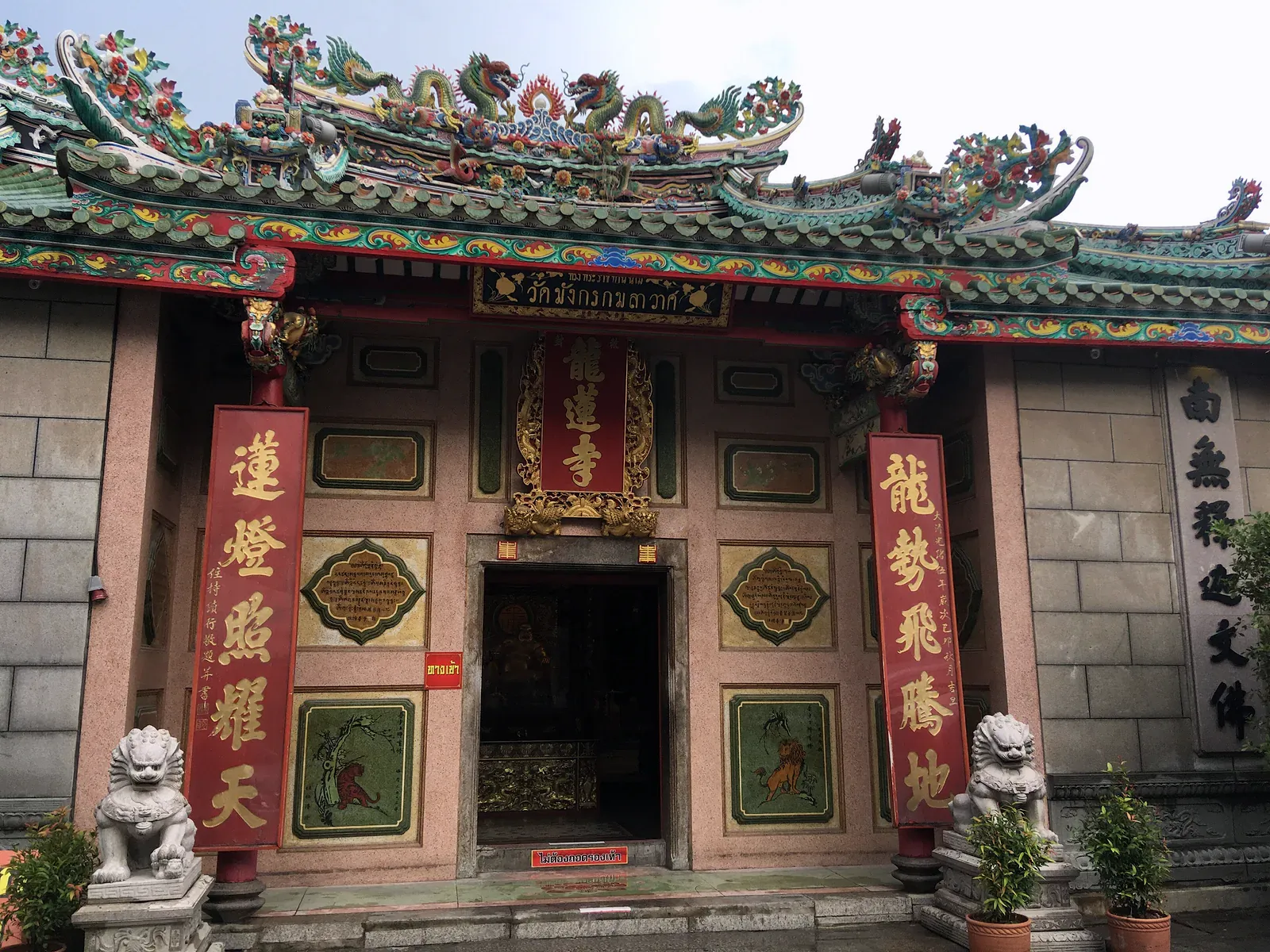
- Wat Mangkon Kamalawat, Chinatown’s principal Chinese Mahayana temple, is dense with incense smoke, red lanterns and Chinese-script signage, and busiest around Chinese New Year: a visibly different atmosphere from a Thai Theravada wat, worth noting so you’re not caught applying the wrong etiquette assumptions.
- Wat Chakrawat, tucked in the older lanes of Chinatown, is known locally for a small pool of crocodiles kept on the grounds: an old, unusual feature rather than a designed attraction, and one that surprises most first-time visitors.
- Smaller Chinese shrines throughout Yaowarat’s lanes, dedicated to specific deities rather than the Buddha, are easy to combine with a walking food tour: treat them as a different tradition sharing the same streets, not a variant of the temples elsewhere on this list.
Getting there: MRT Wat Mangkon station puts you within walking distance of most of this cluster; Hua Lamphong station also works. Allow a half-day if combining with Yaowarat’s food stalls, which most visitors do.
Ornate outliers
A handful of temples build their reputation on one striking, unusual structure rather than historical pedigree, and two on the edge of the metropolitan area are frequently mentioned together despite being architecturally nothing alike.
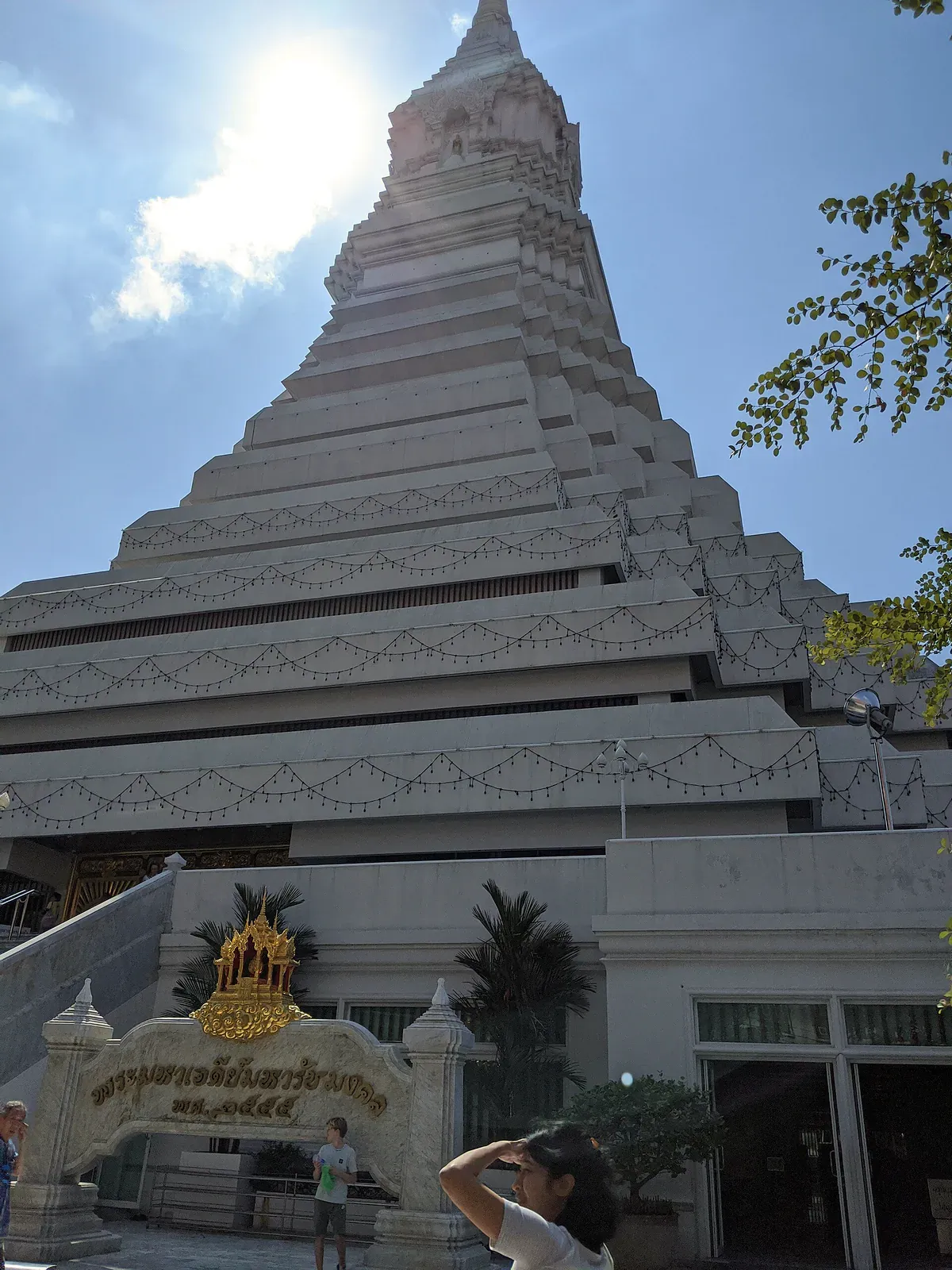
- Wat Paknam Phasicharoen, in Thonburi’s southern reaches, has become known for a large modern Buddha statue visible from a distance, and for a multi-tiered stupa building whose upper level houses a glass or crystal-like ceiling feature above a museum space: a striking, contemporary addition to a temple with a much older core. Confirm which parts are open to visitors before making the trip, since access to specific halls has varied.
- Wat Samphran, technically over the city line in Nakhon Pathom province rather than Bangkok proper, is built around a tall pink cylindrical tower with a giant dragon sculpture spiralling around its full height: a genuinely strange piece of religious architecture, and one that reads as much as folk-art landmark as working temple. It’s a longer trip, realistically most of a day once travel time is counted, and best treated as a deliberate excursion rather than an add-on to a Bangkok temple day.
Getting there: Wat Paknam is reachable by BTS to a nearby station on the Silom line followed by a short taxi or ride-hail, or directly by taxi from central Bangkok. Wat Samphran requires a taxi, ride-hail or organised tour from the city, generally forty-five minutes to an hour each way depending on traffic.
Caveat: both reward the trip on the strength of one standout feature rather than an ensemble of things to see, and both involve real travel time. Go for the specific structure, not expecting a full day’s worth of sights once you’re there.
Gilded modern statements
A different kind of “modern” shows up at Wat Phra Dhammakaya, north of the city in Pathum Thani, built by a large contemporary Thai Buddhist movement around an enormous, saucer-shaped gold-tiled stupa surrounded by an open plaza built to hold very large congregations. It looks nothing like a traditional wat and isn’t trying to: it’s a purpose-built statement of scale from a modern religious organisation, and worth seeing specifically for that contrast with the older temples elsewhere on this list. For a busy city-centre shrine instead, see the Erawan Shrine guide. It’s some distance from central Bangkok and best treated as a half-day trip on its own.
Temples known for a specific practice
Some temples are worth seeking out less for their architecture than for one specific thing they offer or are known for.
- Wat Mahathat Yuwaratrangsarit, near the old-town side close to Sanam Luang, runs one of Bangkok’s longest-established meditation programmes with instruction available in English through its international section: a genuine, low-cost way to sit a session of Theravada meditation with guidance, not a tourist demonstration. Confirm current class times before visiting, since these are set by the temple and can change.
- The amulet market around Wat Mahathat and Wat Rakhang, spilling into the surrounding lanes and along Maharat Road, is a distinct Bangkok subculture in itself: stalls of small pendant-sized Buddha and revered-monk images, inspected by serious, often elderly collectors with loupes, trading in items that can run from a few hundred baht to genuinely large sums for a rare piece. Browsing costs nothing and the market itself is worth the visit regardless of whether you buy.
- Several old-town and Thonburi temples are known among specialists for well-preserved mural cycles inside their main halls: often 19th-century work depicting the life of the Buddha alongside scenes of everyday Thai life from the period. These are easy to miss because they’re inside working viharns with no signage aimed at visitors; asking respectfully whether you can step inside, and being ready to sit quietly for a few minutes, is usually all that’s needed.
- Shrines to specific revered monks, like the one for Somdet Toh at Wat Rakhang mentioned above, draw a steady stream of devotees independent of the temple’s other significance: worth noticing as a different kind of visit than sightseeing, closer to what a pilgrimage site looks like on an ordinary day.
Visiting respectfully when you’re the only foreigner there
The dress code and behaviour covered in the full etiquette guide apply everywhere, but a quiet neighbourhood temple raises the stakes slightly, because there’s no staff member to catch a mistake before it becomes visible to the people actually worshipping. A few things matter more here than at a tourist-facing site:
- Move slowly and watch before acting: where people are sitting, which direction they face, whether shoes have come off at a threshold you hadn’t noticed.
- Keep your voice down by default; a working temple on an ordinary afternoon is a quiet place, and a group of visitors talking at normal volume stands out immediately.
- Don’t assume photography is welcome just because nobody has stopped you: ask, or simply hold back, if a hall is in active use.
- Accept that some parts of a temple compound may be closed to visitors, particularly monks’ living quarters: these are almost never signposted in English, so a closed door or a low rope is the cue, not an oversight to work around.
- A small donation is a good habit at any temple you spend time in, whether or not a collection box is obvious; look near the main entrance or the principal hall.
Finding your own
The temples above are a starting list, not the complete one: Bangkok has far more working wats than any single guide covers, and one of the more rewarding ways to spend a free afternoon is walking a neighbourhood you haven’t been to and following whichever temple roofline is visible above the street. Most Thai neighbourhoods have at least one active wat, generally open to respectful visitors during daylight hours, with no ticket booth and no expectation that a foreigner will show up. Dress as you would for any temple, go in quietly, and treat whatever you find as what it is: somebody’s actual place of worship, not a discovery made for your benefit. That, more than any specific address, is the real version of what this list is pointing at, and it pairs naturally with a planned day like the old-town temple route rather than replacing it.
Common questions
Are these temples safe and easy to visit alone?
Yes, generally: none of them are remote or unusual destinations for a solo visitor, and Thai temples are open, public, low-risk spaces. The main practical issue is navigation and transit time rather than safety, particularly for the temples further from central Bangkok.
Do I need a guide to visit the lesser-known temples?
No. A guide can add context, particularly for the Chinese-Thai syncretic sites in Chinatown where the practices differ from a standard wat, but every temple on this list is reachable and walkable independently with a mapping app and a little patience.
Is Wat Samphran actually in Bangkok?
Not quite: it’s over the provincial line in Nakhon Pathom, though it’s commonly grouped with Bangkok day-trip temples because of the travel time involved, similar to a day trip rather than a city-centre stop.
Can I take part in the meditation sessions at Wat Mahathat even as a complete beginner?
Yes, the English-language programme is designed for exactly that, with instruction pitched at newcomers alongside more experienced practitioners. Dress and behave as you would at any temple, and confirm current timings before making the trip since they’re set by the temple.
What’s the etiquette difference at a Chinese temple like Wat Mangkon Kamalawat compared with a Thai Buddhist wat?
The core respect (quiet behaviour, modest dress, care around active worship) carries over, but the practices themselves differ: incense use is heavier and more central, and the deities and rituals draw on Chinese Taoist and folk tradition alongside Mahayana Buddhism rather than Thai Theravada practice. Watch what worshippers around you are doing rather than assuming the Thai-wat conventions apply exactly.
Why do some of these temples have restricted or closed sections?
Most working temples have areas reserved for monks’ living quarters or ongoing restoration that aren’t open to casual visitors, English-signposted or not. Treat a closed door, a rope, or a quiet gesture from someone nearby as the boundary, and don’t push past it for a better look.
Written by
Mike Brochlowski
Founder and editor, travel photographer and designer
I'm Mike Brochlowski, a travel photographer and designer, and I currently live on Koh Samui, Thailand. I built BangkokWiki to put practical, checked information about Bangkok in one place. Every page is researched from official and primary sources, and the text names them. Where a page shows a checked date, that is when its facts were last confirmed. I also run samui69.com, a non-commercial guide to Koh Samui. If you spot an error or something out of date, tell me through the contact page and I will check it and correct the page.
Read all articles
Where to stay
Pick the area before the hotel
Traffic and heat make Bangkok distances feel longer than they look on a map, so the area shapes a trip more than the hotel does. Our guides match areas to trip types and explain the trade-offs.

Places to stay
Find a hotel
More from Things to do
- 10 min read
 12 min read
Best Spas in Bangkok: How to Choose One
 12 min read
Sauna and Ice Bath in Bangkok: A Guide to the Recovery Scene

Newsletter
You're subscribed as