Transport
Bangkok taxi fare explained: how the meter actually adds up
How a Bangkok taxi meter fare is built, route by route, with a short hop, a cross-town trip and rush hour priced separately, in THB and ~USD.
On this page
A Bangkok taxi meter starts at 35 THB (~1 USD, checked September 2026) and climbs in small steps from there: a bit for distance, a bit for time stuck in traffic, and sometimes a flat surcharge on top. Most guides stop at “expect to pay 80 to 250 baht.” That range is true and almost useless: a 2 km hop across Silom and a 40-minute rush-hour crawl to the airport both fall inside it.
How the meter actually adds up
The fare has three separate ingredients, and understanding each one is what turns “the meter looked high” into “that’s exactly what I expected.”
- Flag-fall: 35 THB covers you stepping in and the first kilometre.
- Distance: roughly 6.50 THB per km for the next stretch (km 2 to 10), then the per-km rate ticks up in stages as the trip gets longer, up to around 10.50 THB/km past 80 km.
- Time, not just distance: when the car is stationary or crawling under 6 km/h, an extra charge (reported as low as 1.50 THB and as high as 3 THB per minute across current fare-guide sources) keeps the meter moving even while the wheels aren’t. This is the part that makes rush hour expensive independent of how far you actually travel.
Short hop, cross-town, rush hour: three real trips
Here’s what that structure means once you put it next to actual routes instead of a flat range.
- Short hop, 2 km
- 40-55 THB
- Cross-town, 10 km, light traffic
- 80-100 THB
- Cross-town, 10 km, rush hour
- 140-190 THB
- Airport run, 25 km
- 280-380 THB
Source: Editorial estimate built from the flag-fall and per-km/per-minute structure above, checked September 2026
| Trip type | Distance | Typical fare (THB) | ~USD | What’s driving the price |
|---|---|---|---|---|
| Short hop | 1-3 km | 40-55 | 1-2 | Mostly flag-fall, barely any distance charge |
| Cross-town, off-peak | 8-12 km | 80-100 | 2-3 | Distance-dominated, meter moves steadily |
| Cross-town, rush hour | 8-12 km | 140-190 | 4-5 | Same distance, but 20-40 minutes of time-charge added |
| Airport run | 20-30 km | 280-380 | 8-11 | Distance plus the 50 THB airport surcharge, before any toll |
The gap between the two cross-town rows is the number every flat-range guide hides: the same 10 km trip can cost close to double depending only on when you take it. Shift a cross-town trip outside 7:30-9:30am or 5-7:30pm and you avoid a meter that keeps ticking while you sit still.
What else can land on top of the metered fare
A few charges are legitimate additions to the number on the meter, not overcharging:
- Airport surcharge: 50 THB at both Suvarnabhumi and Don Mueang, on top of the metered fare, for taxis picking up at the airport rank.
- Expressway tolls: roughly 25-75 THB depending on which tollway entrance the driver uses, paid by the passenger. A full route-by-route breakdown is in Bangkok expressway tolls for riders.
- Call-centre dispatch fee: an extra 20 THB if you phone a taxi company to send a car rather than hailing one on the street.
None of these should appear on a normal street-hailed trip unless one of those specific conditions applies. If a driver adds a number you don’t recognise, ask what it’s for before paying. Tipping is separate from all of this and isn’t required; see tipping and etiquette for Bangkok transport for the going norm.
Is the meter actually required by law?
Yes. Licensed Bangkok taxis must run the meter for a street hail, and refusing to use it, or offering a flat fare instead of a normal in-city trip, is a violation the Department of Land Transport (DLT) takes complaints on. Refusing passengers or not switching on the meter is reportedly the single largest complaint category the DLT receives about taxis.
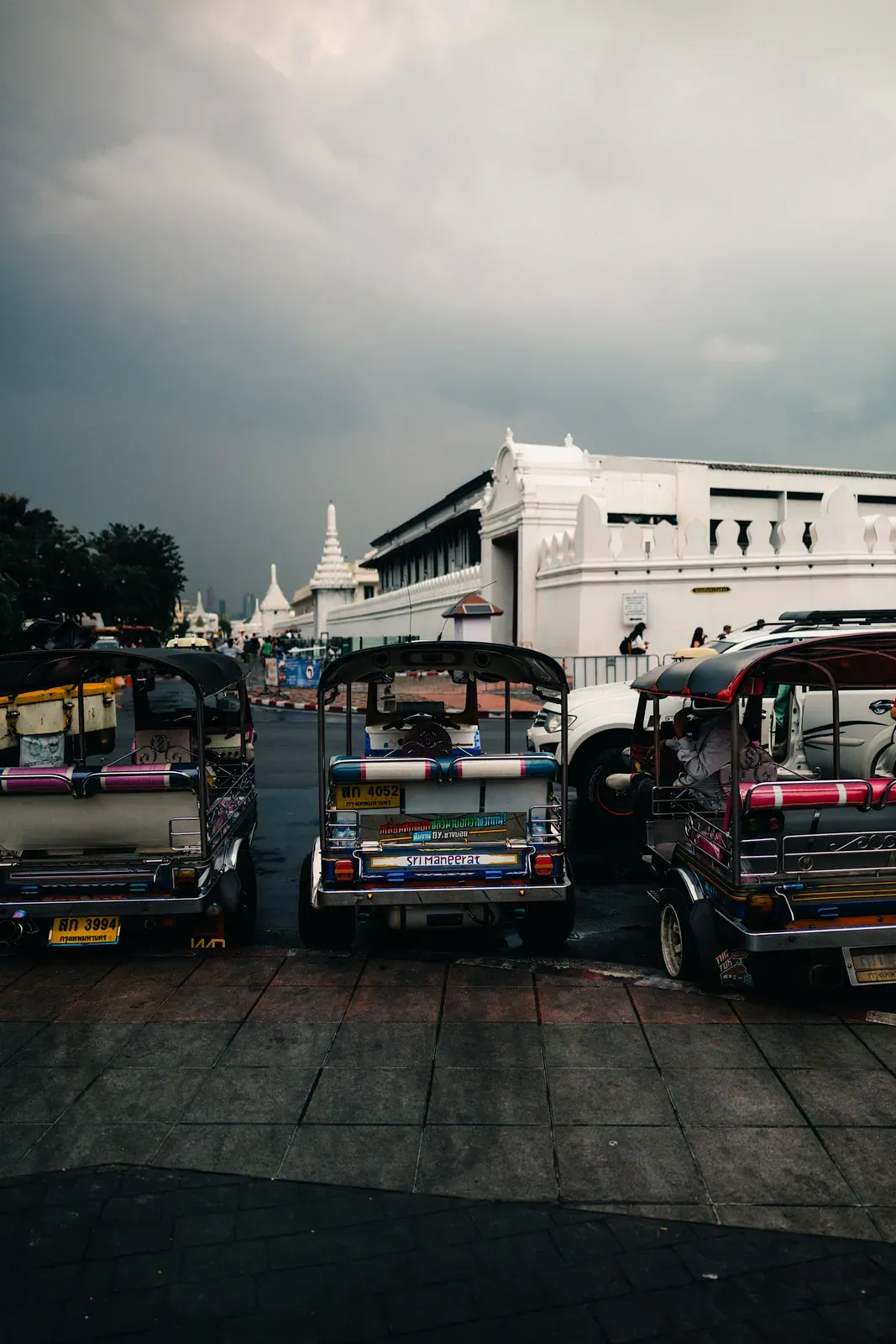
The Department of Land Transport’s 1584 hotline takes complaints against uncooperative taxi drivers 24 hours a day, and a first violation carries a 1,000 THB fine for the driver.
If you do want to report a driver, you’ll need the taxi’s registration number (a photo helps), the taxi’s colour, and roughly where and when you got in.
For a destination with no BTS or MRT stop, see our Khao San Road guide.
Reading your own fare without a translator
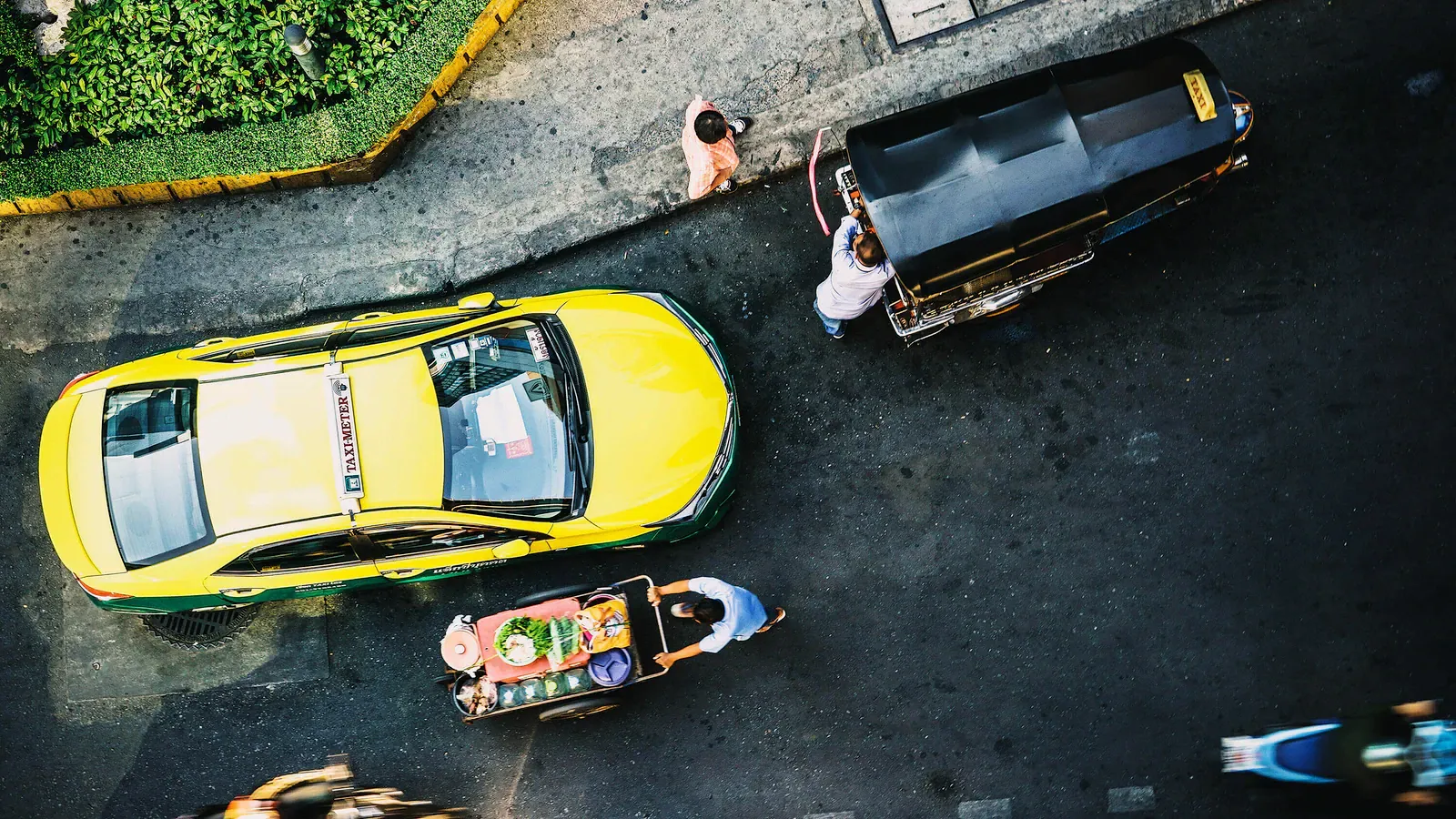
You don’t need to speak Thai to sanity-check a meter. Three habits cover almost every situation:
- Watch the meter switch on as you pull away. If it doesn’t move for the first minute or two of a moving trip, something’s wrong.
- Glance at it every few minutes on a longer trip. A meter that’s climbing roughly in line with the distance and traffic you’re actually experiencing is doing its job.
- Compare the final number to this article’s table for a trip of similar distance and time of day. A wildly higher number, with no airport pickup, toll or dispatch call involved, is worth asking about before you pay.
Common questions
How much is a typical Bangkok taxi fare?
For most in-city trips under 10 km, expect somewhere between 40 and 100 THB (roughly 1-3 USD) off-peak, and 100-190 THB (3-5 USD) if the same trip falls in rush-hour traffic, because time stuck in traffic is charged, not just distance covered.
Why did my taxi fare seem higher than expected?
Usually traffic (the meter adds a per-minute charge when the car is barely moving) or a legitimate add-on: the 50 THB airport surcharge, an expressway toll the driver paid on your behalf, or a 20 THB dispatch fee if the taxi was called rather than hailed.
Do Bangkok taxis have to use the meter?
Yes, for a standard street hail in the city, using the meter is a legal requirement, not a courtesy. A driver who refuses or claims it’s broken is not following the rules, and the simplest response is to take a different cab.
Are Bangkok taxis cheaper than Grab?
There’s no fixed answer since it depends on route, traffic and any in-app promotion running at the time. See taxis, tuk-tuks and ride-hailing for how the two compare beyond price, and Bangkok’s transport cost breakdown for how taxi spending stacks up against rail and buses over a whole trip or month.
Written by
Mike Brochlowski
Founder and editor, travel photographer and designer
I'm Mike Brochlowski, a travel photographer and designer, and I currently live on Koh Samui, Thailand. I built BangkokWiki to put practical, checked information about Bangkok in one place. Every page is researched from official and primary sources, and the text names them. Where a page shows a checked date, that is when its facts were last confirmed. I also run samui69.com, a non-commercial guide to Koh Samui. If you spot an error or something out of date, tell me through the contact page and I will check it and correct the page.
Read all articles
Where to stay
Pick the area before the hotel
Traffic and heat make Bangkok distances feel longer than they look on a map, so the area shapes a trip more than the hotel does. Our guides match areas to trip types and explain the trade-offs.

Places to stay
Find a hotel
Explore the other desks
More from Transport
- 5 min read
 9 min read
Getting Around Bangkok: The Right Strategy for Who You Are
 9 min read
What transport actually costs in Bangkok: three real budgets

Newsletter
You're subscribed as