Transport
Bangkok Taxi and Grab Guide: Tuk-tuks Too
How to use Bangkok's road transport well: metered taxis, ride-hailing apps, motorbike taxis and tuk-tuks, plus traffic, tipping and driver scripts.
On this page
Bangkok’s road transport runs on four distinct modes: metered taxis, ride-hailing apps, motorbike taxis and tuk-tuks, and each solves a different problem. Picking the wrong one for the trip is how visitors end up either overpaying or stuck in traffic they could have avoided. Here’s how each actually works, and when to reach for it.
Metered taxis: how to use them right
Bangkok taxis are plentiful, cheap by international standards, and metered by law for street hails. The entire experience improves once you internalise one habit: the meter should always be running.
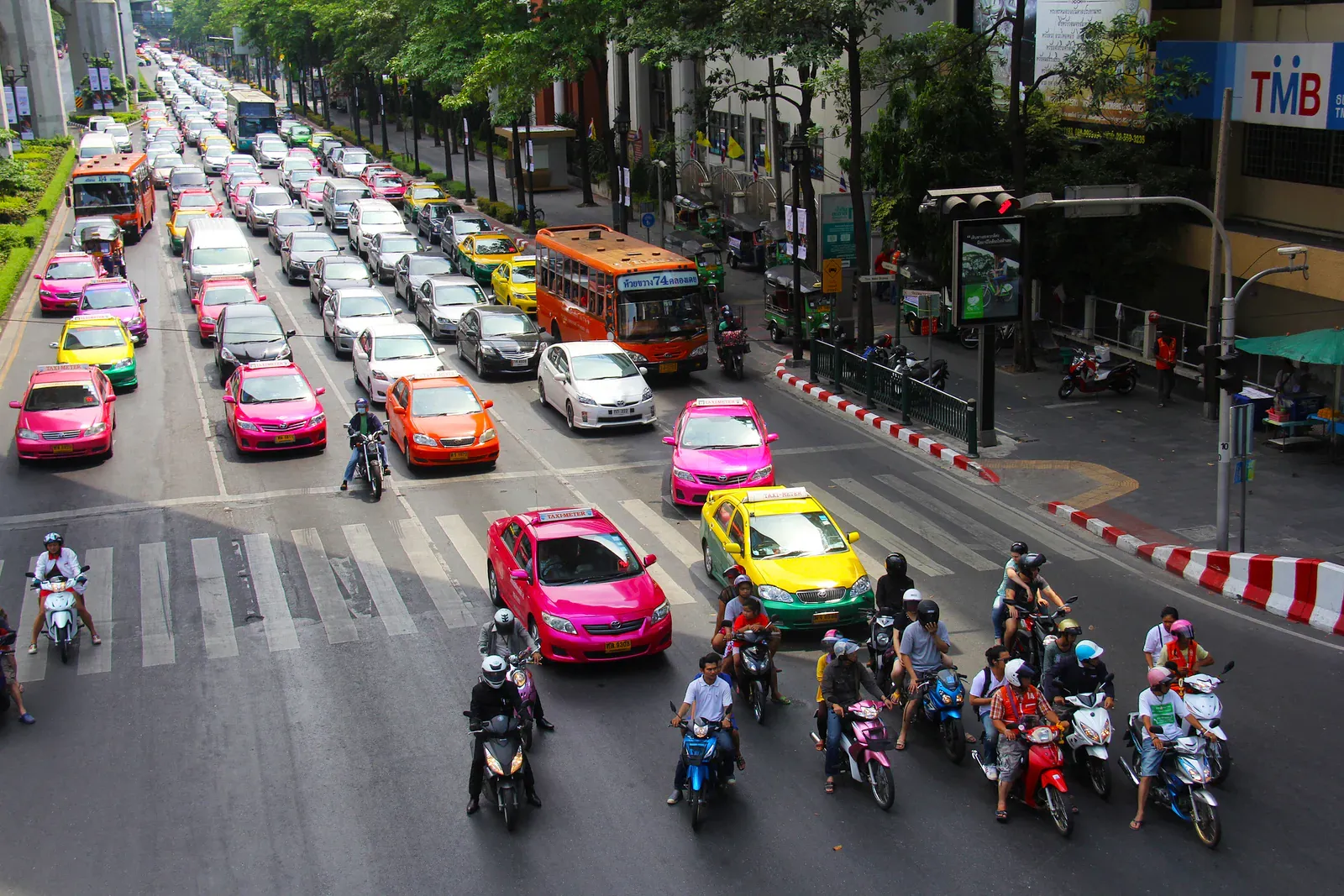
When you get in, watch for the driver to start the meter, or ask directly if they haven’t. A driver who says the meter is broken, refuses to use it, or tries to negotiate a flat fare for a normal in-city trip is not operating as intended: the simple response is to get out and hail another cab, which in most parts of central Bangkok takes moments given how many taxis are on the road. This matters most at tourist-heavy pickup points (outside major hotels, at markets, near the main train stations) where a subset of drivers specifically target visitors who don’t yet know the norm.
Fares combine the metered amount with any expressway tolls the driver pays to keep the trip moving, legitimate and worth confirming upfront if you’d rather they take surface roads instead (usually slower, sometimes cheaper if you’d rather skip the toll). As a broad, indicative-for-2026 sense of scale, a metered fare across central Bangkok usually lands somewhere in the ฿80-250 range (about $2-7), with longer cross-city trips or trips in heavy traffic running higher because time on the meter adds up as much as distance. Treat this as a planning range; check current flag-fall and per-kilometre rates on the operator’s own reference if you want precision.
Not every taxi driver speaks much English, and not every driver knows every soi by name: see the section below on giving an address a driver can actually use.
Ride-hailing apps: the category, not a specific price promise
Grab is the dominant ride-hailing app in Bangkok, with others (Bolt and LINE MAN among them) also operating in the city, LINE MAN in particular blending ride-hailing with its delivery service. All work on the same basic model: you set pickup and destination in the app, see an estimated fare before booking, and get a named driver and vehicle.
What ride-hailing buys you over a street-hailed taxi:
- No language barrier for the destination: the app carries the address and, often, the map pin, so there’s no need to explain where you’re going out loud.
- An upfront estimated fare, which removes the meter-honesty question entirely, though the final fare can still move with traffic and route.
- A traceable trip: driver name, vehicle details, a route shown in-app, which some travellers, especially solo women and seniors, find reassuring.
What it doesn’t automatically buy you: a faster trip. Ride-hailing cars sit in the same traffic as everyone else, and pickup can take longer than flagging a passing taxi if you’re not near a spot the app can route a driver to easily (heavy one-way traffic, no safe stopping point, a mall’s multiple entrances). This guide makes no claim about current pricing or coverage beyond this general shape: check the fare shown in your own app at the time of booking, since promotions, surge pricing and coverage all shift.
Motorbike taxis: when they beat everything else
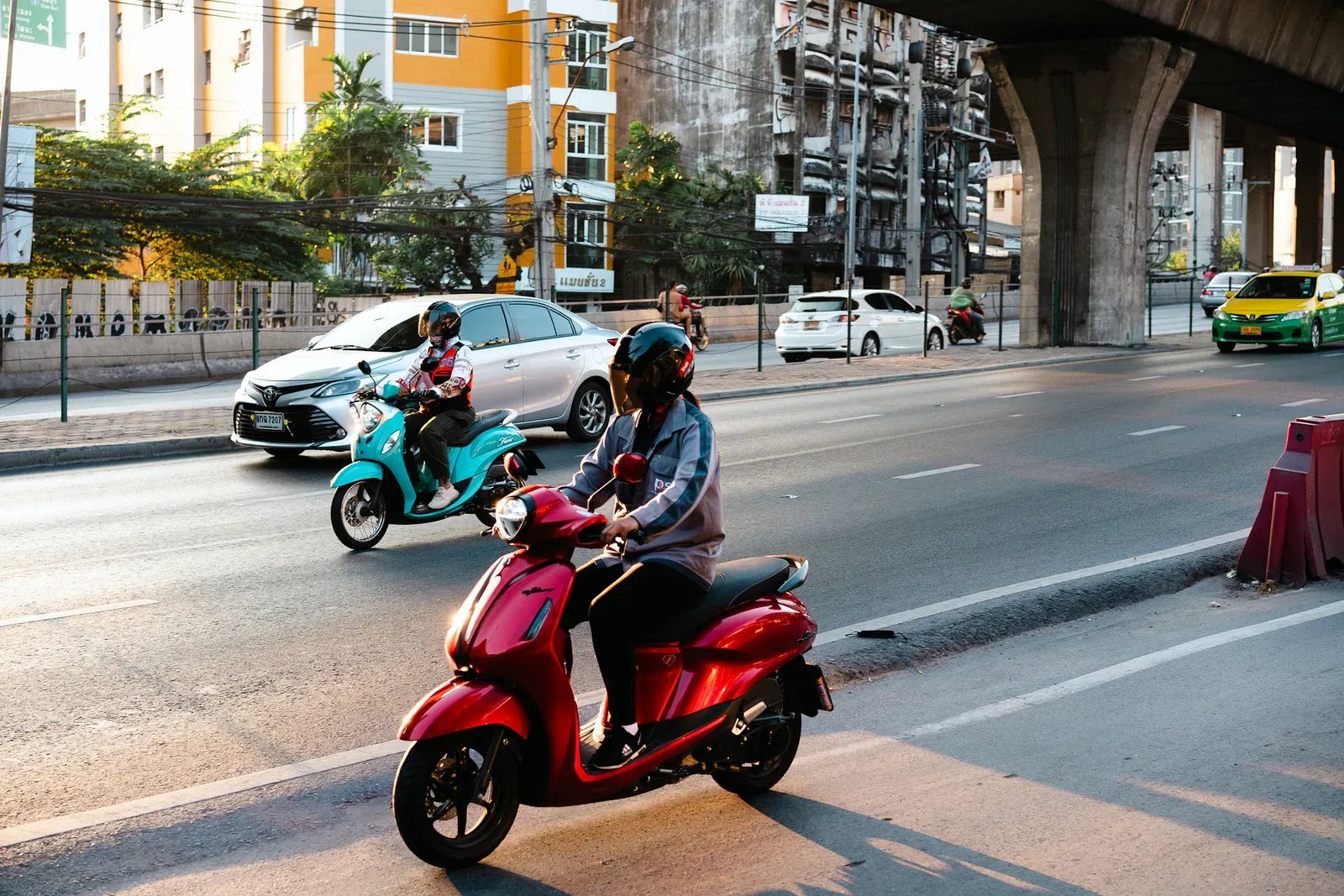
Motorbike taxi riders, identifiable by numbered orange vests (colours and exact uniform details can vary by zone, but the vest itself is the universal marker), wait at fixed spots (usually the mouth of a soi, outside a BTS or MRT station, near a market), ready to take a single passenger, no helmet-optional, straight to a nearby address.
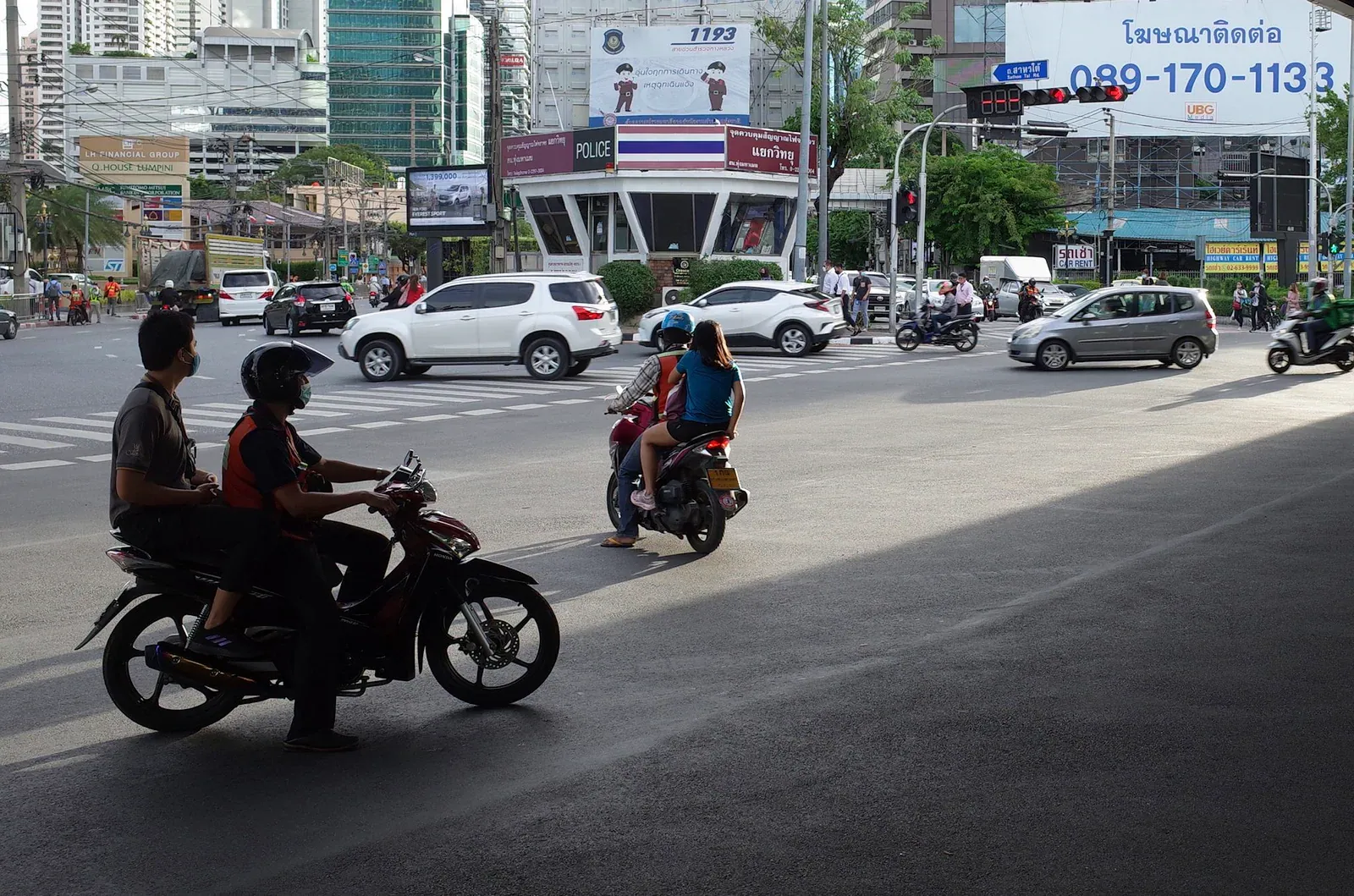
Their advantage is singular and huge: they cut through traffic that a car cannot, weaving between stopped lanes. For a short trip down a long, traffic-choked soi, or from a station to a specific address a ten-minute walk away in Bangkok heat, a motorbike taxi can beat a car by a wide margin, and beats walking when the heat, distance or your luggage make it impractical.
The trade-off is real: this is open-air motorbike travel in city traffic, riders vary in caution, and a helmet (while it should be provided and worn) is not always to Western safety standards. It’s a poor fit for anyone with luggage beyond a small bag, for two people (some riders will carry a second passenger, many won’t or shouldn’t), for young children, and generally for anyone with mobility limitations who can’t quickly get on and off a bike. Seniors in particular should treat this as a mode for short, simple hops when they’re confident on the back of a bike, not a default choice.
Fares for motorbike taxis are typically negotiated or posted at the rank for short, fixed local routes, and are usually a fraction of a taxi fare for the same short distance: agree the price before you get on if it isn’t posted.
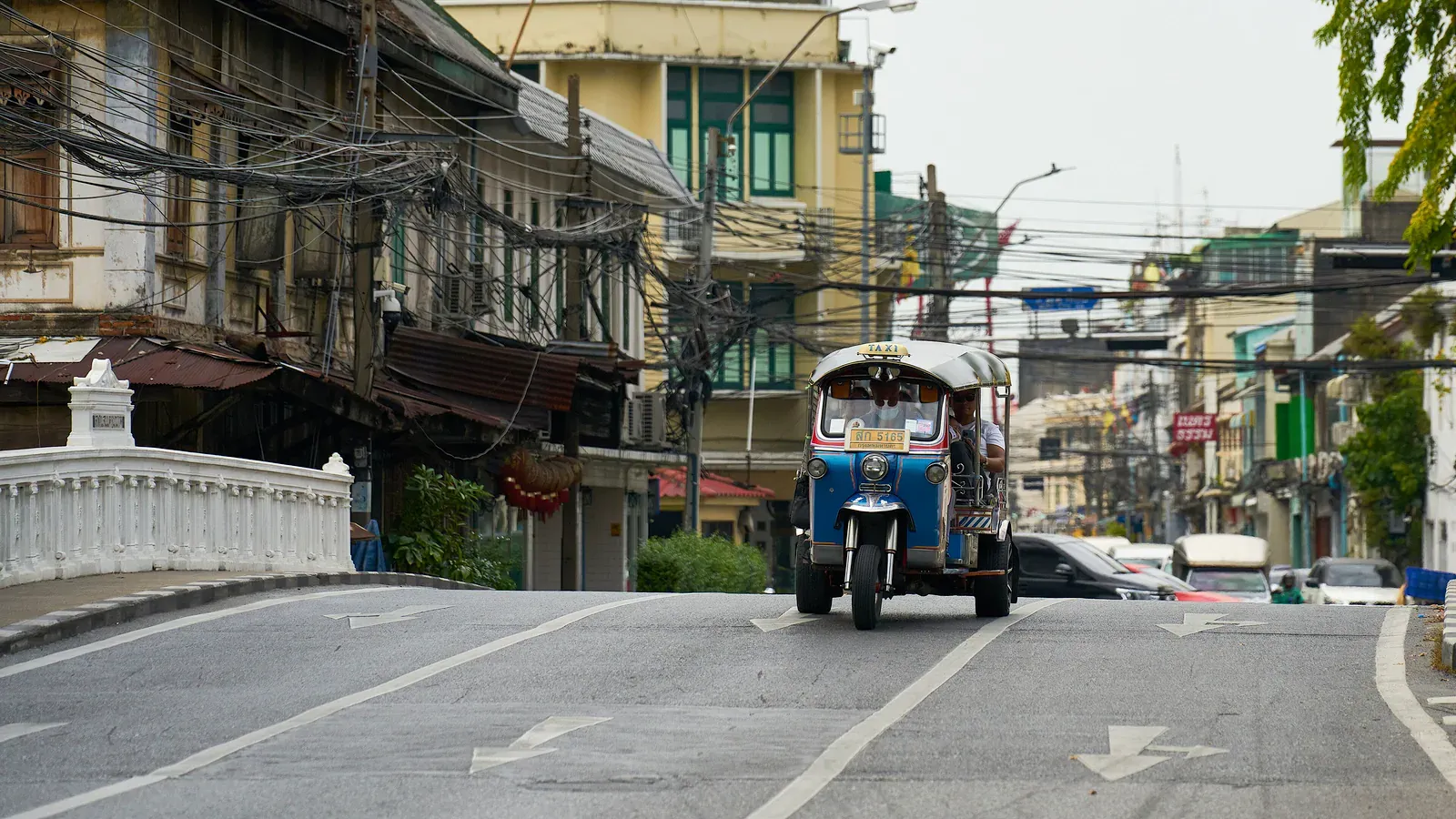
Tuk-tuks: transport or tourist attraction, know which one you’re buying
The three-wheeled tuk-tuk exists in two quite different modes in Bangkok, and mixing them up is the single most common way visitors overpay.
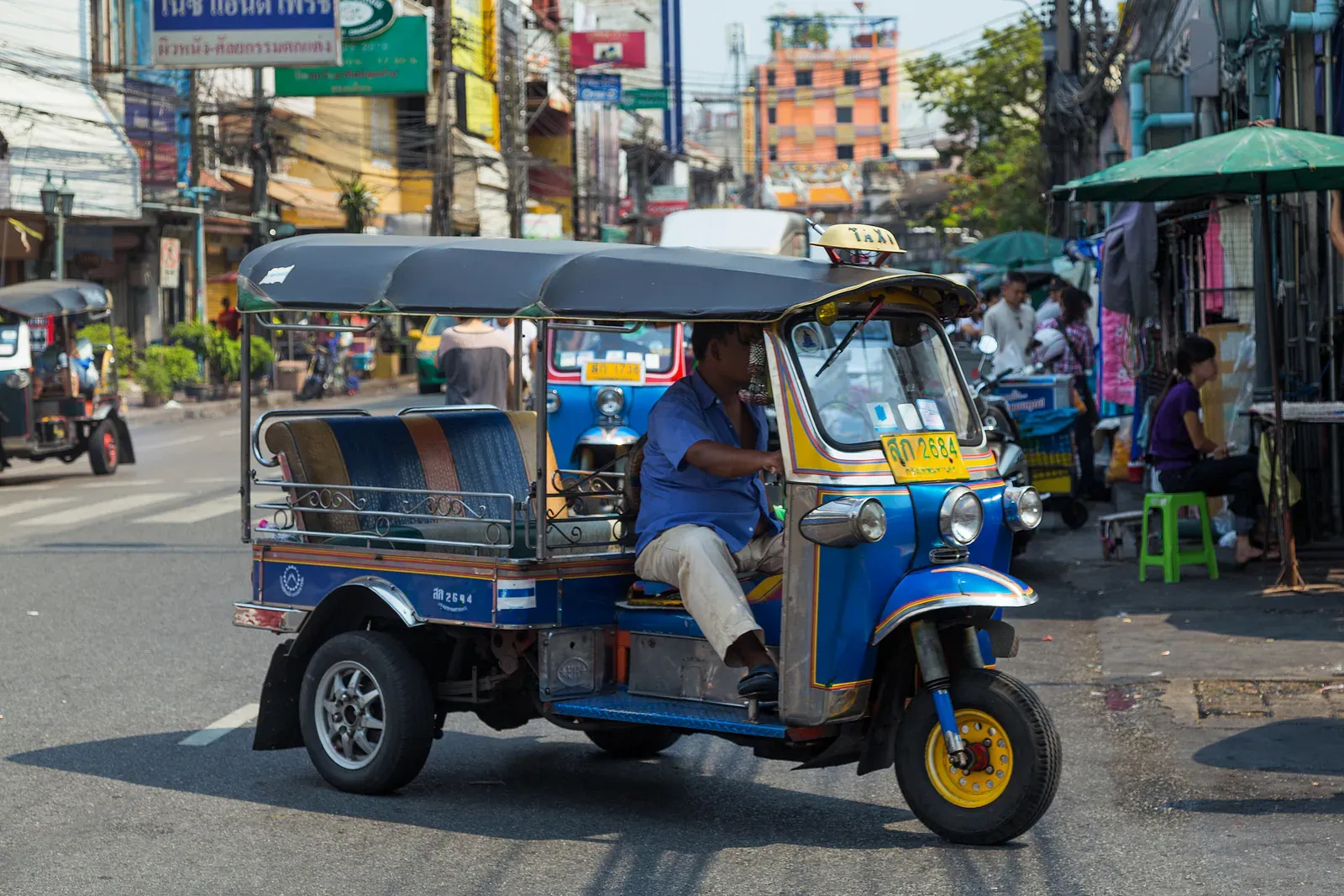
As transport, a tuk-tuk can be a genuine, quick way to cover a short distance, particularly in areas with narrow lanes a car struggles with, or for a driver who knows a shortcut through back streets. Locally, a short tuk-tuk hop is negotiated on the spot and should land in a similar range to, or sometimes below, an equivalent short taxi fare.
As a tourist attraction, tuk-tuks parked near major sights routinely quote fares many multiples higher than the transport-mode price, aimed at visitors who don’t have a comparison point. The ride itself might be enjoyable as an experience, but going in knowing you’re paying for the experience (not for the most efficient way to cover the distance) sets the right expectation, and gives you room to negotiate down or simply walk to a metered taxi instead if the quote feels like a sightseeing surcharge rather than a fare.
There is no metered version of a tuk-tuk: every fare is negotiated before you get in. Agree the price first, every time, and treat any tuk-tuk that pulls up near a major temple or palace offering a suspiciously cheap city tour with real scepticism: this is one of the oldest scripts in Bangkok, and it usually ends at a gem shop or tailor that pays the driver a commission for bringing you in.
Why a 6 km trip can take an hour
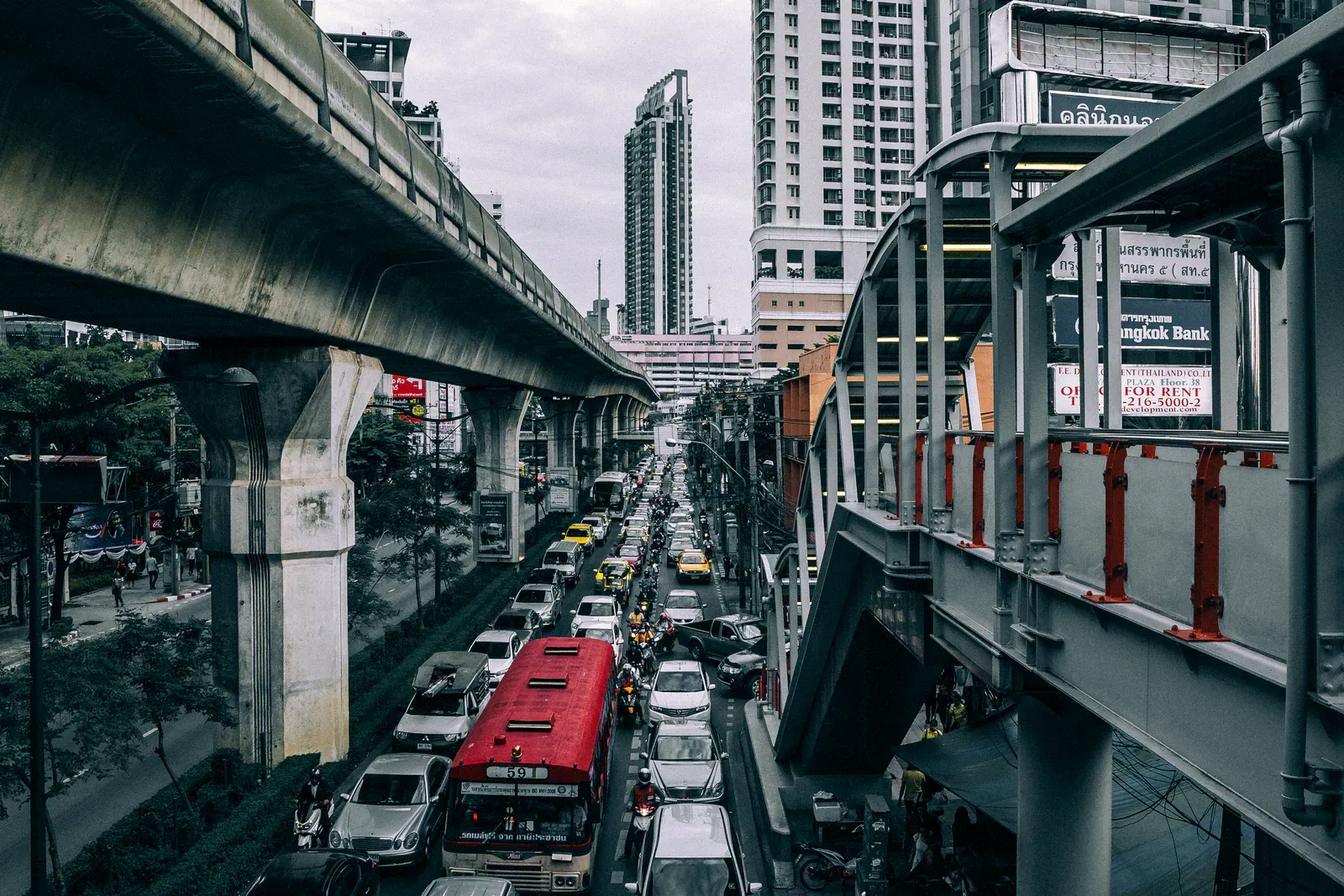
Bangkok’s road network has real structural constraints: a limited number of river-crossing bridges concentrating traffic, long one-way systems in the older parts of the city, and a soi (side-street) layout where a short straight-line distance can require a long loop out to a main road and back in. Add monsoon-season flooding on low-lying streets and the daily rush-hour peaks, and travel time on the same route can vary by a factor of three or four depending on when you leave.
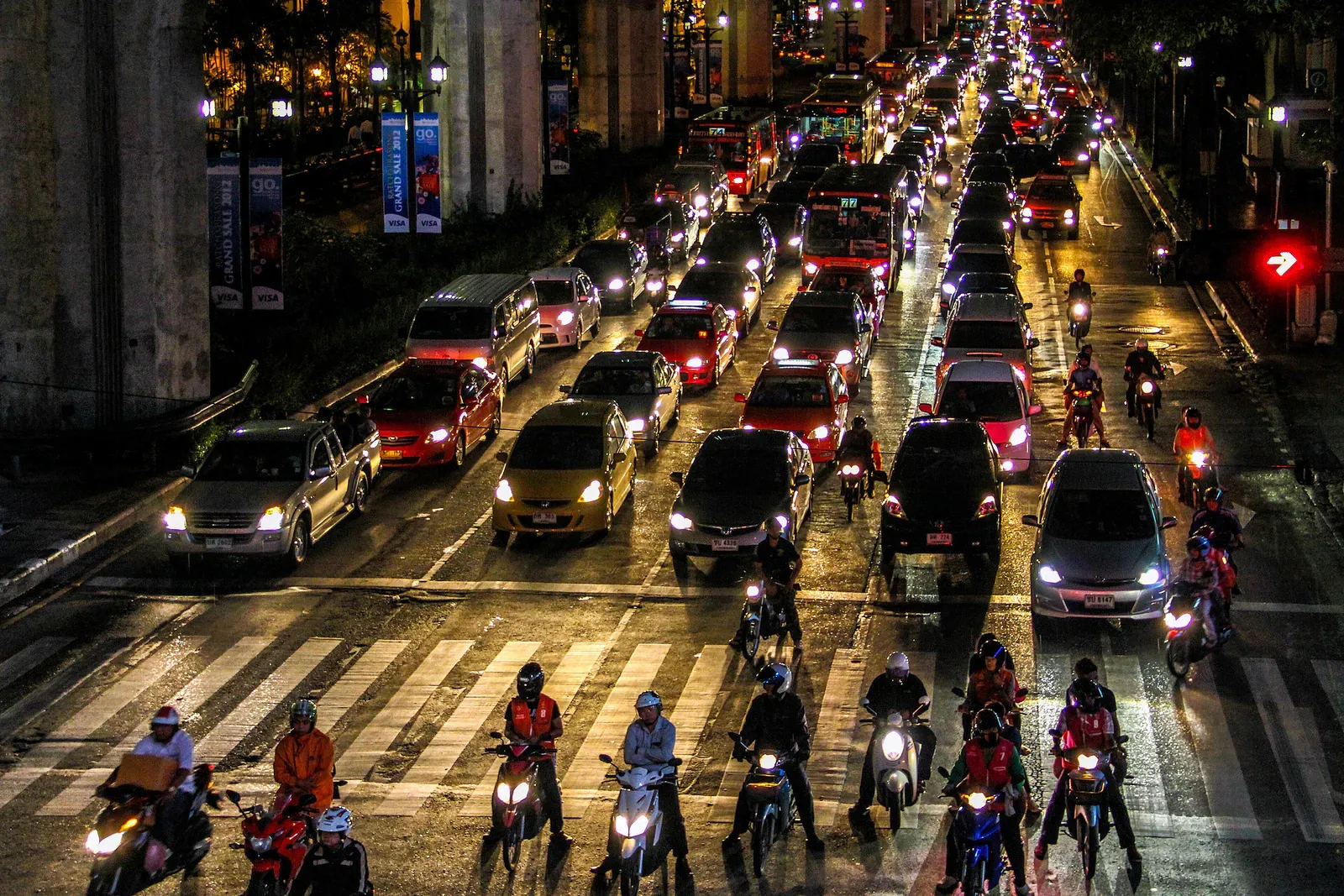
This is why the rail network (see the BTS and MRT guide) beats road transport hands-down for any trip that runs parallel to a rail line during peak hours, even though the train involves walking to and from stations. Road transport wins when your route doesn’t parallel a rail line, when you’re carrying luggage rail stations can’t easily accommodate, or when you’re travelling outside peak hours and the roads are genuinely clear.
Paying, tipping and tolls
Metered taxis and most ride-hailing rides are paid in cash or, increasingly, in-app or by card depending on the service: confirm which your driver or app supports before the trip if it matters to you. Tipping is not obligatory the way it is in some countries; rounding up to the nearest convenient note, or leaving small change, is appreciated but not expected as a fixed percentage. Motorbike taxi and tuk-tuk fares are agreed in advance and don’t carry a tipping convention beyond the same optional round-up.
Tolls on expressways are a legitimate add-on to a metered taxi fare when the driver uses one to save time: you’re effectively paying for the toll plus the time saved. If you’d rather avoid the extra cost and don’t mind a slower trip, you can ask the driver to stay on surface roads, though at peak times this can genuinely be the slower option even before counting the toll saving.
Common driver scripts, and how to handle them
A small number of scripted lines recur often enough to be worth recognising in advance:
- “The meter is broken.” Standard response: ask for a different taxi. Meters are required for street-hailed taxis, and a genuinely broken one should mean the car isn’t working that shift, not a flat-fare pivot.
- “That temple/attraction is closed today.” A classic opener, usually followed by an offer to take you somewhere else “better”: a shop or a different attraction that pays the driver a commission. Politely decline and verify independently if you’re unsure; most major sights simply aren’t closed on a whim.
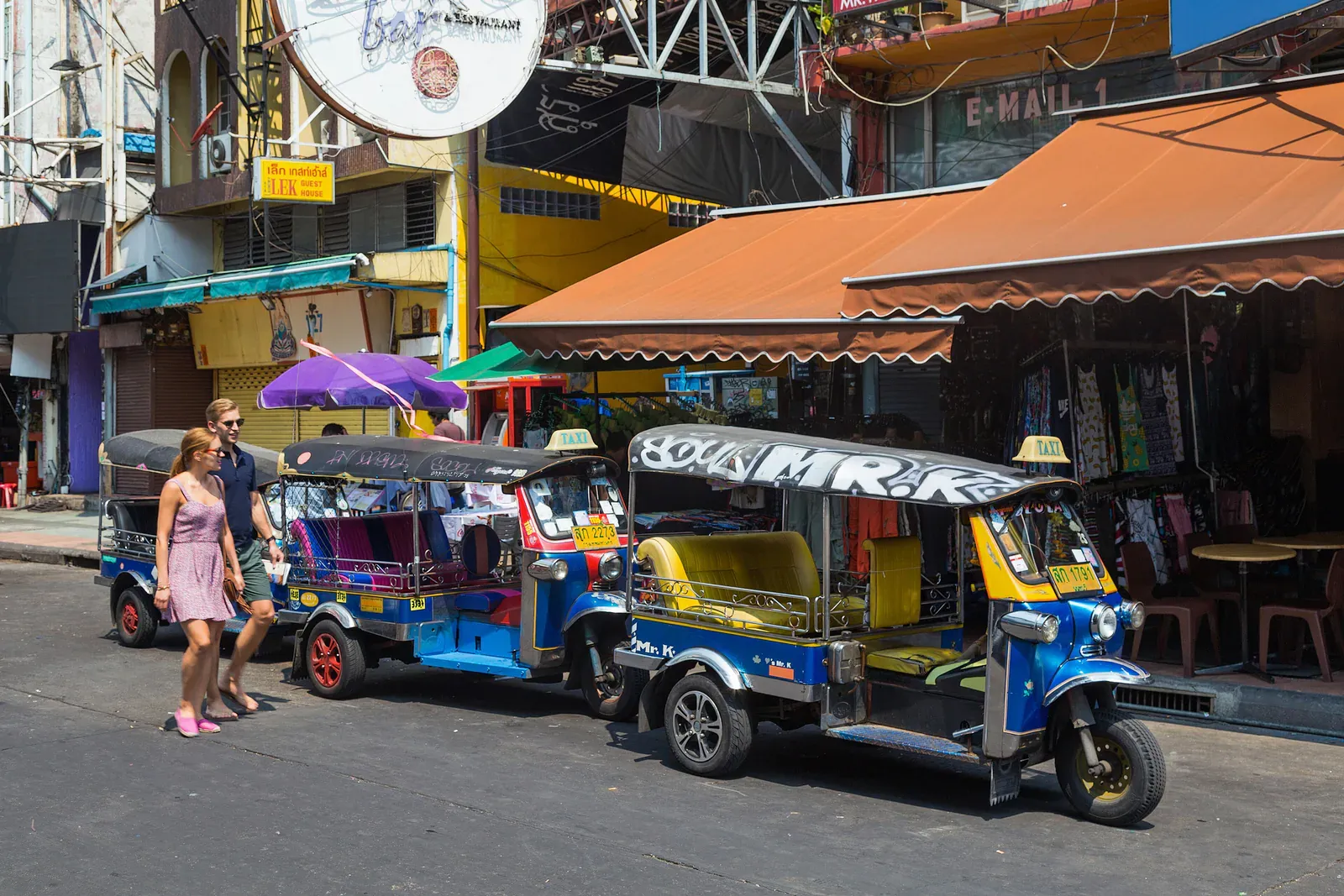
- A tuk-tuk offering a very cheap or free city tour. Almost always leads to a series of shop stops. If you want a tuk-tuk ride, negotiate a point-to-point fare for the specific trip you want, not a tour package from a stranger at a tourist site.
- A flat fare quoted before you get in a metered taxi, at a price well above what the route should cost on the meter. Ask for the meter; if refused, take another cab.
None of these are dangerous, just designed to extract extra money from someone who doesn’t yet know the local baseline, which is exactly what this guide is for.
Giving an address a driver can read
Spoken English place names don’t always translate cleanly, and pronunciation differences can send a well-meaning driver the wrong way. The most reliable approach:
- Show a written address or a map pin rather than saying it aloud: either in Thai script if you have it (many hotels and serviced apartments provide a “show this to the taxi driver” card), or as a pin dropped in a map app.
- Name the nearest BTS or MRT station as a fallback reference point, since drivers generally know the rail network well even if they don’t know a specific building name: “near Thong Lo station” orients a driver faster than a street name alone.
- Have your accommodation’s contact number ready in case the driver wants to call ahead for directions on a small soi.
- For ride-hailing, let the app’s map pin do the work: this is one of the clearest advantages ride-hailing has over a street hail for anyone unsure of the local address format.
Accessibility for seniors
Road transport is, for many older travellers and retirees, the more comfortable option over rail: no stairs, no platform walk, door-to-door pickup and drop-off. A few adjustments make it easier still:
- Prefer taxis or ride-hailing cars over motorbike taxis for anyone with balance concerns, mobility limitations, or simply a preference for a seatbelt and a roof.
- Book ride-hailing in advance from indoors (a hotel lobby, a mall entrance) rather than waiting streetside in heat or during rain.
- Keep a written accommodation address on hand at all times, not just for the outbound trip: the return trip is the one where a tired traveller is more likely to fumble a spoken address.
- Budget extra time in traffic rather than cutting connections close: road transport’s biggest downside for older travellers isn’t comfort, it’s the unpredictability of journey time.
Where a destination is well served by rail and step-free access exists at both ends, the BTS and MRT guide is worth checking too: a short, level rail hop can sometimes beat a long, uncertain road trip even for someone who generally prefers not to walk far. And for the specific case of arriving from either airport, the comparison in Suvarnabhumi Airport to Bangkok city applies the same logic to that first, most important trip of the visit.
Common questions
How do I make sure a Bangkok taxi driver uses the meter?
Ask directly as you get in, or watch that they switch it on before pulling away. If they refuse or claim it’s broken, it’s simplest to get out and hail a different cab: with the volume of taxis in central Bangkok, this rarely costs more than a couple of minutes.
Is Grab cheaper than a metered taxi in Bangkok?
There’s no fixed answer: it depends on the route, time of day, traffic and any in-app promotions running at the time. The advantage of ride-hailing isn’t guaranteed savings, it’s an upfront fare estimate and no language barrier for the destination; check the fare shown in the app against your sense of a typical metered fare for a similar distance.
Are motorbike taxis safe for tourists?
They’re a normal part of daily life for many Bangkok residents and can be very useful for short hops through heavy traffic, but they carry more risk than a car: open-air, in city traffic, with rider caution varying. They suit short trips with light luggage and a rider confident on the back of a bike; they’re a poor fit for luggage-heavy trips, young children, or anyone with mobility concerns.
How much should a tuk-tuk cost?
As transport for a short local hop, a negotiated fare broadly comparable to a similar taxi trip. Near major tourist sights, quoted fares are often many times higher, priced as an experience rather than a way to cover the distance: agree a price before you get in either way, and treat a very cheap “tour” offer with caution.
Do Bangkok taxi drivers expect a tip?
Not as a fixed obligation. Rounding up to the nearest convenient amount is common and appreciated, but there’s no percentage convention to follow the way there might be elsewhere.
What’s the best way to give a Bangkok taxi driver my destination?
Show a written address, a Thai-script address card from your hotel, or a map pin rather than relying on spoken pronunciation, and name the nearest BTS or MRT station as a backup reference: drivers generally know the rail network even when they don’t know a specific building.
Written by
Mike Brochlowski
Founder and editor, travel photographer and designer
I'm Mike Brochlowski, a travel photographer and designer, and I currently live on Koh Samui, Thailand. I built BangkokWiki to put practical, checked information about Bangkok in one place. Every page is researched from official and primary sources, and the text names them. Where a page shows a checked date, that is when its facts were last confirmed. I also run samui69.com, a non-commercial guide to Koh Samui. If you spot an error or something out of date, tell me through the contact page and I will check it and correct the page.
Read all articles
Where to stay
Pick the area before the hotel
Traffic and heat make Bangkok distances feel longer than they look on a map, so the area shapes a trip more than the hotel does. Our guides match areas to trip types and explain the trade-offs.

Places to stay
Find a hotel
Explore the other desks
More from Transport
- 5 min read
 6 min read
Bangkok taxi fare explained: how the meter actually adds up
 9 min read
Getting Around Bangkok: The Right Strategy for Who You Are

Newsletter
You're subscribed as