
Living
Coworking Spaces in Bangkok: A Practical Guide
How to choose a Bangkok coworking space by type, location and price structure, what to test on a trial day, and which contract terms actually matter.
On this page
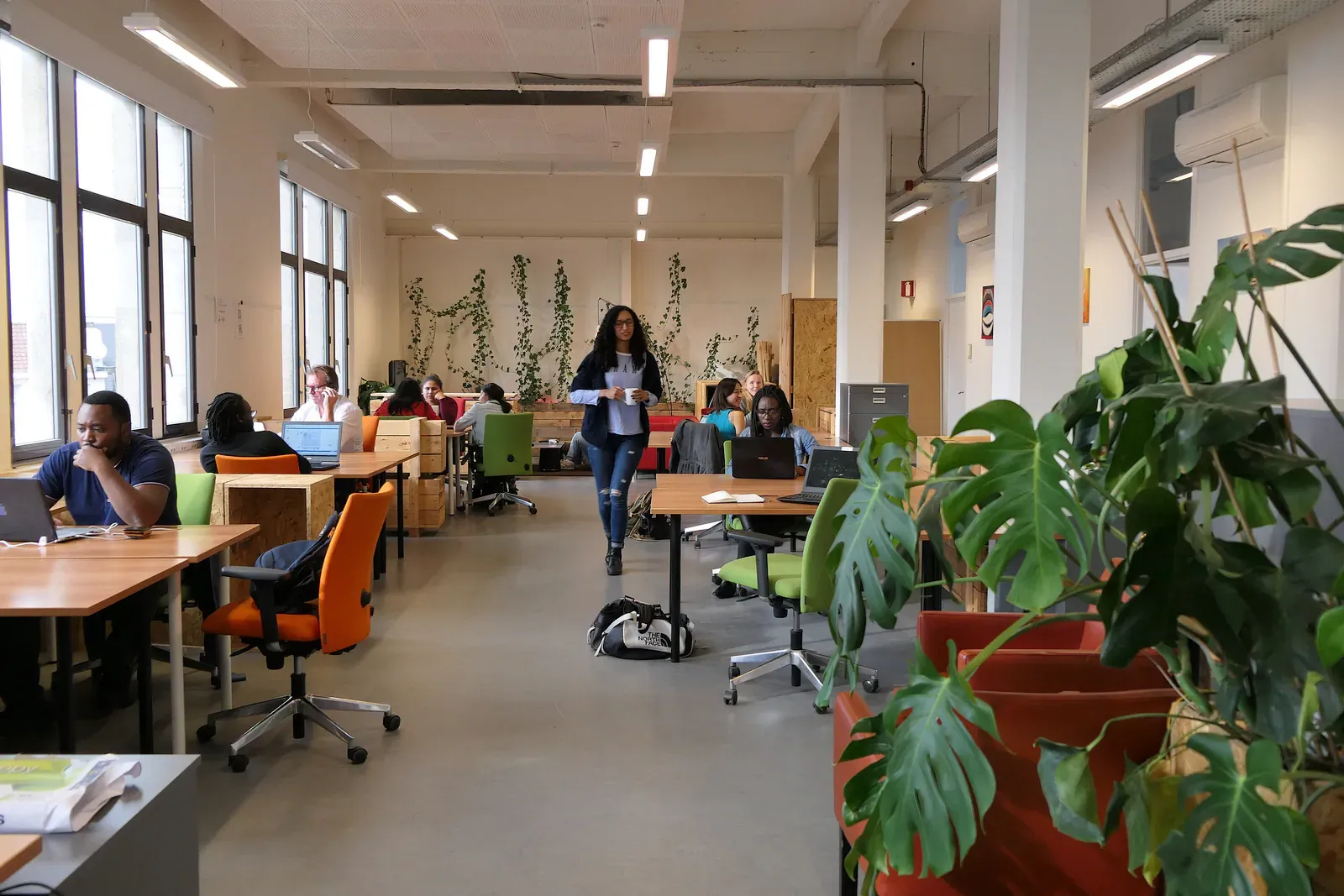
Bangkok has more coworking capacity than almost any city in Southeast Asia, spread across big flexible-office chains, independent community spaces, café-hybrids and hotel lounges. The right one depends less on which is “best” and more on how you actually work (call-heavy, deep-focus, running a small team, or dropping in occasionally), and on a trial day spent testing the things a website photo never shows.
The categories of space, and what each is for
Bangkok’s coworking market splits into a handful of recognisable formats, and mixing them up is the most common way people end up paying for something they don’t use.
- Big flexible-office operators: international or regional chains with polished common areas, meeting rooms bookable by the hour, and locations across several buildings. Strong for reliability, weaker for atmosphere; good if you need a professional address, consistent standards, and the option to add a private office later without moving city.
- Independent community spaces: smaller, often founder-run, built around a specific crowd (founders, creatives, a particular nationality or industry). The value is the network and events, not the desk. Worth it only if you’ll actually show up to the community side; otherwise you’re paying a premium for a wifi connection.
- Café-hybrids: spaces that are explicitly designed as half café, half coworking, with proper desks, sockets and faster wifi than a normal café but a more relaxed, drop-in feel than a corporate operator. A middle ground for people who want structure without a full membership.
- Hotel and mall business lounges: day-use lounges in hotels, or dedicated work zones inside malls, usually pay-per-use or bundled with a hotel stay. Convenient for travellers and short stays, rarely worth a monthly commitment.
- Private serviced offices: a lockable room or floor inside a larger operator’s building, with your own furniture and branding rights, billed monthly. This is the option for a small team that has outgrown hot desks but doesn’t want to sign a standard commercial lease.
- Hourly and pay-as-you-go desks: apps and single-location spaces selling coworking by the hour rather than the day, useful for irregular schedules or as a backup when your usual spot is full.
Most people who commit to a monthly plan without visiting end up in the wrong category, not just the wrong building. Decide the category first, then shop within it.
What to test on a trial day
Almost every space in Bangkok offers a free trial day or a cheap single day pass. Use it properly rather than treating it as a formality: the things that make a space liveable for a month rarely show up in photos.
- Desk and chair ergonomics. Sit for two hours straight. A chair that feels fine for twenty minutes can wreck your back by week two, and Bangkok’s cheaper spaces often furnish with café chairs, not task chairs.
- Aircon temperature and noise. Thai offices run cold by Western standards, and the compressor hum in some buildings is loud enough to matter on calls. Ask if desks near vents or exterior walls can be avoided.
- Wifi under real load, not the front-desk claim. Join a video call from a desk in the middle of the floor at midday, not from the manager’s own laptop by the router. This is the single most common gap between marketing and reality: see internet and connectivity for remote work for what to test and why upload speed matters more than the number on the wall poster.
- Power sockets per seat. Count them. Some open-plan floors have one socket for every three desks, fine until the room fills up.
- Call booths and meeting rooms. Check how many exist relative to the headcount, whether they need booking in advance, and whether the booth actually blocks sound: some are glass boxes that look private and aren’t acoustically.
- Printing, scanning and mail handling. Relevant mainly for founders and anyone dealing with contracts or visas; ask what’s included versus charged per page.
- Kitchen and lockers. A locker matters if you don’t want to carry a laptop to the bathroom every time; a real kitchen (not just a coffee machine) matters if you’re there all day.
- 24/7 access. Some plans include it, some don’t, and it matters disproportionately for people working US or EU hours from Bangkok.
- The community programme. Either the entire point of an independent space, or a distraction of forced networking events for someone who just wants quiet desk time. Ask to see the events calendar for the last month, not the promised one.
Geography and the commute
Bangkok’s coworking supply clusters around a handful of BTS and MRT corridors, and picking the wrong cluster relative to where you live is the single biggest quality-of-life mistake people make.
| Cluster | Stations | Character |
|---|---|---|
| Sukhumvit (Asok, Phrom Phong, Thong Lo, Ekkamai, On Nut) | BTS Sukhumvit line, MRT Blue line at Asok | Highest density of spaces, expat-heavy, best for community events and evening networking |
| Sathorn / Silom | BTS Silom line, MRT Blue line at Lumphini/Sala Daeng | Corporate, close to embassies and banks, suits client-facing founders |
| Ari | BTS Sukhumvit line | Quieter, residential-feeling, popular with a slightly older nomad and creative crowd |
| Ratchathewi / Siam | BTS Silom and Sukhumvit lines interchange | Central, well connected for cross-city meetings, busier and more transient |
| Rama 9 / Asoke-Rama 9 | MRT Blue line | Newer business district, corporate towers, better value per square metre, less café culture nearby |
If most of your life (gym, condo, friends) is in one cluster, don’t commute across the city for a marginally nicer coworking floor. The time cost compounds daily in a way the membership fee doesn’t. Someone weighing café-working instead of a formal membership should also read laptop-friendly cafés in Bangkok, since several of these same clusters have café scenes that cover the same need for less money.
Pricing structures, not prices
Treat the numbers below as structures to expect, not quotes: all figures are broad, indicative ranges for 2026, and every operator’s actual pricing should be checked directly before you commit.
| Plan type | Rough range (THB) | Rough range (USD) | Best for |
|---|---|---|---|
| Single day pass | ฿300-700 | $9-20 | Trials, occasional drop-ins, travellers |
| 10-day / multi-day pack | ฿2,000-4,500 | $57-130 | Irregular weekly schedules |
| Hot desk, monthly | ฿4,000-9,000 | $115-255 | Regular use, no fixed seat needed |
| Dedicated desk, monthly | ฿6,500-13,000 | $185-370 | Daily use, want the same spot and storage |
| Private office, monthly (per person) | ฿9,000-20,000+ | $255-570+ | Small teams, client meetings on site |
Prices vary by cluster (Sathorn and central Sukhumvit run higher than Ari or Rama 9), by operator tier, and by how much meeting-room time is bundled in. Always confirm current numbers with the operator before budgeting around them.
Contracts, deposits and the fine print
- Notice periods. Monthly plans are rarely month-to-month in practice: many require 30 days’ written notice to cancel or downgrade, which catches people who assumed they could leave whenever.
- Deposits. Dedicated desks and private offices commonly ask for a deposit equivalent to one month, refundable minus any damage or outstanding charges: get the refund terms in writing before signing.
- “Unlimited coffee”. Usually means filter coffee or a basic machine, not espresso drinks on demand; espresso-based drinks are frequently metered separately or capped per day even on “unlimited” plans. Ask specifically rather than assuming.
- Meeting room credits. Monthly plans often bundle a fixed number of meeting-room hours, after which you pay per hour: heavy meeting users burn through the bundled hours fast and should price the overage rate before signing, not after the first invoice.
- Guest passes. Bringing a client or collaborator in usually needs a day pass bought on their behalf, sometimes at a markup versus the walk-in rate.
How a cheap plan becomes expensive
The lowest advertised price rarely reflects the real monthly cost. The common traps:
- A hot desk plan that turns out not to guarantee a desk on busy days, forcing an upgrade to dedicated desk mid-term.
- Meeting-room hours that run out by mid-month, pushing regular users onto the higher per-hour rate.
- A location that saves money on the membership but adds a daily commute that costs more in time and transport than the difference in fees.
- Printing, scanning and locker fees that were “extra” from day one but weren’t mentioned on the pricing page.
- A 30-day notice period that means paying for a month you’ve already decided to leave.
Using a coworking address for business registration
Founders setting up a Thai company or freelancers who need a professional address for invoicing sometimes ask whether a coworking membership can double as a registered business address. Some operators, mostly the larger chains with a serviced-office product, offer this as an add-on service, usually at a premium over a standard desk plan and often restricted to dedicated-desk or private-office tiers rather than a basic hot desk. If this matters to you, ask specifically and get the terms in writing before assuming a membership includes it: registered-address services carry their own compliance obligations for the operator, so not every space offers them, and the ones that do vary in what mail-handling and document-signing support comes with the service.
Etiquette in a shared space
Coworking floors run on unwritten norms as much as posted rules. Keep calls to booths or designated zones rather than taking them at an open desk: a floor of people on hot desks with wired-in focus is disrupted fast by one loud call. Clean up after using shared kitchens and meeting rooms; a space that feels well kept is usually one where members police this themselves, and one that doesn’t is a sign the community programme is more marketing than substance. Booking a meeting room and not showing up, or running well over the booked slot, is the fastest way to earn a quiet reputation with staff and other members: most spaces track no-shows even if they don’t say so.
Who coworking is not worth it for
Coworking is a poor fit for a narrow but real set of people: anyone whose work is entirely asynchronous with no calls and no need to be seen working, anyone on a tight budget who can work from a laptop-friendly café instead, and anyone who travels enough that a monthly membership sits unused for half the month. In all three cases, a day pass used occasionally, or skipping coworking altogether in favour of a café or a well-equipped home desk, is the more honest economic choice. Coworking earns its cost through community, meeting-room access, and a professional environment for calls: if none of those apply to how you actually work, the membership fee is subsidising an amenity you won’t use.
Decision table by worker type
| Worker type | Best-fit category | What to prioritise |
|---|---|---|
| Call-heavy (client calls, sales, remote team standups) | Big operator or private office | Booth count, wired-feel wifi, soundproofing |
| Deep-focus (writing, coding, research) | Independent space or café-hybrid, quiet hours | Chair quality, low ambient noise, minimal event traffic |
| Founder with a small team | Private serviced office | Meeting-room bundle size, 24/7 access, room to grow |
| Occasional user (a few days a month) | Day pass or hourly app | No monthly commitment, flexibility across locations |
Common questions
Is coworking worth it if I only need wifi and a table?
Often not. If your main need is a decent desk and connection rather than meeting rooms or community, a laptop-friendly café or café-hybrid space usually covers it for a fraction of the price: see laptop-friendly cafés in Bangkok for how to judge one.
How much should I budget for a month of coworking in Bangkok?
As a broad, indicative 2026 range, a hot desk membership runs roughly ฿4,000-9,000 ($115-255) a month depending on cluster and operator, with dedicated desks and private offices costing more. Always confirm the current rate directly with the space.
Do I need a dedicated desk or is hot desk enough?
Hot desk is enough for most people who don’t need to leave a second monitor or paperwork set up overnight. Choose dedicated desk if you value having the same spot daily, need permanent storage, or the space is busy enough that hot desks sometimes run out.
Which area has the most coworking options?
Sukhumvit, particularly the Asok-Thong Lo stretch, has the highest density of spaces and the widest range of formats, from big operators to independent community spaces.
Can I negotiate coworking membership prices in Bangkok?
Often, especially for private offices and multi-month commitments: operators regularly offer discounts for prepaying three or six months, or for teams of three or more. It rarely hurts to ask, but get any negotiated rate in writing before signing.
What is the biggest mistake people make choosing a coworking space?
Picking based on photos rather than a trial day. Chair comfort, real-world wifi under load, and noise levels are the three things that make or break daily use, and none of them are obvious from a website.
Written by
Mike Brochlowski
Founder and editor, travel photographer and designer
I'm Mike Brochlowski, a travel photographer and designer, and I currently live on Koh Samui, Thailand. I built BangkokWiki to put practical, checked information about Bangkok in one place. Every page is researched from official and primary sources, and the text names them. Where a page shows a checked date, that is when its facts were last confirmed. I also run samui69.com, a non-commercial guide to Koh Samui. If you spot an error or something out of date, tell me through the contact page and I will check it and correct the page.
Read all articles
Visas and paperwork
Staying in Thailand longer?
Visas, extensions, documents and banking for longer stays. Rules and fees change often and offices apply them differently, so check the official source before you act.

Places to stay
Find a hotel
Explore the other desks
More from Living
- 9 min read
 9 min read
Renting Near an International School in Bangkok
 6 min read
Furnished vs Unfurnished in Bangkok: The Breakeven Math

Newsletter
You're subscribed as