Living
Gyms in Bangkok: Tiers, Contracts, Where to Train
How Bangkok's gym tiers compare, what contracts really cost, and where to swim, do yoga or train outdoors: a practical guide for monthly members.
On this page
Bangkok has enough gym capacity to serve almost any budget or goal, but the tier you pick matters more than the brand, and the contract you sign matters more than either. This guide walks through the tiers people actually train in, the membership terms that catch newcomers out, and the practical details (aircon, hygiene, peak hours, station access) that decide whether a gym works for your real schedule rather than the one on the sales brochure.
The gym tiers, and who each one suits
International chain gyms
Large regional and international chains occupy prime floors in malls and office towers, usually with the newest equipment, the widest class schedules and the most polished presentation of any tier. Crowding tracks the office day closely: expect a packed floor from roughly 6pm to 9pm on weekdays and a much quieter one at midday or mid-morning. These gyms suit people who want reliability, a broad class timetable and multi-location access across the city, and they sit at the top of the price range: budget roughly ฿2,500-5,000 ($71-142) a month on a longer-term plan, more on a rolling monthly basis.
Mid-market Thai chains
A step down in price and polish, these chains cover a wide footprint across the city and suburbs with solid, well-maintained equipment and a mostly local membership base. They’re the workhorse option for anyone who wants a proper gym without chain-gym pricing, typically ฿1,000-2,500 ($29-71) a month, and crowding follows the same office-hours pattern as the international chains, just with a bit more breathing room outside peak.
Independent and specialist gyms
Smaller, often single-location gyms built around a specific focus (strength, functional fitness, a particular training method) rather than a broad membership base. Quality varies more than at chains since it depends heavily on the individuals running the place, but the ceiling is higher: some of the city’s best coaching and most dedicated training cultures live here. Pricing spans widely, from budget-friendly to premium boutique rates, and it’s worth a trial session before committing since there’s no brand consistency to rely on.
Condo gyms
Almost every mid-range and above condo building in Bangkok includes a small gym as a standard amenity, and it’s worth being honest about what these actually are: a handful of cardio machines, a rack of dumbbells, sometimes a single squat rack, rarely more. They’re genuinely useful for a quick session or as a backup on a day you can’t get to a proper gym, and they cost nothing beyond the building’s common-area fee, but they are not a substitute for a real gym if strength training or variety matters to your routine. Equipment maintenance is inconsistent across buildings (some are kept in excellent condition, others neglected), and it’s worth checking a building’s gym before signing a lease if it’s meant to be your main training space.
Hardcore and powerlifting gyms
A smaller but real category: gyms built specifically around heavy barbell training, powerlifting and strongman work, with the specialised equipment (proper platforms, heavy-duty racks, a serious plate inventory) that a general commercial gym doesn’t stock. These attract a dedicated, often competitive membership base and are worth seeking out specifically if barbell training is the point of your routine: a general chain gym’s single squat rack and light dumbbell selection will frustrate a serious lifter fast.
Boutique studios
Spinning, reformer pilates, yoga studios and HIIT or CrossFit-style functional fitness boxes make up a genuinely large and growing slice of the market, concentrated heavily in the same central districts as the coworking and coffee-shop scene. These run on a class-pack or package model rather than open gym access, tend to be the most expensive per session of any tier, and suit people who want structure and coaching baked into every visit rather than self-directed training. Expect roughly ฿500-1,200 ($14-34) per class as a walk-in rate, with meaningful discounts on multi-class packages. For race-style training, see our Hyrox Bangkok guide.
Public sports complexes and stadium facilities
City-run and government sports complexes offer some of the cheapest structured training in Bangkok: weight rooms, running tracks, swimming pools and multi-purpose halls at a fraction of private gym pricing, though often with older equipment, more basic facilities and less English-language signage or staff support than a commercial gym. These are worth knowing about specifically for swimming and track access, covered below, and for anyone on a tight budget who doesn’t need a polished environment.
Hotel gyms with paid membership
A number of hotels sell external, paid gym memberships rather than restricting the fitness floor to guests, which can be worth considering for the amenity bundle: a hotel gym membership often comes with pool access, sometimes a spa discount, and a genuinely quiet, well-maintained floor since hotel gyms rarely see the crowding a commercial gym does. Pricing sits toward the premium end and varies enormously by hotel tier, so it’s a niche option rather than a default, best suited to someone who values the pool-plus-gym combination and doesn’t mind paying for it.
The contract question: where people actually lose money
Bangkok’s gym sales culture is built around long-term contracts, and the gap between the advertised monthly rate and what you actually pay is where most complaints originate.
- Joining fees. Many gyms charge a one-off joining or registration fee on top of the membership price, sometimes waived as a “promotion” that’s actually the standard practice: treat any joining fee as negotiable and ask directly whether it can be waived.
- Minimum periods. The advertised low monthly rate is almost always tied to a 12-month (sometimes longer) commitment; a genuinely flexible month-to-month membership costs noticeably more per month, and it’s worth calculating the total cost of both options rather than anchoring on the headline monthly figure.
- The hard-sell. Sign-up conversations at commercial gyms, especially chains, are commonly run by staff on commission, with real pressure to commit on the spot to a longer contract or add-on package (personal training bundled at signup is a common upsell). Taking a day or two to decide, and being explicit that you want to compare options first, is normal and shouldn’t cost you the promotional rate: if it does, that’s a signal.
- Leaving Thailand mid-contract. This is the single biggest source of dispute. Long-term contracts are written under Thai consumer contract terms and don’t automatically waive remaining payments because a member has left the country; some gyms offer a formal transfer, freeze or buyout option, others don’t, and enforcement of the fine print varies by operator. Read the cancellation and early-termination clause before signing, ask specifically what happens if you relocate, and get any verbal assurance in writing.
- Freezing a membership. Many contracts allow a freeze for medical reasons or travel, usually capped at a set number of days per year and requiring supporting documentation for medical freezes: useful to know about before you need it, since asking after the fact is a weaker negotiating position.
- Day passes and class packs. Almost every gym and studio sells single day passes and multi-visit packages as an alternative to a full membership, a sensible way to trial a gym properly or to cover an irregular schedule without committing to a year.
- Personal training. Sold either as individual sessions or discounted packages of 10, 20 or more, commonly bundled into the initial sales pitch at a discount that evaporates if bought later: worth evaluating on its own merits (a specific coach, a specific goal) rather than as a bundled add-on to a gym membership you haven’t tested yet.
Aircon, hygiene and the physical realities of training here
Aircon is a genuine variable between gyms in a way it rarely is in a temperate country: some gyms run cold enough to need a layer between exercises, others barely take the edge off Bangkok’s heat and humidity, and the difference has a real effect on workout quality and how much you’ll actually want to go. Visiting at your intended training time before committing is the only reliable way to judge this: a gym that feels comfortable at 10am can feel stifling at 7pm when it’s full and every machine is running warm.
Hygiene norms lean stricter than in many Western gyms: wiping down equipment after use is expected and often enforced with visible spray-bottle stations, and a number of gyms require or strongly encourage a separate pair of indoor training shoes, distinct from what you wore on the street, particularly at boutique studios and yoga spaces where bare feet or clean-floor policies are common. Towel service is inconsistent (some gyms provide one as standard, others charge a small rental fee or expect you to bring your own), so it’s worth checking on your first visit rather than assuming.
Changing rooms and showers are standard at chain and mid-market gyms, generally clean and reasonably private, though facility quality drops noticeably at the cheapest tier and at some smaller independent gyms. Lockers are near-universal but vary between free day-use lockers and paid or rented long-term ones; bring your own lock unless the gym confirms it provides one.
Peak hours, station access and 24-hour training
Crowding at commercial gyms tracks the office day with remarkable consistency: a lunchtime bump from roughly midday to 1:30pm, then the main peak from around 6pm to 9pm as the working day ends, with weekday mornings before 9am and the mid-afternoon lull the quietest reliable windows. Weekend patterns shift later, with late-morning to early-afternoon the busiest stretch.
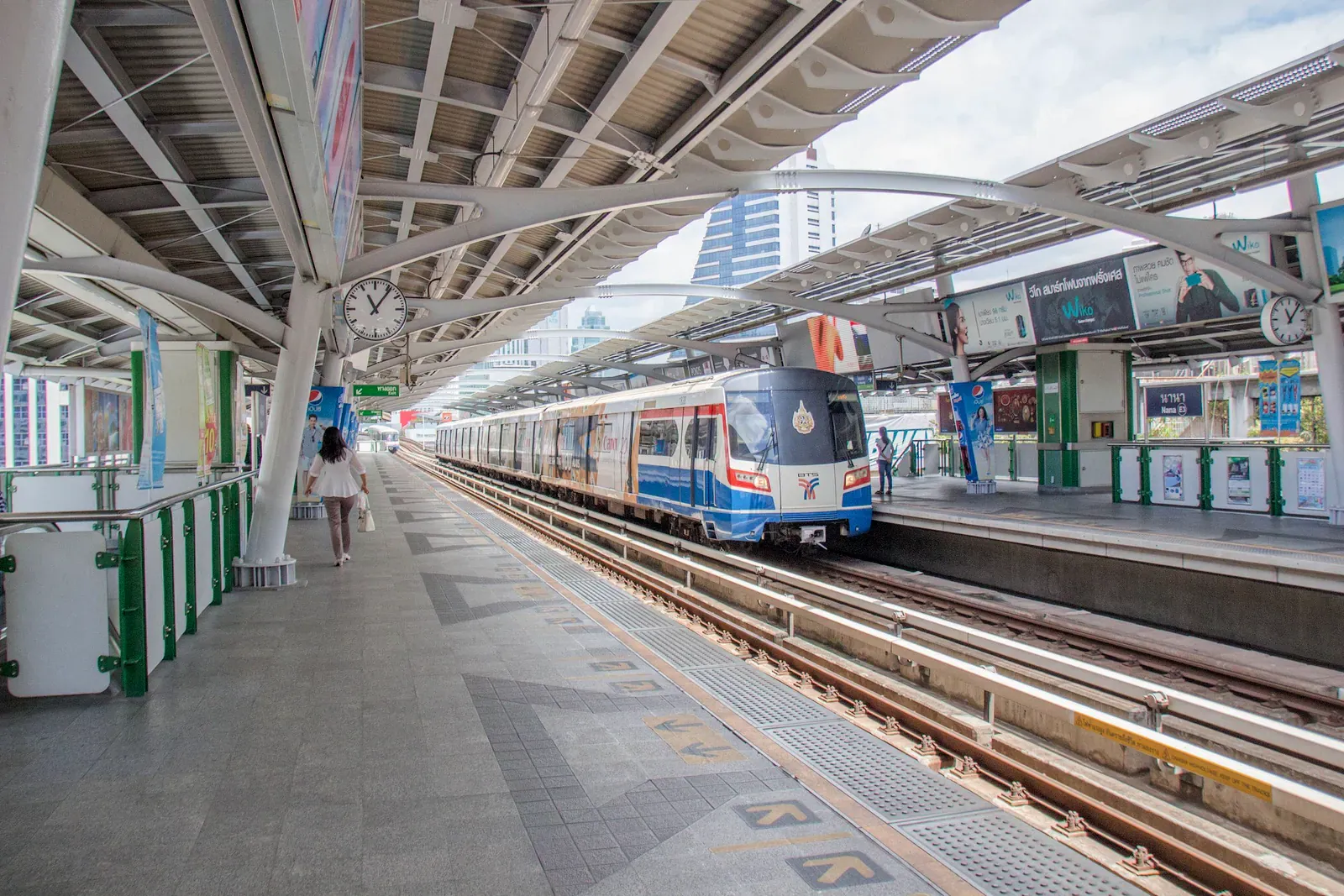
Gym density mirrors the BTS and MRT network closely, since both gyms and their members cluster around the same transit-connected residential and office areas: central Sukhumvit, Sathorn, and the newer developments along the rail extensions all carry a high concentration of chain and mid-market gyms within a short walk of a station, which matters more for consistency of use than almost any other factor: a gym two minutes from your station gets used, one that needs a taxi doesn’t, no matter how good the equipment is. 24-hour access exists at a meaningful number of chain locations and some independents, usually via a keycard or app-based entry system, and is worth prioritising specifically if you work irregular hours or prefer training very early or very late.
Training as a woman
Bangkok’s gym culture is generally comfortable and unremarkable for women training alone, including in the evening, across the mainstream tiers: chain and mid-market gyms, boutique studios and yoga spaces all see substantial female membership and don’t carry the intimidating, male-dominated atmosphere some newcomers expect from unfamiliar cities. The main exceptions are some of the more hardcore powerlifting and strongman-focused gyms, which skew heavily male in practice even without any formal restriction, and it’s worth visiting at your intended training time to get a feel for a specific gym’s actual crowd rather than assuming from its marketing. Boutique studios, especially yoga, reformer pilates and barre-style classes, tend to have the most balanced or female-leaning attendance of any tier.
Older beginners
Starting to train later in life is common enough in Bangkok that it carries no particular stigma, and several parts of the fitness scene are specifically well suited to it: public sports complexes with pools and tracks, gentler boutique classes, and gyms with a broad member age range rather than a young, high-intensity crowd. The main practical advice is the same anywhere: get a basic health check before starting anything strenuous if you haven’t exercised in years, especially given Bangkok’s heat load on cardiovascular effort, and choose a gym or class with visible older members already training there rather than one aimed squarely at a 20-something clientele. This isn’t medical advice; anyone with an existing condition should check with a doctor before starting a new training programme, particularly one involving sustained outdoor exertion in Bangkok’s heat.
Yoga and pilates as a separate scene
Yoga and reformer pilates function almost as their own ecosystem, largely separate from the gym-and-weights world, concentrated in dedicated studios rather than as an add-on class at a commercial gym (though many chains do offer group yoga sessions too). Studio yoga in Bangkok spans everything from serious, disciplined practice spaces to a lighter, social, wellness-branded scene, and reformer pilates has grown fast enough in the last few years to become a genuine category of its own with a loyal, largely female membership. Both run on class packs rather than open membership, typically ฿600-1,500 ($17-43) per class or meaningfully less per session bought in bulk, and trialling a few different studios matters more here than almost anywhere else in the fitness scene, since teaching style and studio atmosphere vary enormously between them.
Swimming pools and lap swimming
A genuine lap pool (long enough and quiet enough for continuous swimming rather than a decorative condo pool) is harder to find in Bangkok than a gym, and it’s worth treating pool access as its own decision rather than assuming any gym membership includes one. Condo pools are almost always too short and too shared for serious lap swimming. The more reliable options are hotel gyms with paid membership (many bundle proper pool access), some of the larger international chain gyms with a pool facility, and public sports complexes, several of which maintain full-length competition pools open to the public at a low per-visit or membership rate. Anyone for whom swimming is the primary form of exercise should check pool length and lane availability directly before committing to any membership built around it. For pool entry rules and day passes, see our public swimming pools guide.
Training outdoors: parks, calisthenics and run clubs
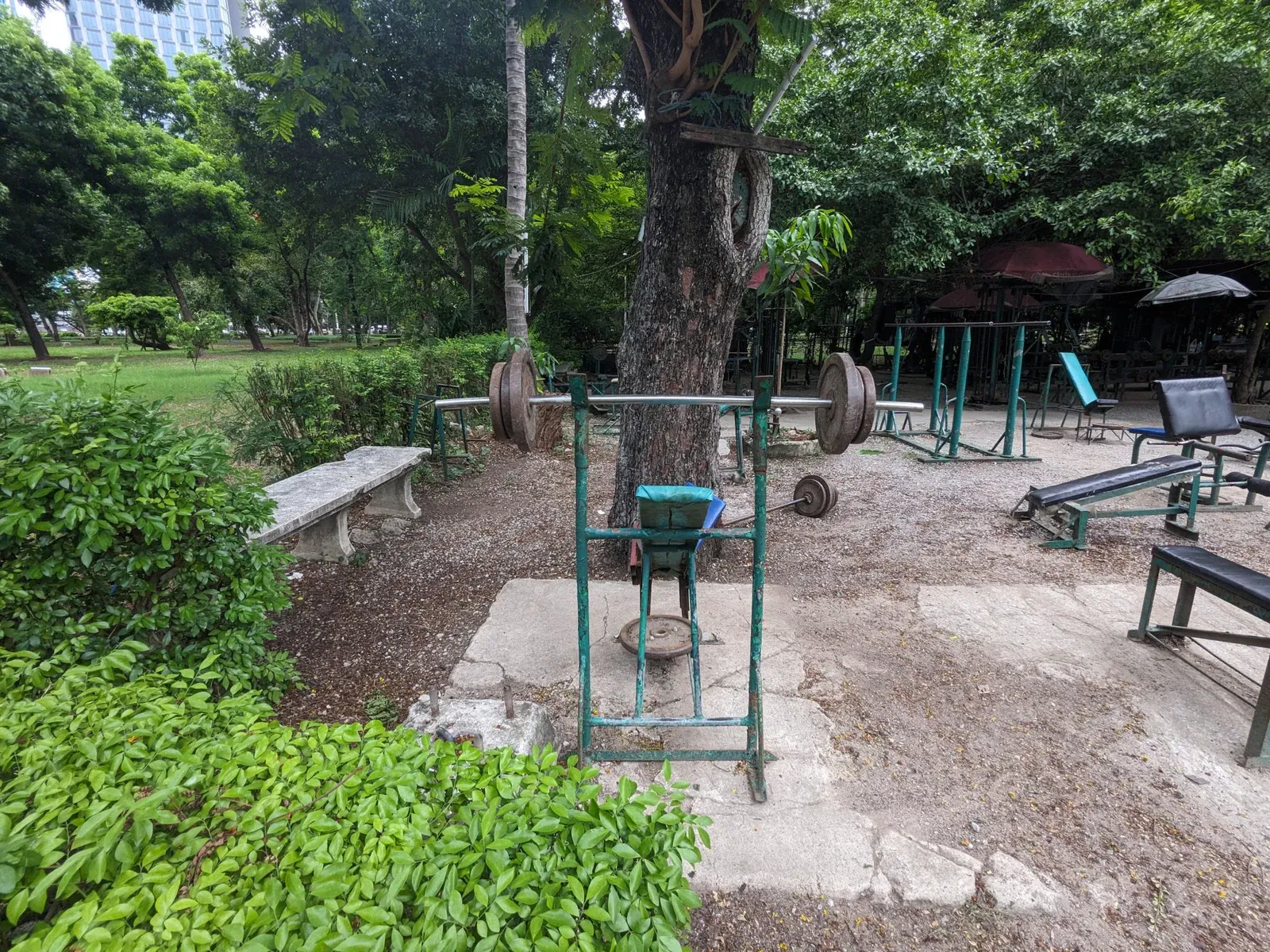
Bangkok’s public parks are a genuinely useful and free layer of the fitness scene. Most larger parks include a section of fixed outdoor exercise equipment (basic calisthenics and resistance stations installed by the city), free to use and popular with a mixed-age local crowd, especially in the cooler early morning and early evening hours. Calisthenics-specific setups with proper bars for pull-ups and dips are less common but do exist in a handful of parks, and are worth seeking out specifically if bodyweight training is your main mode. For other sports, see our climbing gyms guide and golf courses compared.
Run clubs are a large and active part of Bangkok’s fitness culture, with regular group runs organised through messaging apps and social media meeting at parks and along riverside or park-loop routes at dawn or dusk to dodge the worst of the heat; joining one is one of the fastest ways to build a fitness-minded social network in the city. The same caveat applies to all outdoor training here that applies to outdoor racket sports and cycling: Bangkok’s heat is a real physiological load, not just discomfort, and the burning season (roughly January to April, worst in February and March) brings PM2.5 air pollution high enough that hard outdoor exertion on the worst days is worth skipping or moving indoors. Anyone training outdoors seriously should hydrate deliberately, favour dawn or dusk sessions over midday, and check an air quality reading before a long run rather than judging by eye. See cycling in Bangkok for how the same parks and heat considerations play out for cyclists, and padel and tennis in Bangkok for the equivalent heat guidance for outdoor racket sports.
Matching goal and budget to gym tier
| Goal | Budget | Best-fit tier | The catch |
|---|---|---|---|
| General fitness, reliable schedule | Mid | International chain or mid-market Thai chain | Peak-hour crowding 6-9pm; contract length on the best rate |
| Serious strength or powerlifting | Mid-high | Hardcore/powerlifting gym | Fewer locations; less beginner hand-holding |
| Minimal cost, occasional use | Low | Condo gym or public sports complex | Limited equipment variety; older facilities at public complexes |
| Structured classes, coaching included | High | Boutique studio (HIIT, CrossFit-style, spin) | Highest per-session cost; class-pack expiry dates |
| Yoga or pilates focus | Mid-high | Dedicated yoga/reformer studio | Quality varies a lot between studios; trial before committing |
| Swimming as primary exercise | Mid-high | Hotel gym membership or public sports complex pool | Genuine lap pools are scarce; check length and lanes first |
| Flexible schedule, no long commitment | Low-mid | Day passes and class packs across tiers | Higher per-visit cost than a committed membership |
Common questions
What does a gym membership cost in Bangkok?
As a broad, indicative 2026 range, expect roughly ฿1,000-2,500 ($29-71) a month at a mid-market Thai chain and ฿2,500-5,000 ($71-142) a month at an international chain on a longer-term contract, with month-to-month flexibility costing more per month at either tier. Boutique studios and specialist gyms run on class packs rather than flat membership and price separately.
Can I cancel a gym contract if I leave Thailand?
Not automatically: long-term contracts are binding under their written terms, and leaving the country doesn’t by itself end the payment obligation. Some gyms offer a transfer, freeze or buyout clause; check this specifically before signing and get any verbal promise in writing, since enforcement varies by operator.
Are there 24-hour gyms in Bangkok?
Yes, a meaningful number of chain locations and some independents offer 24-hour keycard or app-based access, which is worth prioritising if you train very early, very late or on an irregular schedule.
Where can I find a proper lap pool in Bangkok?
Condo pools are almost never long enough for serious lap swimming. Hotel gyms with paid external membership, some larger international chain gyms with pool facilities, and public sports complexes with full-length pools are the more reliable options: check length and lane availability before committing.
Is it normal to negotiate a gym membership price in Bangkok?
Yes, particularly joining fees and the rate on longer commitments: these are often treated as negotiable in practice even when presented as fixed, and it’s reasonable to ask for a day or two to decide rather than signing under pressure at the first sales conversation.
Is outdoor training safe year-round in Bangkok?
Not without adjustment. Heat makes midday outdoor exertion risky for much of the year, and burning season (roughly January to April) brings air quality low enough to justify skipping hard outdoor sessions on the worst days. Dawn and dusk sessions, hydration and checking an air quality reading first are the standard precautions serious outdoor trainers here follow.
Part of
Written by
Mike Brochlowski
Founder and editor, travel photographer and designer
I'm Mike Brochlowski, a travel photographer and designer, and I currently live on Koh Samui, Thailand. I built BangkokWiki to put practical, checked information about Bangkok in one place. Every page is researched from official and primary sources, and the text names them. Where a page shows a checked date, that is when its facts were last confirmed. I also run samui69.com, a non-commercial guide to Koh Samui. If you spot an error or something out of date, tell me through the contact page and I will check it and correct the page.
Read all articles
Visas and paperwork
Staying in Thailand longer?
Visas, extensions, documents and banking for longer stays. Rules and fees change often and offices apply them differently, so check the official source before you act.

Places to stay
Find a hotel
Explore the other desks
More from Living
- 9 min read
 9 min read
Bangkok's Expat Enclaves: How Nationality Shaped Its Areas
 10 min read
Freelancer, Employee or Founder: Bangkok Nomad Life

Newsletter
You're subscribed as