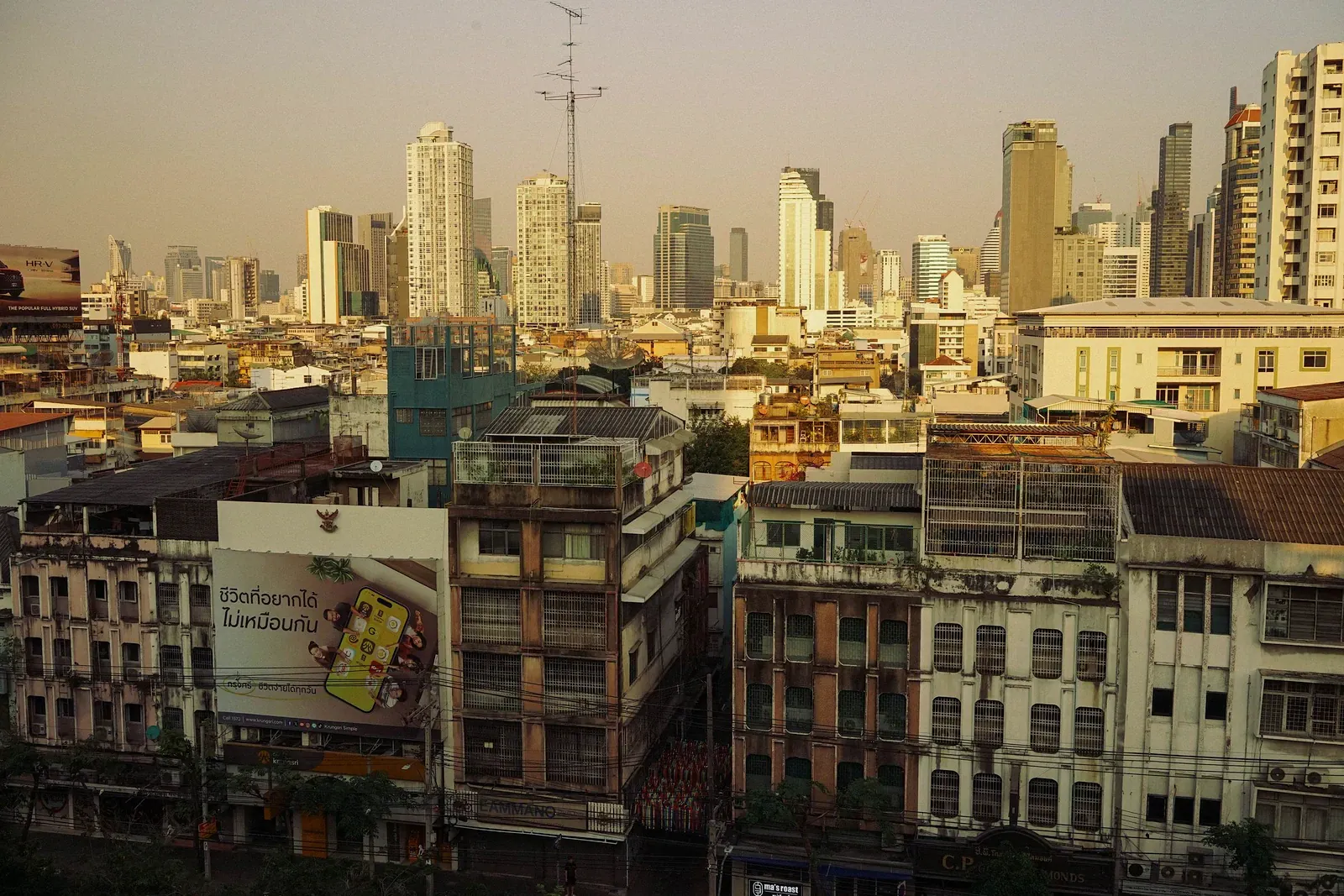
Living
Sukhumvit vs Sathorn: Which Bangkok Area Should You Live In
A head-to-head on Bangkok's two main expat spines: rail access, walkability, food, schools, rent tiers, traffic and the quieter pockets inside each.
On this page
Sukhumvit wins on density and restaurant life; Sathorn wins on rail redundancy and a calmer, more corporate pace. Neither is objectively better: they suit different daily routines, and the honest answer for a fair number of people is a quieter pocket inside Sukhumvit rather than either headline district. This is a direct comparison across the variables that actually change day to day life, not a ranking.
For the wider tour of Bangkok’s other areas, see Where to Live in Bangkok; for a deep dive on the nomad favourite further north on the same rail line, see the Ari area guide.
Character and crowd
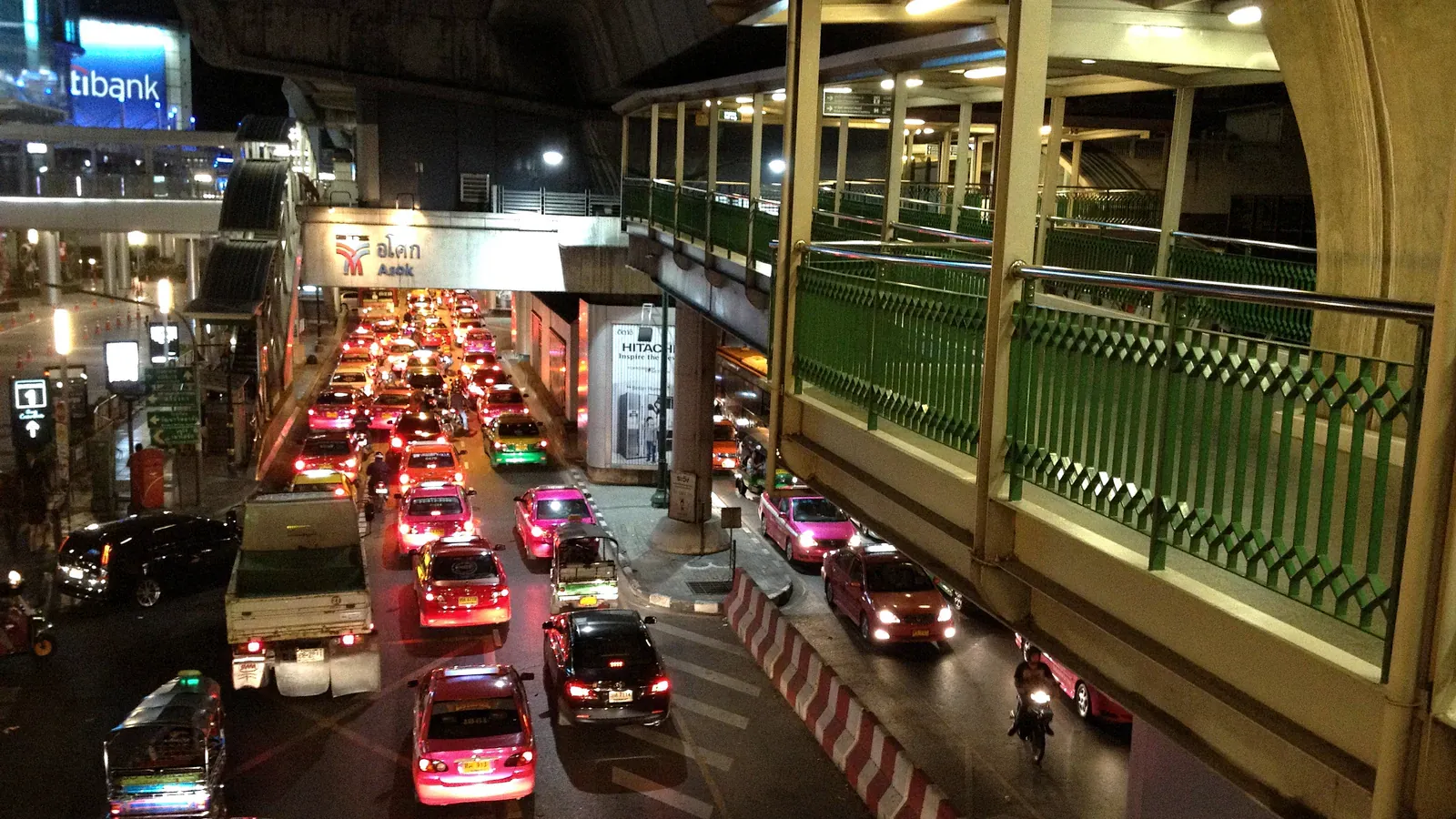
Sukhumvit is Bangkok’s densest expat and tourist corridor: a near-continuous run of restaurants, bars, malls, serviced apartments and street-level commerce from Nana through to Ekkamai. It’s loud, crowded, international and varied: you can eat a different cuisine every night for a month without repeating a soi. The crowd skews younger, more transient, more nightlife-oriented toward the Nana-Asok end, and calmer and more settled from Phrom Phong onward.
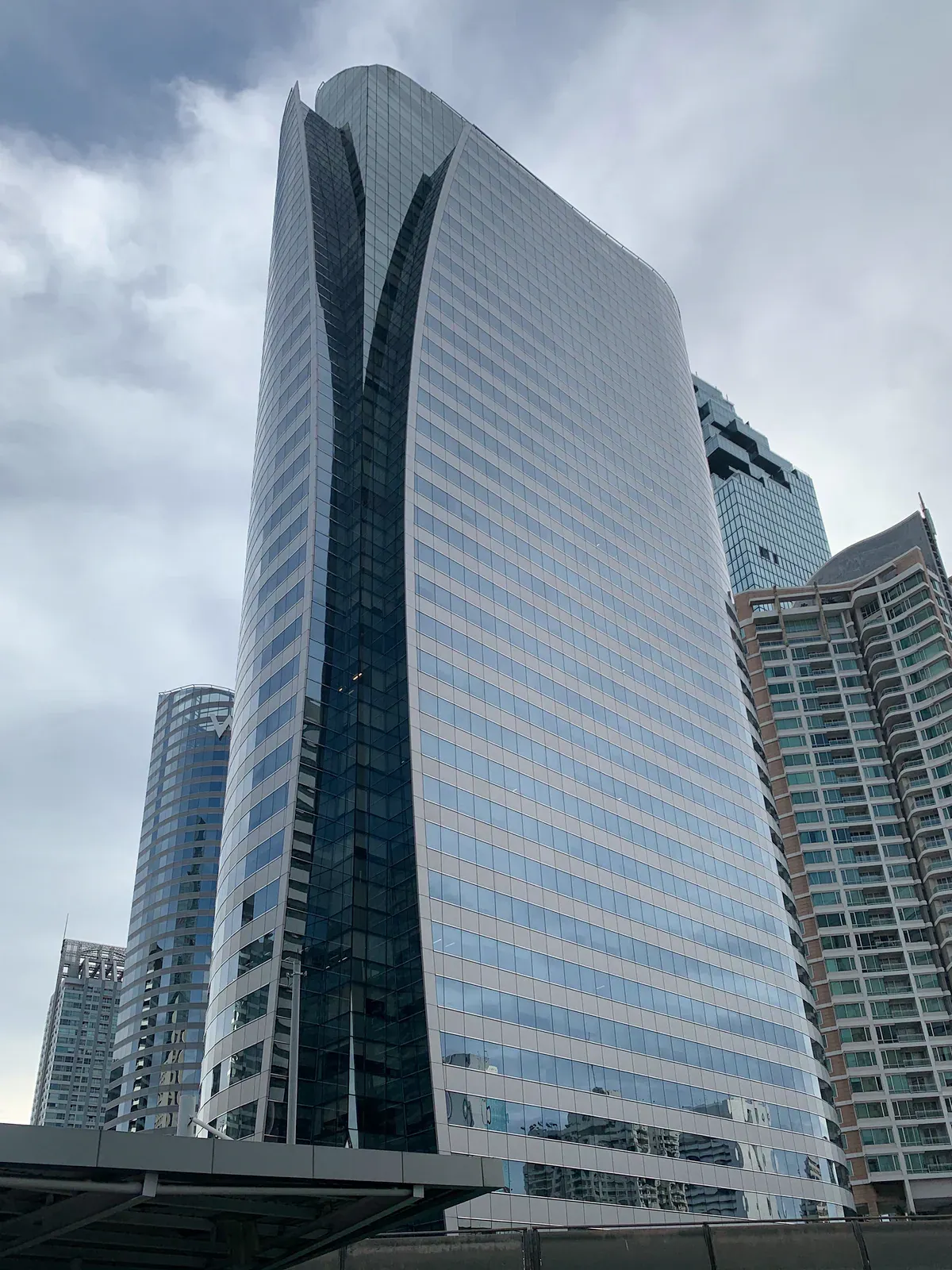
Sathorn is Bangkok’s financial spine: office towers, embassies, five-star hotels and a noticeably more buttoned-up daytime crowd. Evenings are quieter: Sathorn empties out once the office towers close, aside from a cluster of restaurants and Patpong’s nightlife sitting just over the boundary in neighbouring Silom. It suits people who want their neighbourhood to be calm rather than a destination in itself.
Rail geometry: one line versus a crossroads
This is the single biggest structural difference. Sukhumvit is served by one BTS line, running in a straight spine, with the MRT Blue Line crossing it at a single point, Asok/Sukhumvit station. Live anywhere on the Sukhumvit line and you have fast access up and down that one line; getting to anywhere off it means either walking, a taxi, or transferring at Asok or Mo Chit.
Sathorn and Silom sit at Bangkok’s clearest rail crossroads: the BTS Silom line runs through Sala Daeng, which is also an MRT Blue Line station (as Silom), giving two lines in two different directions from the same short walk. That redundancy matters if your commute, social life or errands pull in more than one direction across the city, or if you want a fallback when one line has a service disruption.
Walkability and the state of the pavements
Both areas are walkable near their stations by Bangkok standards, which is a relative statement. Sukhumvit’s main road has wide but uneven, often obstructed pavements (parked motorcycles, food carts and utility boxes are constant) and crossing the road itself typically means using a footbridge rather than a street-level crossing. The sois running off Sukhumvit vary enormously: some are shaded and pleasant, others have no real footpath at all.
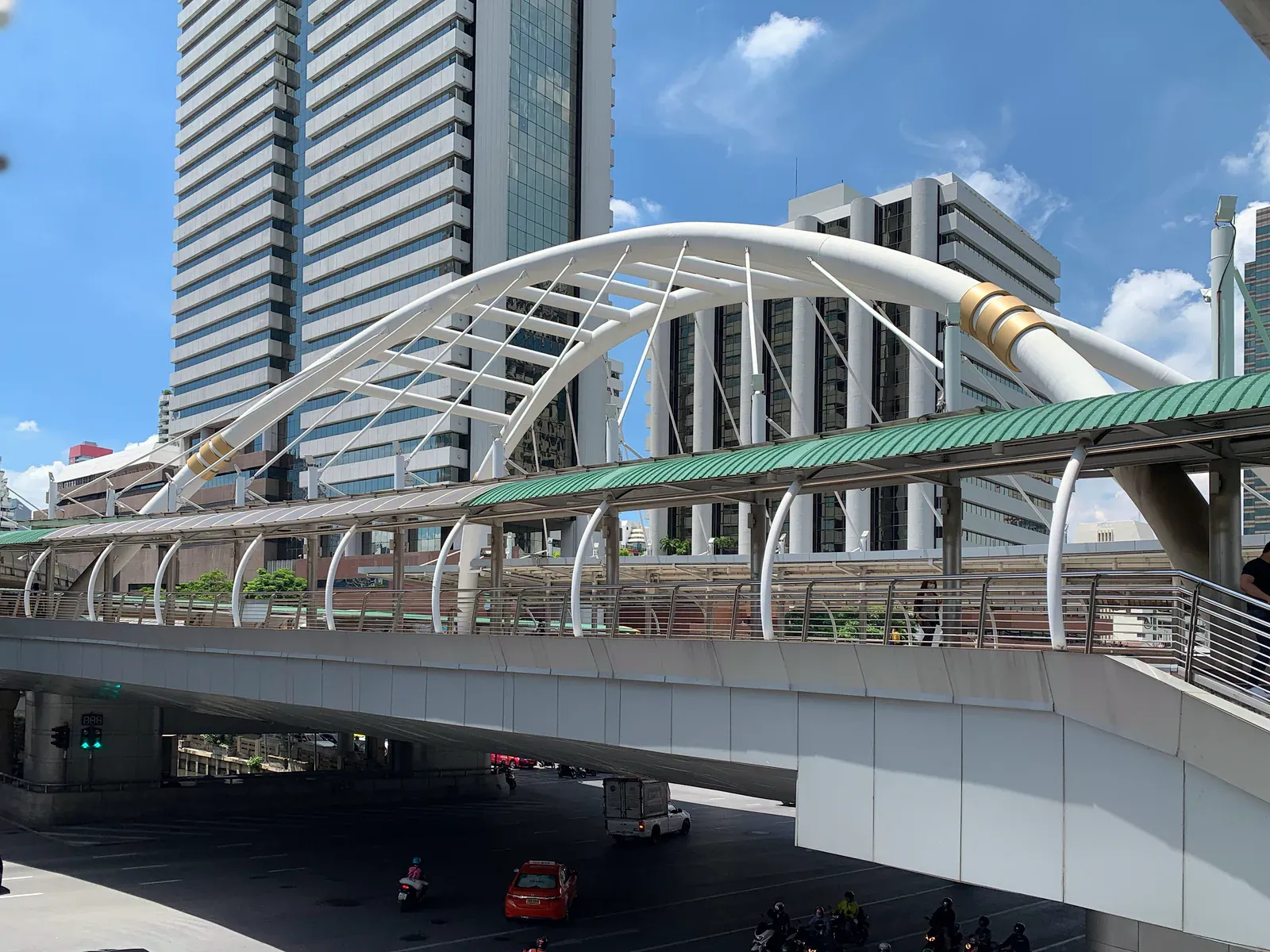
Sathorn Road’s pavements are wider and better maintained on the whole, reflecting its status as an embassy and corporate corridor, though the road itself is one of the city’s most congested for vehicle traffic, which affects noise and air quality for pavement users. The quieter sois south of the main road (Soi Sathorn, the streets around Suan Phlu) are genuinely pleasant to walk, tree-lined and much less obstructed than a typical Sukhumvit soi.
Food and nightlife density
Sukhumvit is not close. The concentration of restaurants, bars, rooftop venues and street food between Nana and Ekkamai has no equivalent anywhere else in the city, and it spans every price point from street stalls to destination fine dining. If eating out is a significant part of why you want to live centrally, this is the deciding factor on its own.
Sathorn has good restaurants, many of them hotel-attached or corporate-lunch oriented, and it borders Silom’s nightlife district (Patpong and the streets around it), but it doesn’t have Sukhumvit’s sheer walkable density. Residents of Sathorn who want Sukhumvit-level food variety generally accept a short taxi or BTS ride for it rather than expecting it on their own soi.
Green space
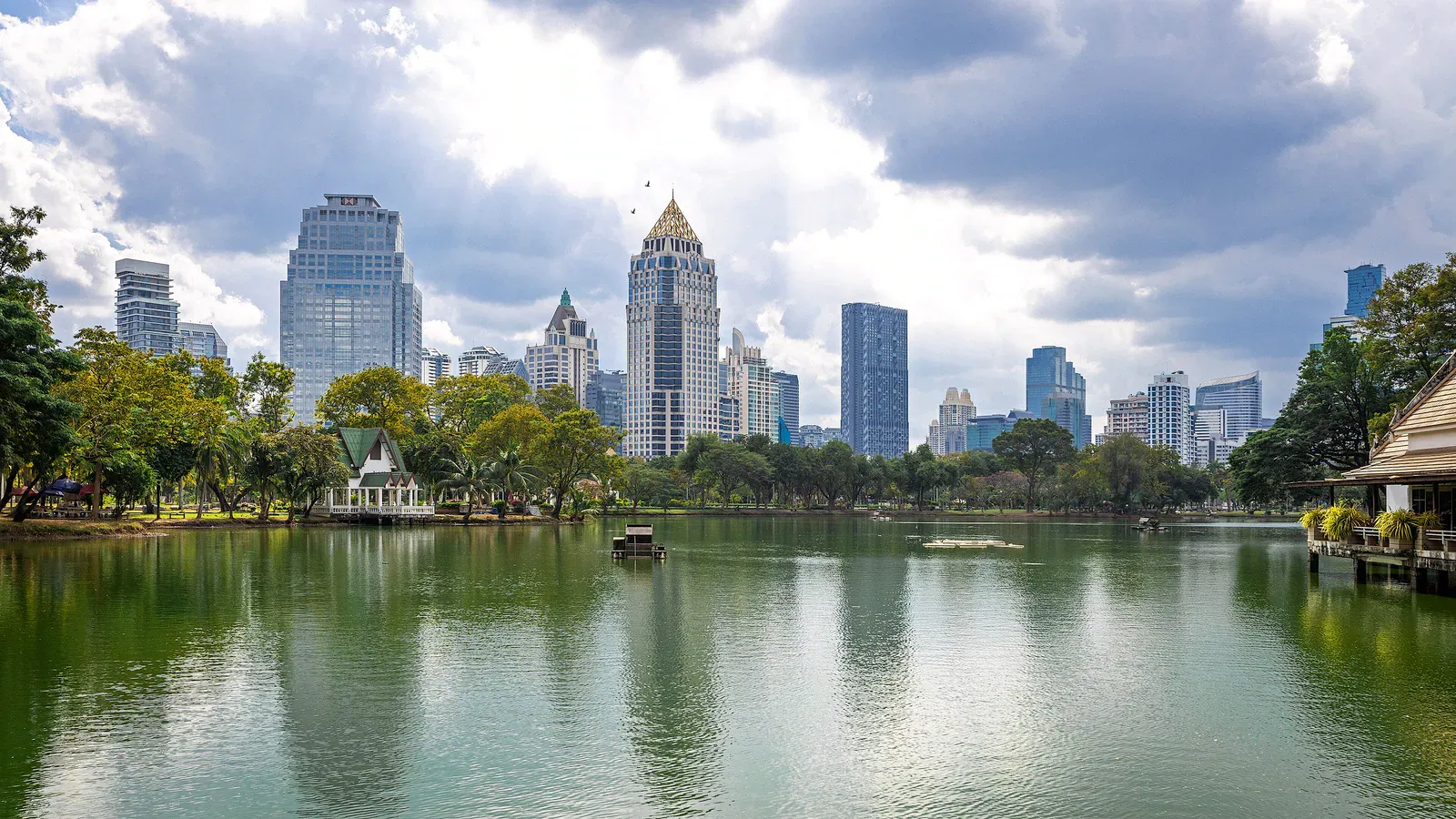
Sathorn’s biggest advantage: Lumphini Park sits at its northern edge, the city’s best large green space, with a proper running loop, monitor lizards, shade and genuine quiet within a short walk of the office towers. Nothing on the Sukhumvit spine matches it in scale: Benjakitti Park near Asok is the closest equivalent and is smaller, though well designed and increasingly popular for evening exercise.
Family fit and schools
Neither area is the city’s primary family cluster (that sits further out toward Bangna-Trad) but both work for families anchored to a school with a manageable commute. Sathorn’s quieter southern sois (Suan Phlu, Yen Akat) are popular with diplomatic and corporate families precisely because they combine calm streets with proximity to several international schools and consulates. Sukhumvit works for families who prioritise walkable daily life over quiet, particularly in the Phrom Phong to Ekkamai stretch, which has a noticeably more settled, family-friendly feel than Nana or Asok.
Commuting to an office
If your office sits in the Sathorn/Silom CBD, living there removes the commute entirely, and Sukhumvit residents heading into that CBD daily face a BTS ride plus a change or a walk at the Siam/Sala Daeng end: workable, but a real daily cost in time. If your office sits in Sukhumvit itself, Rama 9, or anywhere off the direct Sathorn-to-Sukhumvit axis, the calculation reverses. Map your actual commute in stops before deciding; “central” is not the same as “close to your office.”

Building stock and rent tiers
Sukhumvit has the widest range of building stock in the city: ageing low-rise apartment blocks from the 1990s sitting beside brand-new luxury towers, often on the same soi. This gives the widest price spread: a basic older unit near On Nut can be a fraction of the cost of a new-build tower near Phrom Phong. Sathorn’s stock skews newer and more corporate-serviced-apartment in character, with fewer of the cheap ageing walk-ups that keep parts of Sukhumvit affordable.
Broadly, both sit at or near the top of the city’s rent range, with Sukhumvit’s Phrom Phong-Thong Lo stretch and central Sathorn comparable to each other, and Sathorn’s quieter southern sois running a shade below the main-road towers. Treat any figure as an indicative range only: check current listings for the specific soi and building age, since the spread within each area is wide enough to make a single number misleading.
Healthcare and daily errands
Both areas score well for hospital access, which matters for the senior and medical-tourism audience specifically. Sathorn and neighbouring Silom sit within a short ride of several hospitals used heavily by foreigners and medical travellers, and the area’s flatter, wider pavements around the main road make it easier going for anyone with mobility concerns walking between a condo and a clinic. Sukhumvit has comparable hospital density along its length, particularly around the Nana to Phrom Phong stretch, though the more obstructed pavements and the need to use footbridges to cross the main road are a bigger daily friction for older residents or anyone recovering from a procedure.
For groceries and everyday errands, both areas are well covered by full-size supermarkets, pharmacies and convenience stores within a short walk of most buildings. Sukhumvit has the wider spread simply because of its length: there is a supermarket or market of some kind within a few minutes of almost any point on the line. Sathorn’s errand options cluster more tightly around the main road and a couple of shopping centres, with the quieter southern sois relying on a slightly longer walk or a short ride for a full grocery run.
Traffic, flooding and noise
Sathorn Road and the wider CBD are among the most congested stretches in the city during rush hour, which affects both traffic noise for pavement-facing units and taxi/ride-hailing journey times off the rail network. Sukhumvit’s main road carries similarly heavy traffic, though its greater number of parallel sois gives slightly more routing flexibility for a taxi trying to dodge a jam.
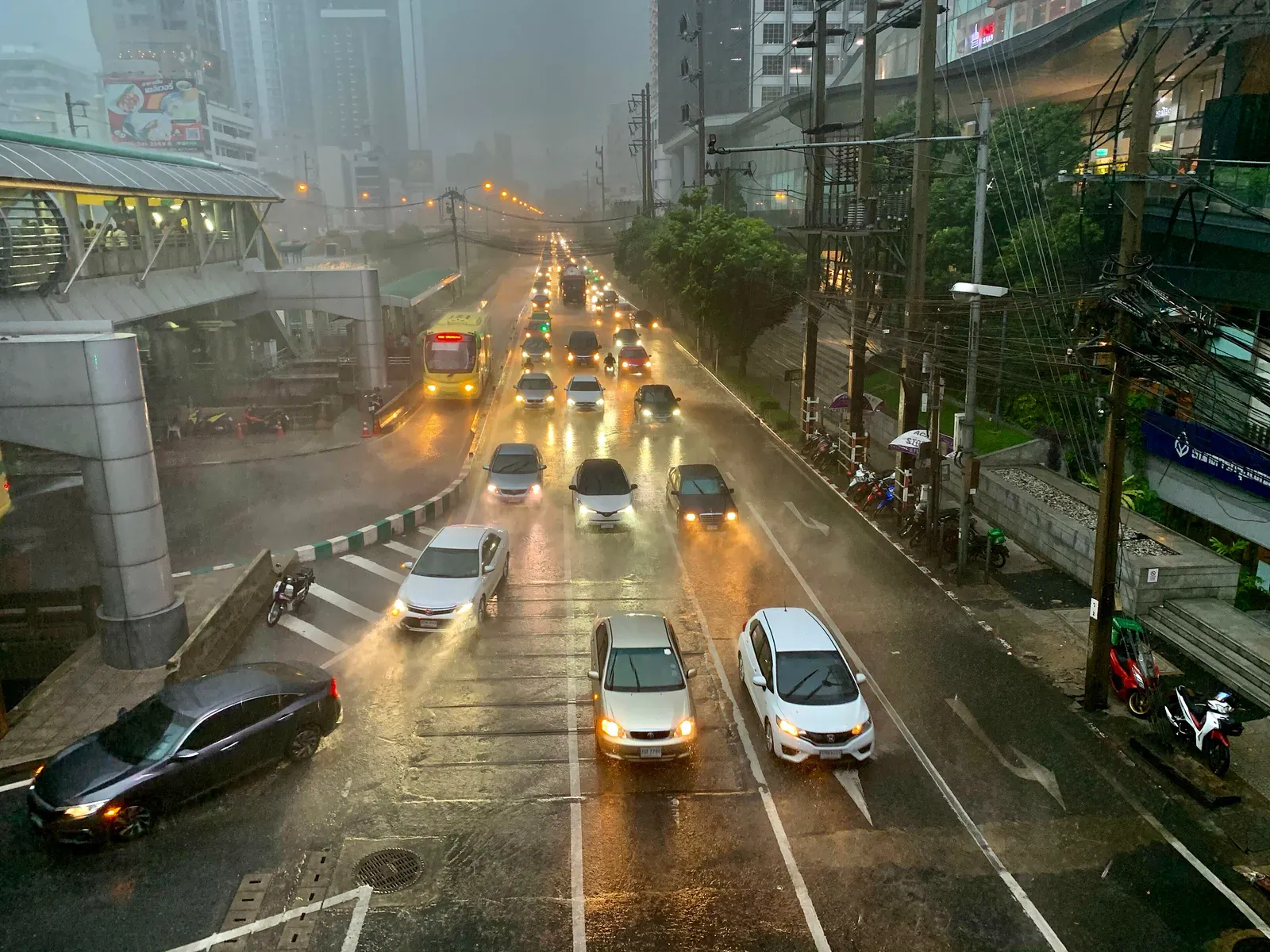
Flood behaviour is soi-specific in both areas rather than following the Sukhumvit/Sathorn divide cleanly; low-lying stretches of both flood in heavy rainy-season downpours. Ask about a specific soi’s drainage history before signing a lease rather than assuming either district is immune.
Serviced apartments, embassies and the expat-services layer
Sathorn carries a heavier concentration of embassies, consulates and corporate-serviced apartments than Sukhumvit, a legacy of its role as the traditional base for diplomatic staff and relocating executives. That brings a practical upside: agents, relocation consultants and serviced-apartment operators who specialise in exactly this kind of short-notice corporate move cluster around Sathorn, which can smooth a first few months for anyone arriving on a company package. Sukhumvit’s equivalent services exist but are more spread out and oriented toward independent movers and long-stay tourists rather than corporate relocations specifically. Related guides: Western European embassies in Bangkok, Northern and Eastern European embassies in Bangkok, Middle Eastern embassies in Bangkok.
This also shapes the two areas’ rental markets slightly differently. Sathorn’s serviced-apartment stock tends toward furnished, management-heavy buildings with hotel-style services, reflecting that corporate-relocation demand, while Sukhumvit has a broader mix of furnished and unfurnished options across a wider range of building ages, giving more room to negotiate on a longer lease.
The quieter pockets inside each
Sukhumvit’s Phrom Phong side sois (away from the main road, toward Ekkamai) are noticeably calmer than the Nana-Asok stretch, with a more residential, less transactional feel while staying on the same rail line. Sathorn has two well-known quiet pockets: Suan Phlu, a low-rise, leafy residential enclave popular with long-stay professionals, and Yen Akat, slightly further out, quieter again and more suburban in feel. Silom’s Saladaeng area, technically bordering Sathorn at the Sala Daeng interchange, offers a middle ground: walkable, well-connected, with a calmer daytime character than Patpong’s nightlife strip a few streets over.
Comparison table
| Factor | Sukhumvit | Sathorn |
|---|---|---|
| Rail | One BTS line, MRT crossing at Asok only | BTS Silom line crossing MRT Blue Line at Sala Daeng |
| Character | Dense, international, nightlife-heavy toward Nana-Asok | Corporate, calmer, quieter evenings |
| Food and nightlife | The city’s densest concentration | Good but thinner; borders Silom’s nightlife |
| Green space | Benjakitti Park (smaller) | Lumphini Park (larger, better) |
| Walkability | Wide but obstructed pavements; uneven soi quality | Wider, better-maintained main road; leafy quiet sois south of it |
| Family fit | Best in Phrom Phong-Ekkamai stretch | Best in Suan Phlu / Yen Akat |
| Rent tier | Top of the range, very wide spread by building age | Top of the range, narrower spread |
| Office commute | Best if your office is on this line | Best if your office is in the CBD |
Who should pick which, and who should pick neither
Pick Sukhumvit if restaurant and bar density, walkable daily variety and a younger social scene matter more than quiet evenings, and your work or life doesn’t require the CBD specifically. Pick Sathorn if you work in the financial district, want genuine green space within walking distance, or prefer a calmer, more corporate-feeling home base with easy MRT access in a second direction.
Pick neither if you need family-cluster proximity to the main international-school belt (look at Bang Na instead, covered in Where to Live in Bangkok), if budget is the primary constraint (both sit at the top of the city’s rent range), or if you want low-rise, café-driven neighbourhood character over density: that’s Ari, covered in full in the Ari area guide.
Common questions
Is Sathorn more expensive than Sukhumvit?
Roughly comparable at the top end, though Sukhumvit has a far wider spread because of its mix of old and new buildings: a basic older unit on upper Sukhumvit can undercut a new Sathorn tower considerably, while a new-build near Phrom Phong or Thong Lo sits close to Sathorn’s typical range. Check current listings for the specific building age and soi rather than assuming either area is uniformly pricier.
Which is better for a first-time mover to Bangkok who doesn’t know the city yet?
Sukhumvit, generally, because of its single-line simplicity, dense walkable amenities and easier social scene for meeting people early on. Sathorn suits someone who already knows their commute is CBD-bound and prioritises calm over discovery.
Is Sathorn quieter than Sukhumvit at night?
Yes, on the whole. The office-district core empties out after work, and outside the Silom nightlife strip at its edge, most of Sathorn is genuinely quiet by mid-evening. Sukhumvit stays busy well into the night across most of its length. Visitors can read where to stay in Sukhumvit.
Can I get MRT and BTS both without living exactly at Sala Daeng or Asok?
Yes, a short walk or a couple of BTS stops from either interchange still gives practical access to both lines within a reasonable door-to-door time. You don’t need to live directly on top of the interchange station itself.
Which area has better schools nearby?
Neither is the city’s primary school cluster, but Sathorn’s southern sois sit closer to a useful spread of international schools and are popular with diplomatic and corporate families for that reason. Families prioritising school proximity above all else should also look at Bang Na, covered in Where to Live in Bangkok.
Does either area flood more than the other?
Flood risk is determined by the specific soi’s drainage and elevation more than by which of the two districts it sits in. Both have low-lying stretches that pool in heavy rainy-season downpours; ask a local agent about a specific street’s history before committing to a lease.
Written by
Mike Brochlowski
Founder and editor, travel photographer and designer
I'm Mike Brochlowski, a travel photographer and designer, and I currently live on Koh Samui, Thailand. I built BangkokWiki to put practical, checked information about Bangkok in one place. Every page is researched from official and primary sources, and the text names them. Where a page shows a checked date, that is when its facts were last confirmed. I also run samui69.com, a non-commercial guide to Koh Samui. If you spot an error or something out of date, tell me through the contact page and I will check it and correct the page.
Read all articles
Visas and paperwork
Staying in Thailand longer?
Visas, extensions, documents and banking for longer stays. Rules and fees change often and offices apply them differently, so check the official source before you act.

Places to stay
Find a hotel
Explore the other desks
More from Living
- 10 min read
 6 min read
Cost of Living by Bangkok Area: Three Budgets Compared
 9 min read
Commute Times Across Bangkok: A Data Compilation by Area

Newsletter
You're subscribed as