Things to do
Bangkok Temple Tour Route: Grand Palace, Wat Pho, Wat Arun
A timed, walkable route through the old town's three big temples by foot and river ferry, plus extensions, a half-day version and the gem-shop scam to avoid.
At a glance
- Reading time
- 10 min read
- Chapters
- 11
- Published
- Sep 20, 2026
On this page
The classic Bangkok temple route links the Grand Palace and Wat Phra Kaeo, Wat Pho and its reclining Buddha, and Wat Arun across the river, all within walking distance of each other and one short ferry crossing. Done in the right order, starting early, it’s a single manageable day. Done in the wrong order, or started at midday, it’s three hours of queuing in full sun. This is the order that works, with honest timings and the extensions worth adding if you have more than a day.
Why the order and the start time matter
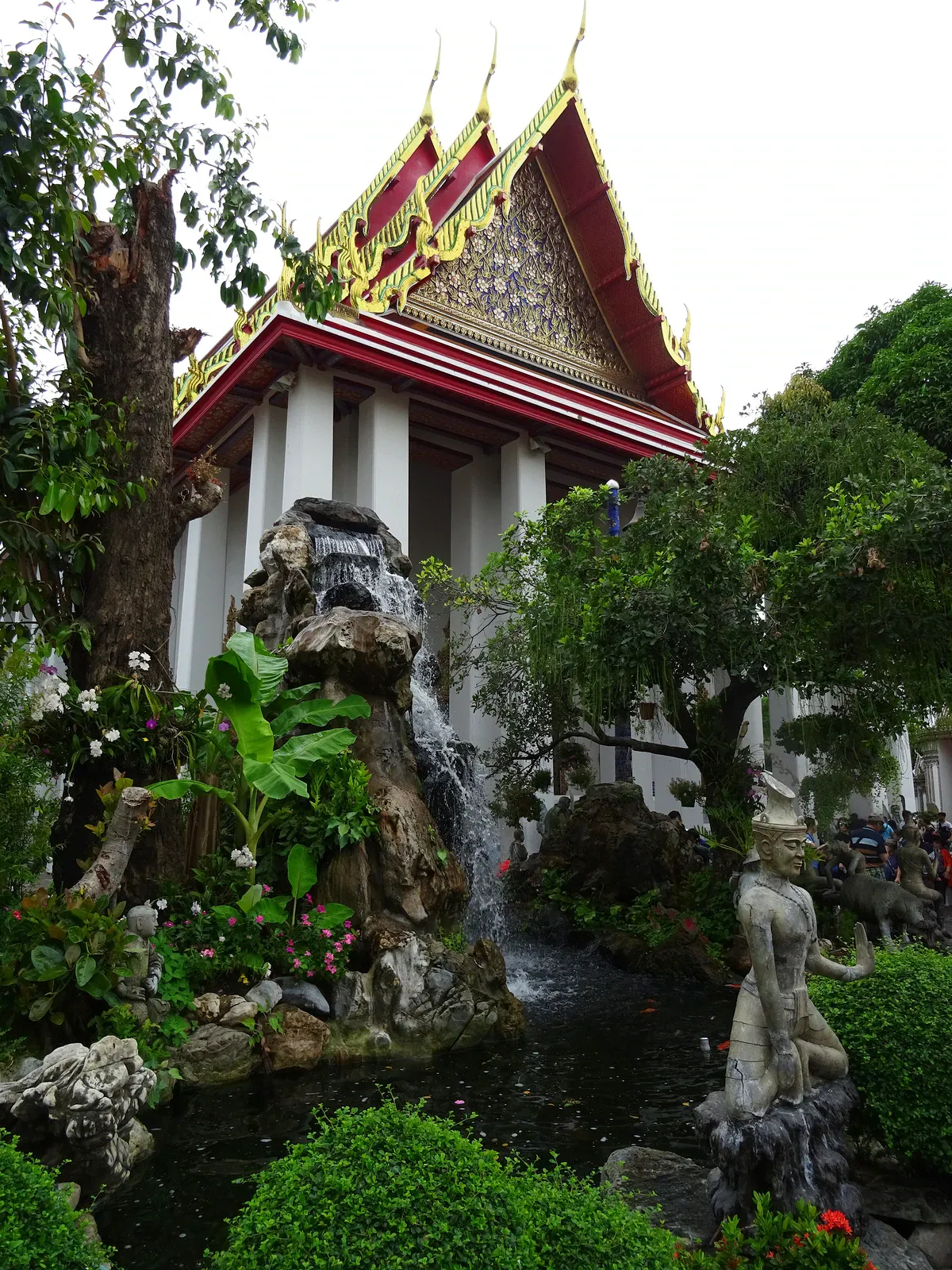
All three sites sit on or near the Chao Phraya river in Rattanakosin, the old royal island district, within about a twenty-minute walk of each other end to end. The constraint isn’t distance: it’s heat and crowds. The Grand Palace complex draws the largest queues of the day by mid-morning, and by noon the stone courtyards at all three sites are radiating heat with almost no shade. Starting at or before the Grand Palace’s opening time and moving downhill in intensity (Grand Palace first, then Wat Pho, then the river crossing to Wat Arun) front-loads the busiest, most exposed site while you’re freshest and the light is best for photos, and leaves the river crossing, which has a breeze, for the hottest part of the day.
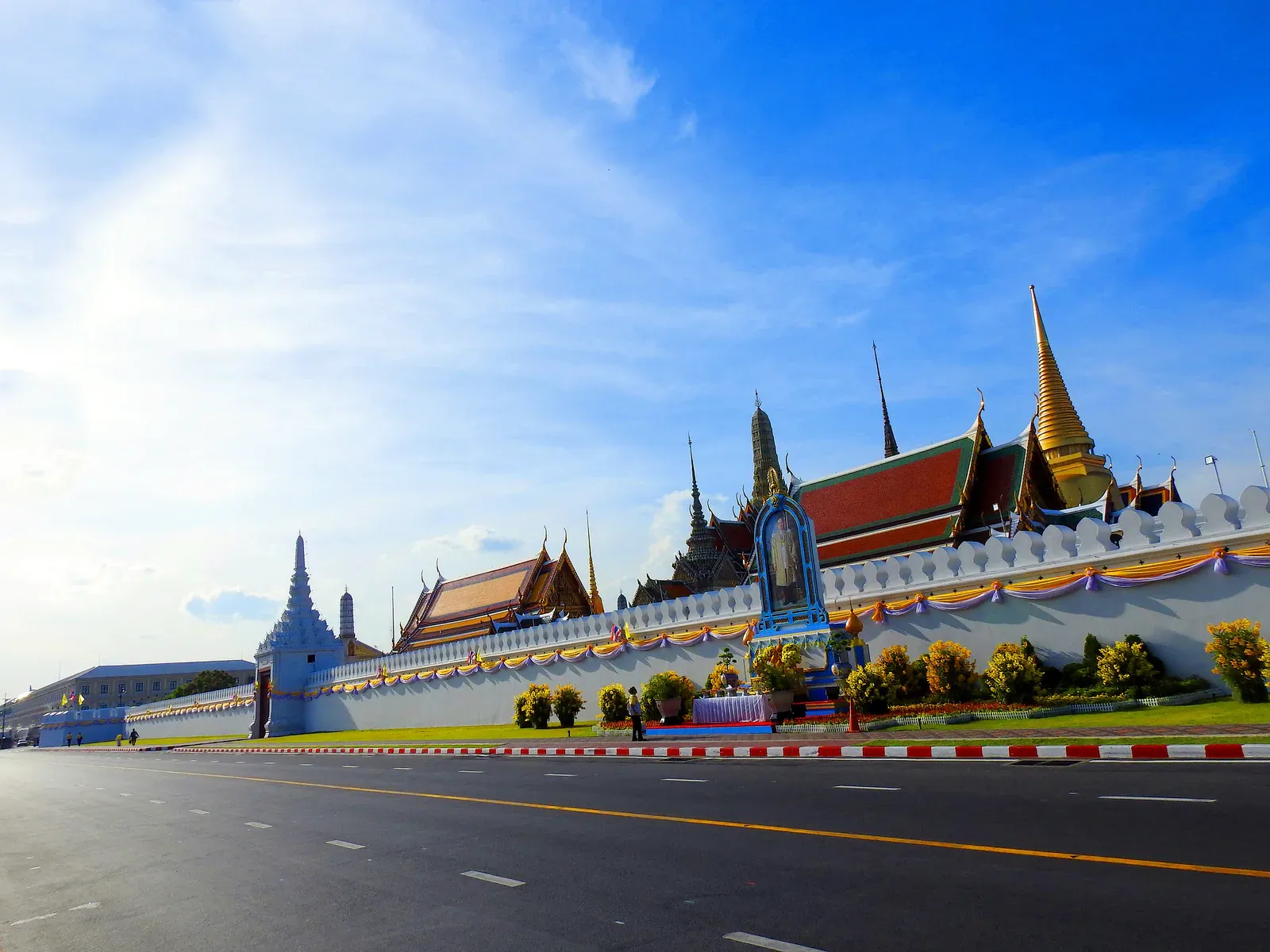
Before setting out, dress for the strictest checkpoint on the route: the dress code and etiquette guide covers exactly what passes and what doesn’t at the Grand Palace gate, and it’s worth reading before you leave rather than finding out at the entrance.
The route, stop by stop
- Grand Palace and Wat Phra Kaeo (Temple of the Emerald Buddha). The two are one ticketed complex and the obvious start: arrive as close to opening as you can manage. Expect a security check, a dress-code check, and, once inside, significant walking across open courtyards between the palace halls and the temple compound housing the Emerald Buddha. This is the strictest dress-code checkpoint on the whole route and the one most likely to turn away an underdressed visitor.
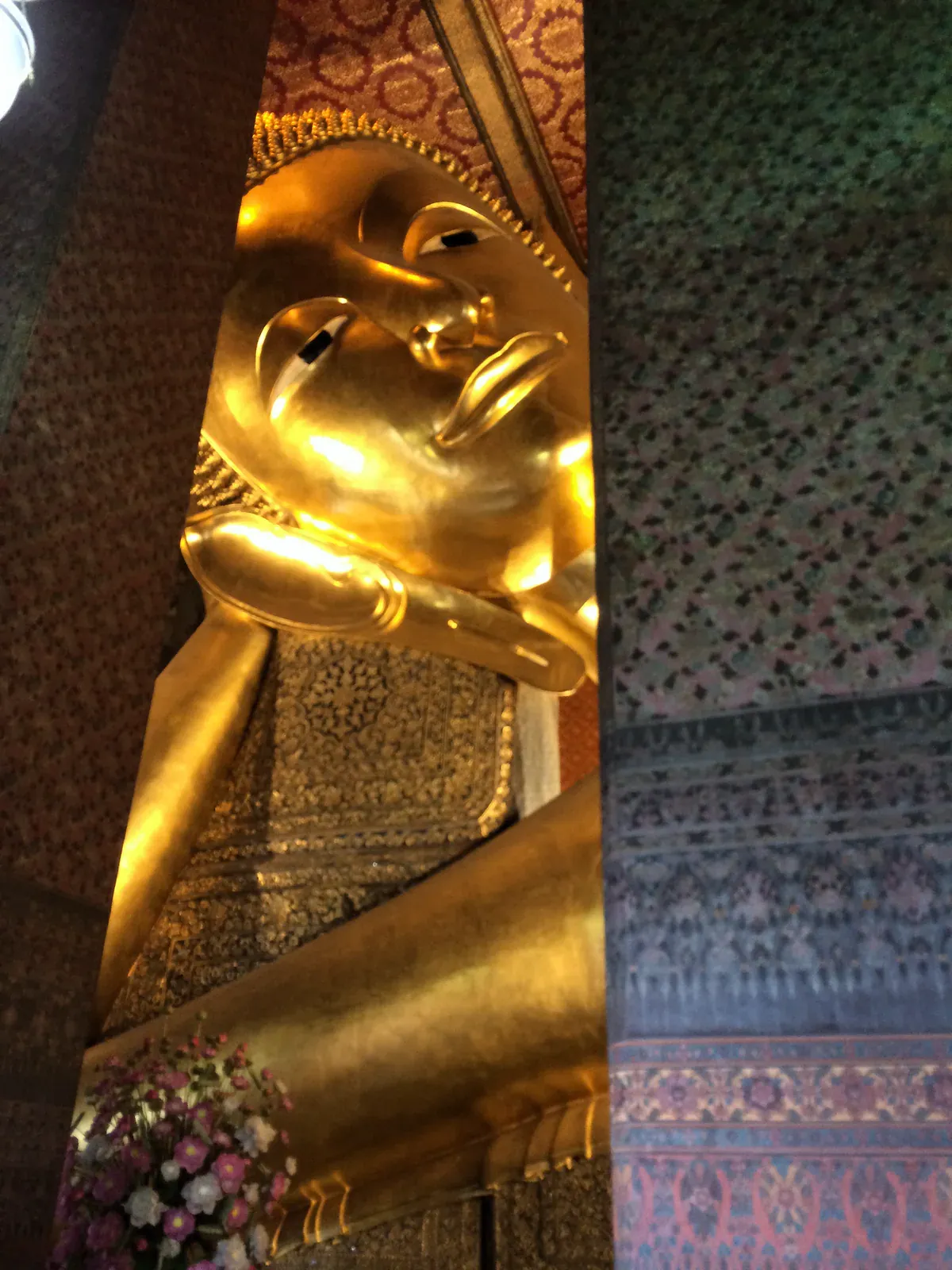
- Walk to Wat Pho (Temple of the Reclining Buddha). A short walk south from the Grand Palace, inside the same old-town district. Wat Pho is calmer than the Grand Palace despite being just as significant: lower ceilings, fewer crowds funnelled through one doorway, and the reclining Buddha hall itself is a single large space rather than a multi-building complex. It’s also the traditional home of Thai massage teaching, and a foot or shoulder massage here is a genuine, well-established way to break up the day rather than a tourist gimmick.
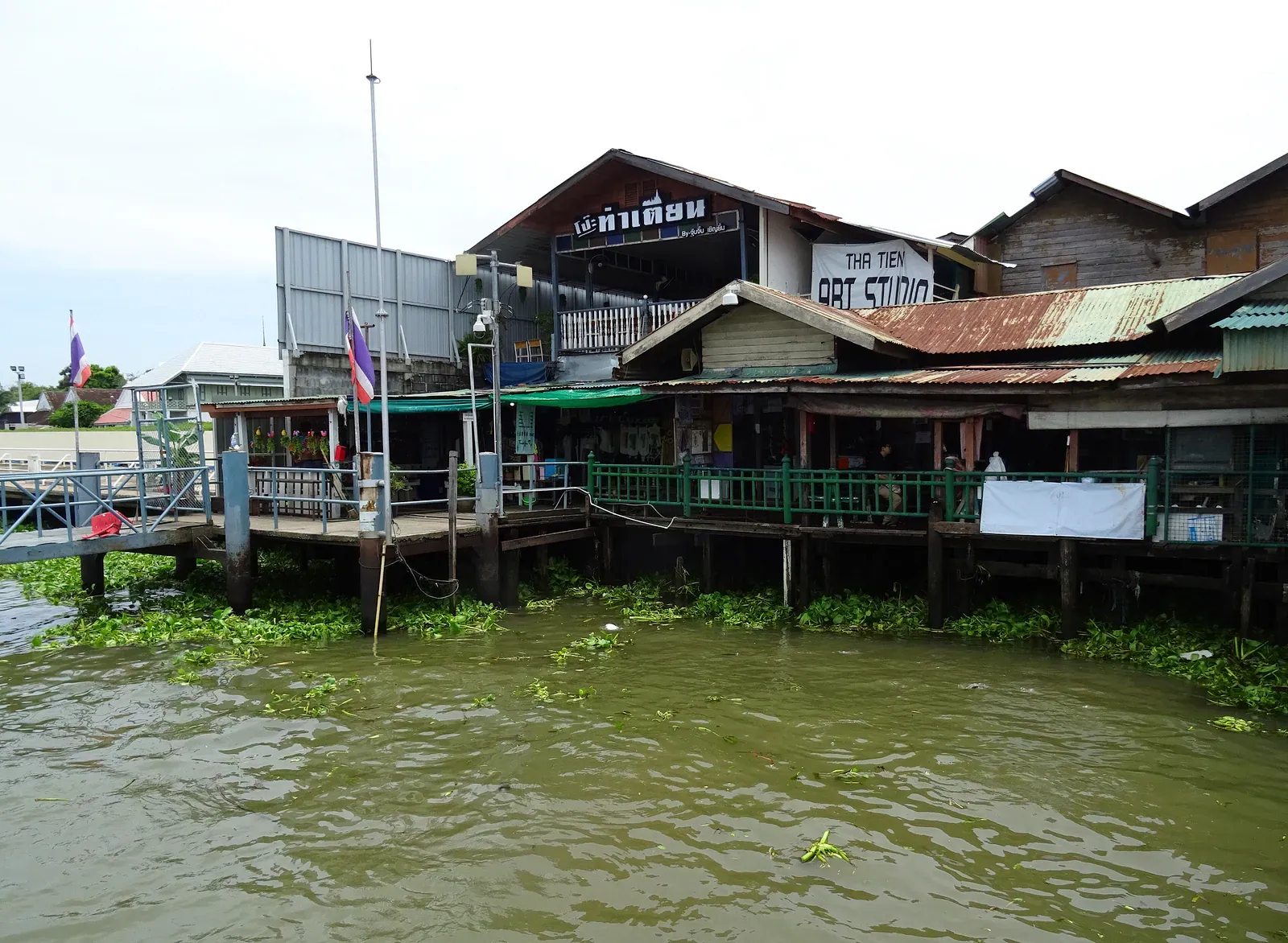
- Walk to Tha Tien pier and cross the river. A short cross-river ferry (a few minutes, a small flat fare) runs from Tha Tien pier directly opposite Wat Arun. This is the single boat crossing the whole route depends on, and it runs frequently through the day.
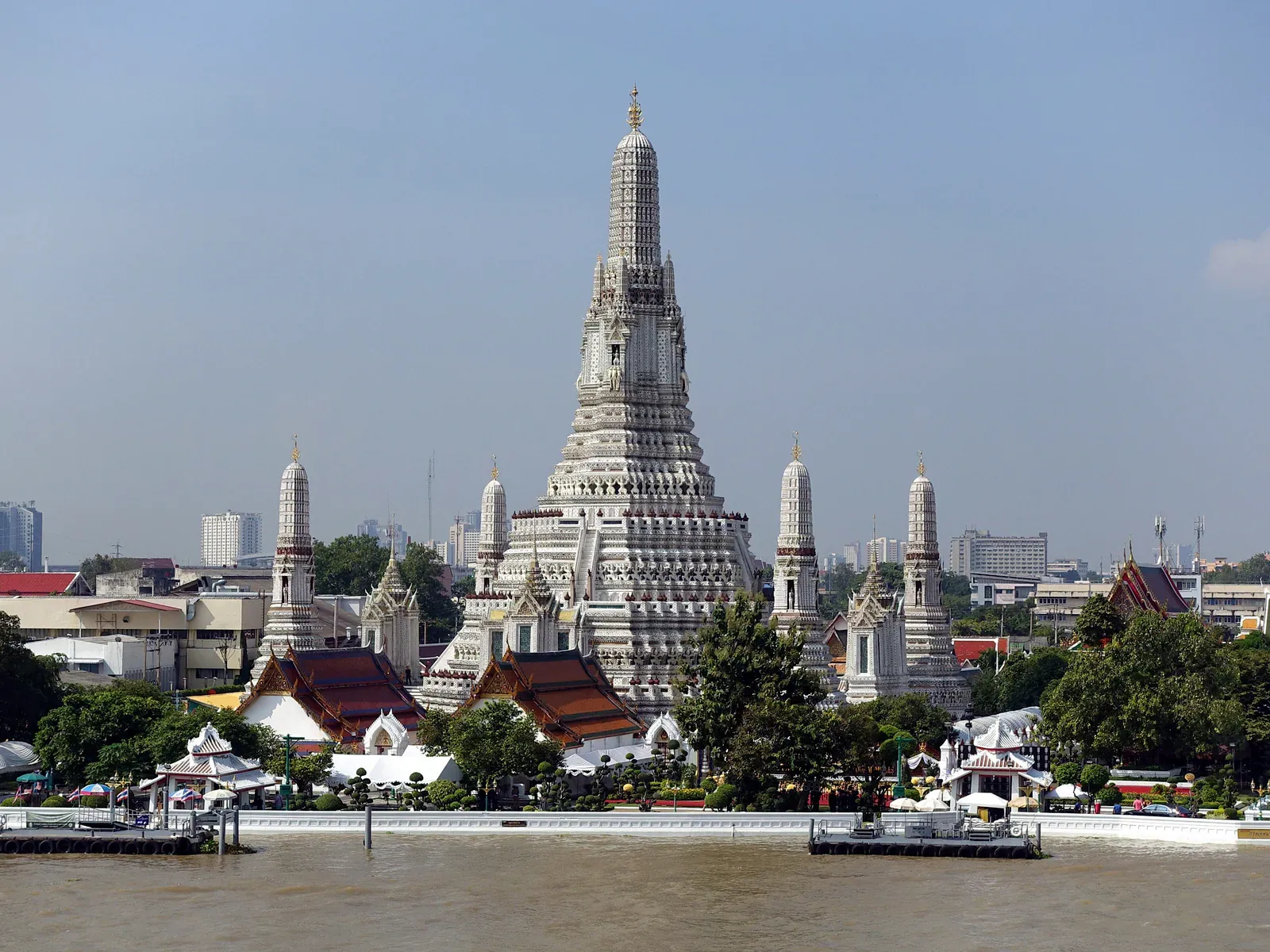
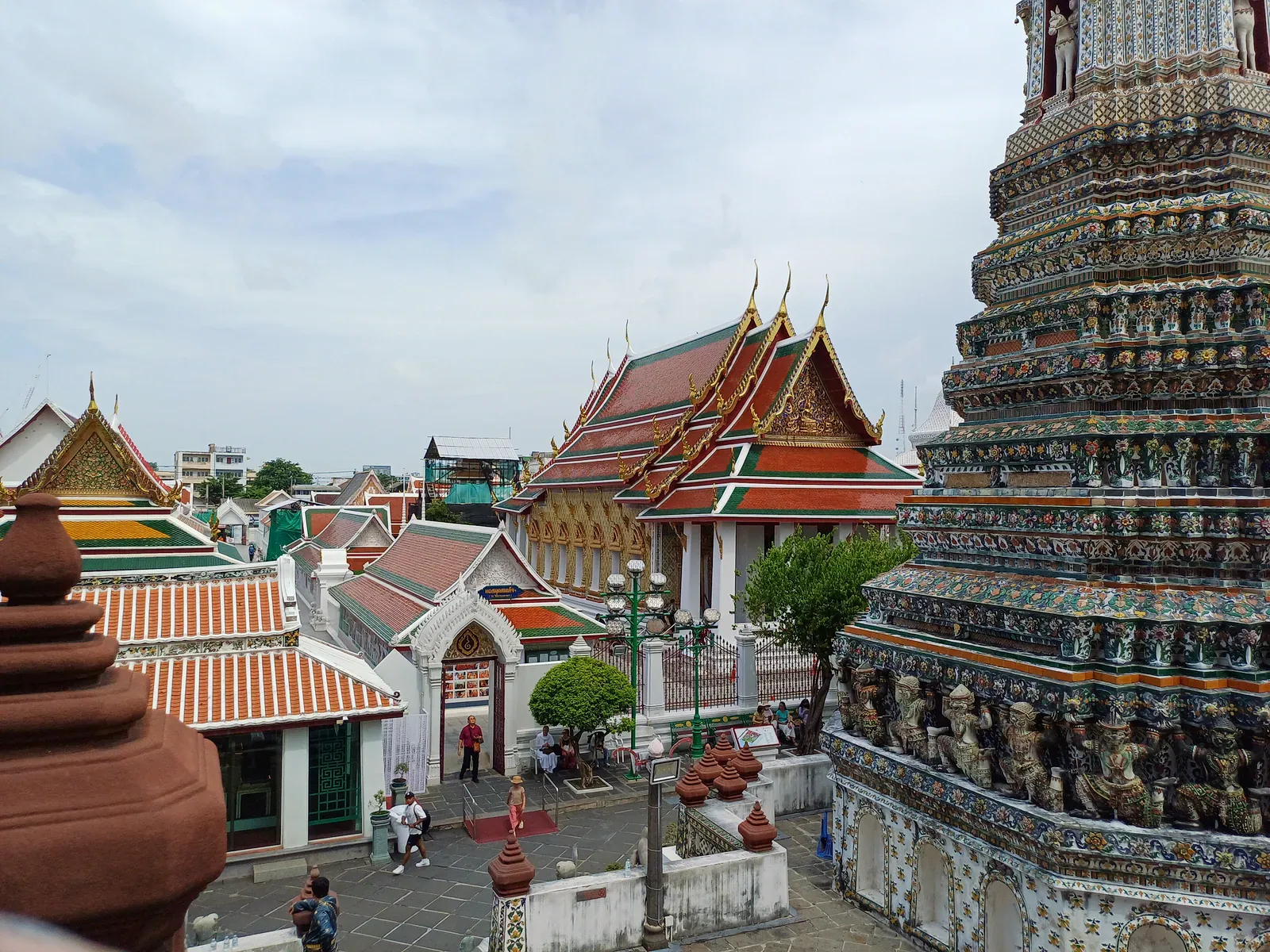
- Wat Arun (Temple of Dawn). The distinctive porcelain-and-seashell-encrusted prang is climbable partway up steep steps for a river view, weather and maintenance status permitting: check on arrival, since sections are periodically closed for restoration. Wat Arun photographs best from the Tha Tien side in late afternoon light, so a visitor doing the crossing early and coming back for photos from the opposite bank later in the day gets the best of both.
- Return to the old-town side via the same cross-river ferry, or continue further down the Chao Phraya on the express boat network if the day continues elsewhere.
How the piers stitch it together
The Chao Phraya Express Boat runs the length of the river with numbered piers, and understanding two or three of them is enough for this whole route.
| Pier | Serves | Use on this route |
|---|---|---|
| Tha Chang (N9) | Grand Palace | Closest express-boat pier to the Grand Palace entrance if arriving by river rather than road |
| Tha Tien (N8) | Wat Pho, cross-river ferry to Wat Arun | The hinge of the route: walk here from Wat Pho, cross to Wat Arun, and return |
| Tha Wang Lang / Siriraj (N10) | Thonburi side, hospital pier | Useful if extending into the Thonburi canal-side temples afterwards |
The express boats run frequent services on flagged colour-coded lines during the day; a boat operator or pier staff will point you to the right one if you’re unsure. None of this requires booking ahead: buy or tap in at the pier.
A timed day
Timings below are realistic for an unhurried visit including queuing, not a sprint. Add slack rather than subtract it.
| Time | Stop | Notes |
|---|---|---|
| 08:00 | Arrive Grand Palace / Wat Phra Kaeo | Dress-code and security check on entry |
| 08:00-10:00 | Grand Palace complex | Palace halls plus the Emerald Buddha temple compound |
| 10:00-10:15 | Walk to Wat Pho | Short walk, mostly shaded by buildings |
| 10:15-11:45 | Wat Pho | Reclining Buddha hall, temple grounds, optional massage |
| 11:45-12:00 | Walk to Tha Tien pier, cross to Wat Arun | A few minutes on the water |
| 12:00-13:00 | Wat Arun | Climb partway up the prang if open; find shade for a break |
| 13:00-14:00 | Lunch, Thonburi or old-town side | Riverside restaurants near Tha Tien on either bank |
| 14:00 onward | Return or extend | Head back for rest, or continue to an extension below |
Lunch deliberately sits after Wat Arun rather than before it: eating right before the hottest, most exposed climb of the day is the less comfortable order.
What the day of the week and a holy day change
Weekends bring heavier domestic tourist traffic to all three sites, particularly Wat Arun in the late afternoon when it’s popular for photos. A weekday morning start is the quietest realistic combination. On Wan Phra, the recurring Buddhist observance day, and especially on the handful of major annual holy days, expect more Thai worshippers, more active ceremony inside the halls, and occasionally a section closed for a private rite: a normal feature of a working temple, not a fault in the plan. Dress and behave a shade more conservatively than usual on these days; the full etiquette detail is in the dress code guide.
The “temple is closed today” scam
This route is the exact stretch of Bangkok where a long-running scam operates, and it’s worth knowing before you’re approached rather than after. A well-dressed stranger (sometimes claiming to be a guide, a government worker, or simply a friendly local) tells you the Grand Palace or a specific temple is closed for a holiday, a ceremony, or renovation, and offers to take you somewhere else “worth seeing instead,” usually ending at a gem or tailor shop running a pressure sale. The claim is essentially always false: these sites don’t close on short notice for tourists without it being obvious from an actual locked gate and posted signage, not a stranger’s word.
The reliable response is to ignore the claim entirely and walk to the gate yourself. If a site is genuinely closed, official signage and the queue itself will make it obvious in under a minute: no need for a tuk-tuk ride to find out.
Extensions for a longer day or a second visit
The three-temple loop is a full but not exhausting day. With more time, or on a second visit, these extend naturally from the same old-town base:
- Wat Suthat and the Giant Swing. A short distance from the Grand Palace area, Wat Suthat has one of the city’s most impressive viharn interiors and murals, and sits beside the tall red Giant Swing frame in front of it: now a monument rather than an active swing, but a distinctive landmark either way.
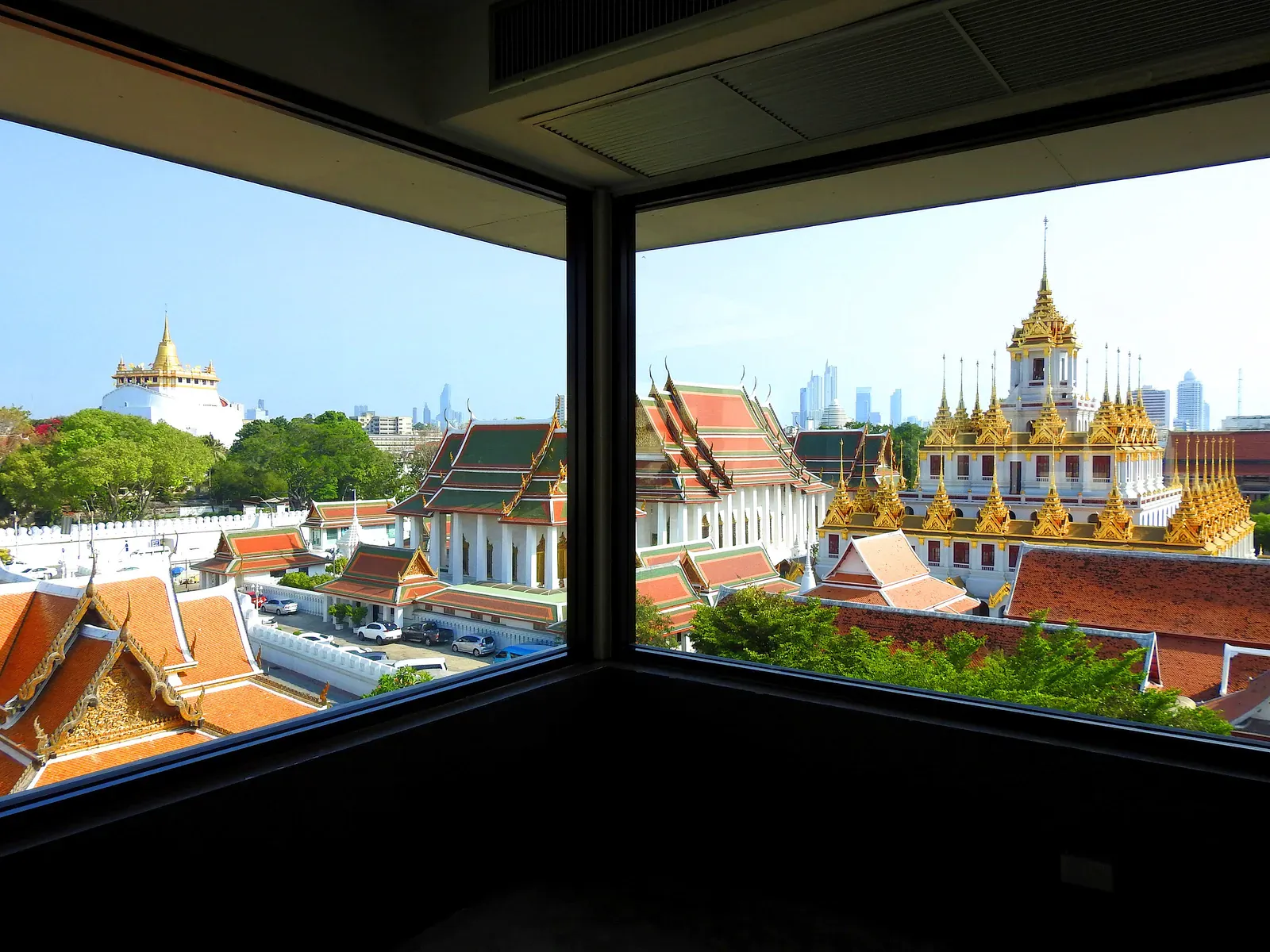
- Wat Saket and the Golden Mount. A walk or short ride from Wat Suthat, this one (see the Wat Saket Golden Mount guide) adds a genuine climb: a spiralling stairway up an artificial hill to a gilded chedi at the top, with a panoramic view over the old town as the payoff for the stairs. Worth doing on a day when the legs are still fresh, or as a separate half-day of its own.
- Wat Ratchanatdaram. Close to the Golden Mount, distinctive for its metal castle-like structure (Loha Prasat) rather than a conventional chedi: worth the short detour if you’re already in the area.
- The Thonburi side. Beyond Wat Arun, the canal-side and riverside temples of Thonburi reward a slower, boat-based visit rather than a rushed add-on. They’re covered in full, along with how to reach them, in the guide to Bangkok’s lesser-known temples.
For other stops, see Wat Benchamabophit, the marble temple and the Wat Traimit golden Buddha guide, which pairs with the Yaowarat Chinatown plan. To compare more sites, read famous temples in Bangkok.
Half-day version
For a shorter visit, or a first afternoon before a longer trip:
- Grand Palace and Wat Phra Kaeo only, arriving at opening.
- Walk to Wat Pho, allowing at least an hour.
- Stop there: skip the Wat Arun crossing and return another day, ideally in late afternoon when the light and the temperature both favour it.
This trims roughly the last three hours of the full day and avoids the hottest stretch entirely, at the cost of missing Wat Arun.
A version for limited mobility
The three-site loop involves real walking distances between stops, uneven and worn stone underfoot in places, and stairs at both Wat Arun’s prang and inside parts of the Grand Palace complex. For a visitor managing mobility limits, heat sensitivity, or simply preferring a gentler pace:
- Take a taxi or tuk-tuk between the Grand Palace and Wat Pho rather than walking, even though it’s a short distance: it removes the sun exposure of the walk itself.
- At Wat Arun, the temple grounds and lower terraces are accessible without climbing the steep central steps; the view from ground level is still worthwhile even without the climb.
- Plan for one site properly rather than three rushed ones: the Grand Palace and Wat Pho alone, without Wat Arun, is a complete and satisfying half-day with far less walking.
- Benches and shaded spots exist at all three sites; building in seated rest breaks rather than trying to match a fitter visitor’s pace makes the difference between an enjoyable day and an exhausting one.
Ticketed versus free
The Grand Palace and Wat Phra Kaeo complex charges an entry fee, payable at the gate: treat any online figure as indicative for 2026 and confirm the current price on arrival, since it has changed before. Wat Pho and Wat Arun have historically charged smaller entry fees of their own for the temple grounds and the reclining Buddha hall or prang respectively; again, confirm current pricing at the gate rather than relying on a number from an old blog post. The cross-river ferry between Tha Tien and Wat Arun charges a small flat fare each way, paid in cash at the pier.
Common questions
Can I really do the Grand Palace, Wat Pho and Wat Arun all in one day?
Yes, comfortably, if you start near opening time and follow this order. Starting late or trying to fit in extensions on the same day is what turns a manageable day into a rushed and overheated one.
Which pier do I use for the boat to Wat Arun?
Tha Tien, on the old-town side directly opposite Wat Arun. It’s a short walk from Wat Pho, and the cross-river ferry runs frequently through the day with no need to book.
Is the Golden Mount worth adding to the same day?
Only if you’re moving at a brisk pace and starting very early: the extra walking and a genuine flight of stairs make it a stretch to add onto an already full day. It works better as a dedicated half-day, paired with Wat Suthat.
What’s the gem-shop scam I should watch for near the Grand Palace?
A stranger claiming the Grand Palace or a temple is closed and offering to take you somewhere else instead, ending at a pressured gem or tailor sale. Ignore it and walk to the gate yourself; genuine closures are obvious from official signage, not a stranger’s claim.
Do I need to book tickets in advance?
Not for any of the three main sites as a general rule, though queue times vary by season and day of week; arriving early manages this better than advance planning does. Confirm current ticketing arrangements before you go, since they have changed in the past.
What should I do if it’s raining on the day I planned this route?
Wat Pho and the Grand Palace both have covered walkways between several buildings, but the open courtyards at both sites offer little shelter. A heavy downpour is worth waiting out under cover rather than pushing through, since Rattanakosin’s stone courtyards flood shallowly in a hard rain.
Written by
Mike Brochlowski
Founder and editor, travel photographer and designer
I'm Mike Brochlowski, a travel photographer and designer, and I currently live on Koh Samui, Thailand. I built BangkokWiki to put practical, checked information about Bangkok in one place. Every page is researched from official and primary sources, and the text names them. Where a page shows a checked date, that is when its facts were last confirmed. I also run samui69.com, a non-commercial guide to Koh Samui. If you spot an error or something out of date, tell me through the contact page and I will check it and correct the page.
Read all articles
Where to stay
Pick the area before the hotel
Traffic and heat make Bangkok distances feel longer than they look on a map, so the area shapes a trip more than the hotel does. Our guides match areas to trip types and explain the trade-offs.

Places to stay
Find a hotel
More from Things to do
- 10 min read
 12 min read
Best Spas in Bangkok: How to Choose One
 12 min read
Sauna and Ice Bath in Bangkok: A Guide to the Recovery Scene

Newsletter
You're subscribed as